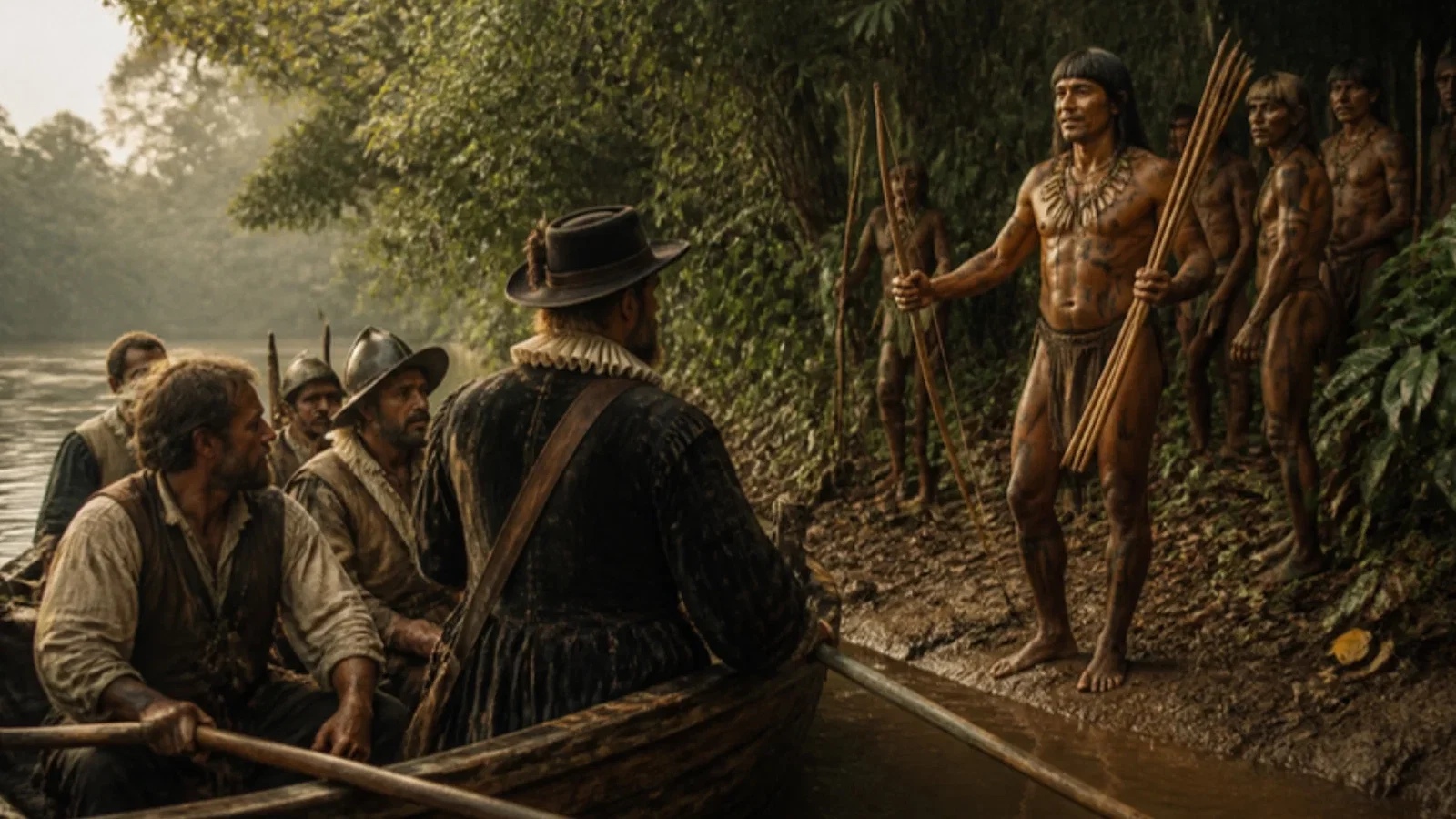
Ralegh's 1596 Discoverie of Guiana describes arrow poison causing torment and madness, with a cure kept by priests; the symptoms do not match curare's quiet paralysis.
Reading Library · Anesthesia Epochs · 中文版
Watch the education video (for clinicians)
1596: Ralegh's Guiana — An Arrow Poison Described · Anesthesia Epochs Education Series
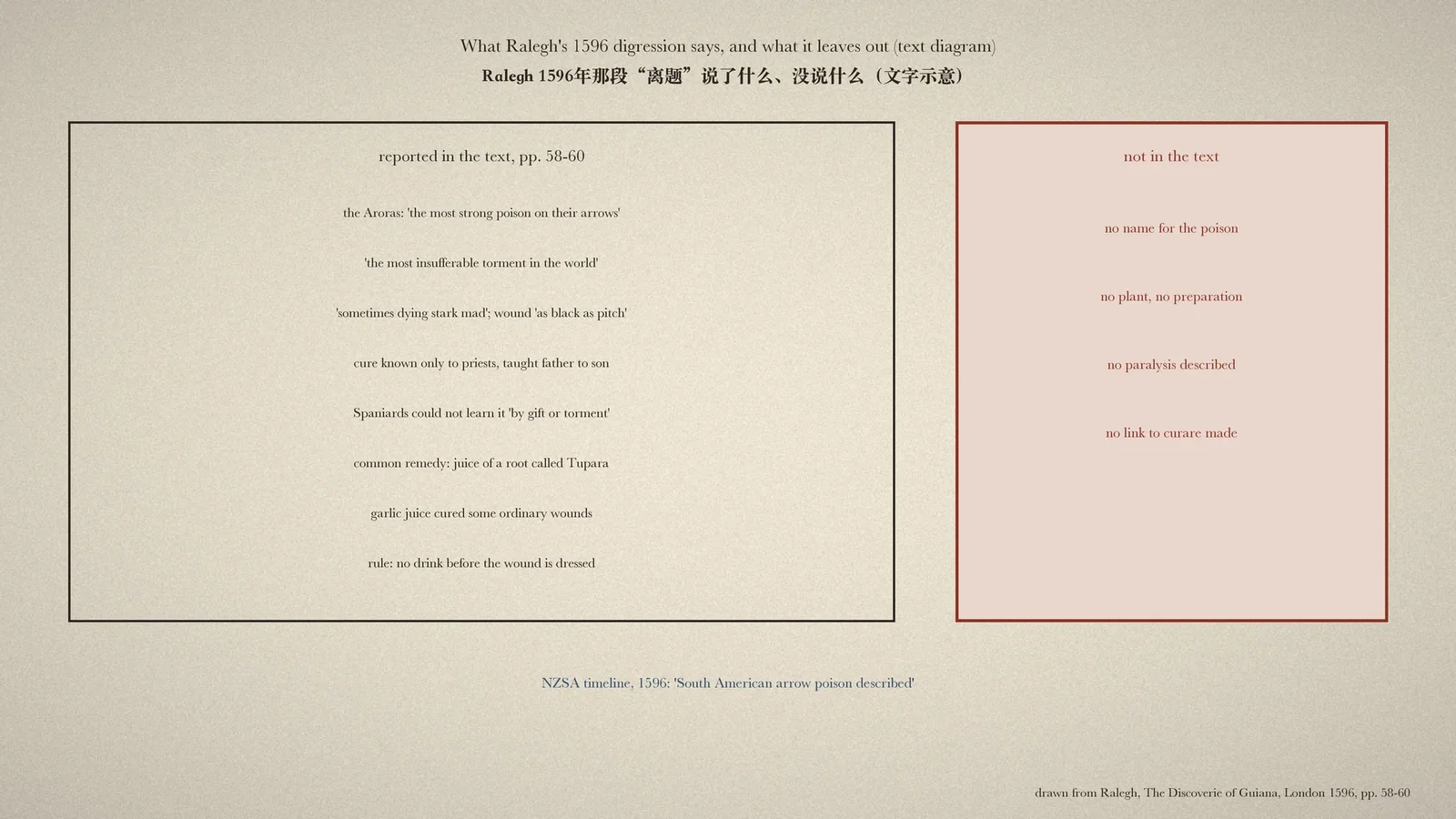
Anaesthesia timelines often begin the story of muscle relaxants long before the operating room, with European travellers writing about South American arrow poisons. The New Zealand Society of Anaesthetists' timeline puts it in one line under 1596: "South American arrow poison described". The book behind that date is Walter Ralegh's account of Guiana. Reading the passage itself shows how little it can carry. [1][2]
The book
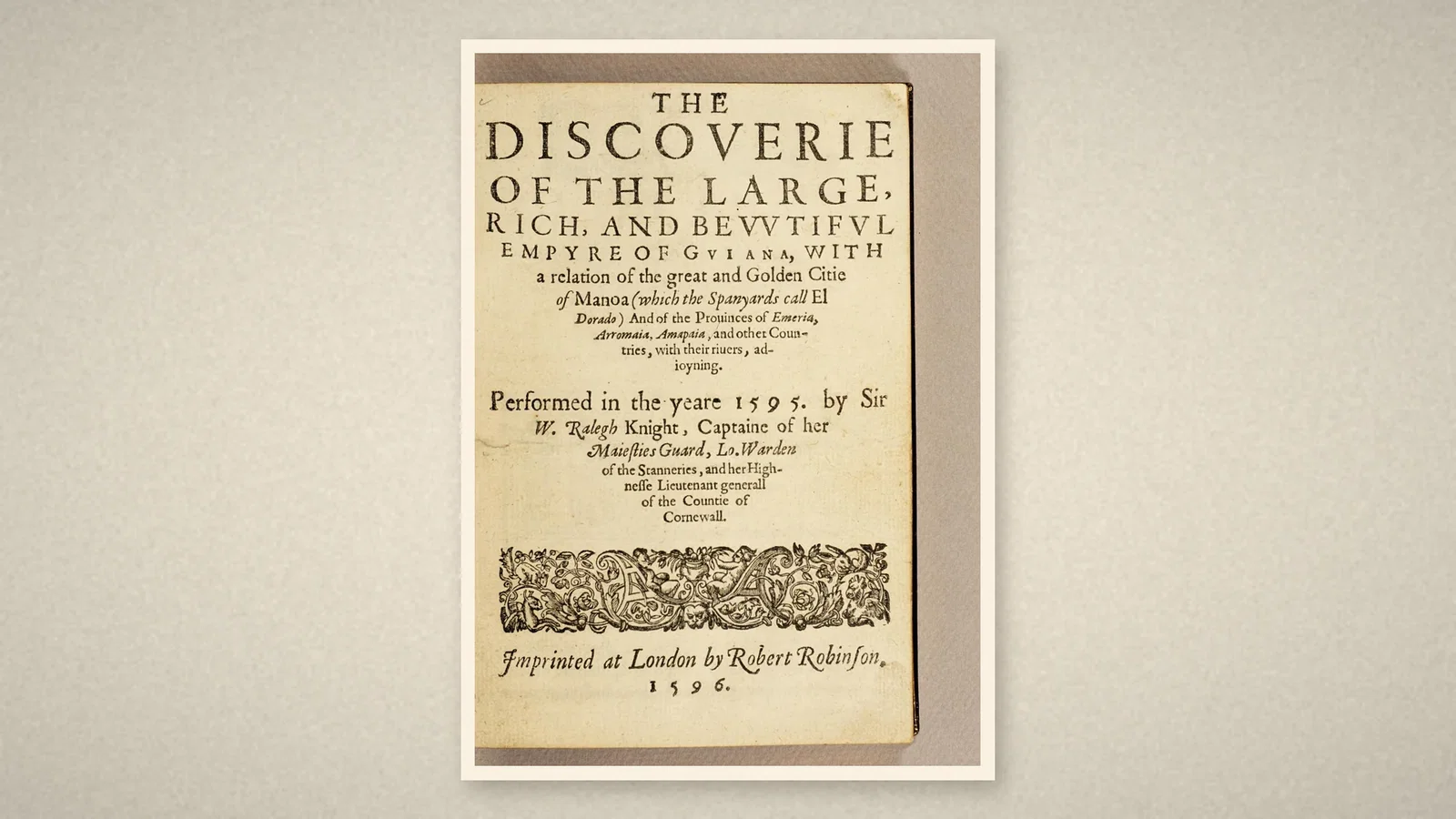
"The Discoverie of the large, rich, and bewtiful Empyre of Guiana" was printed in London by Robert Robinson in 1596. Its subtitle promises a relation of "the great and Golden Citie of Manoa (which the Spanyards call El Dorado)", and the title page says the voyage was "performed in the yeare 1595" by Sir W. Ralegh, captain of the Queen's Guard. [1, title page]
The digression
The arrow poison comes up almost by chance. Listing four principal nations north of the Orinoco, Ralegh calls the fourth the Aroras, a very valiant people who have "the most strong poison on their arrows, and most dangerous of all nations", and announces "a digression not unnecessary". [1, pp. 58-9]
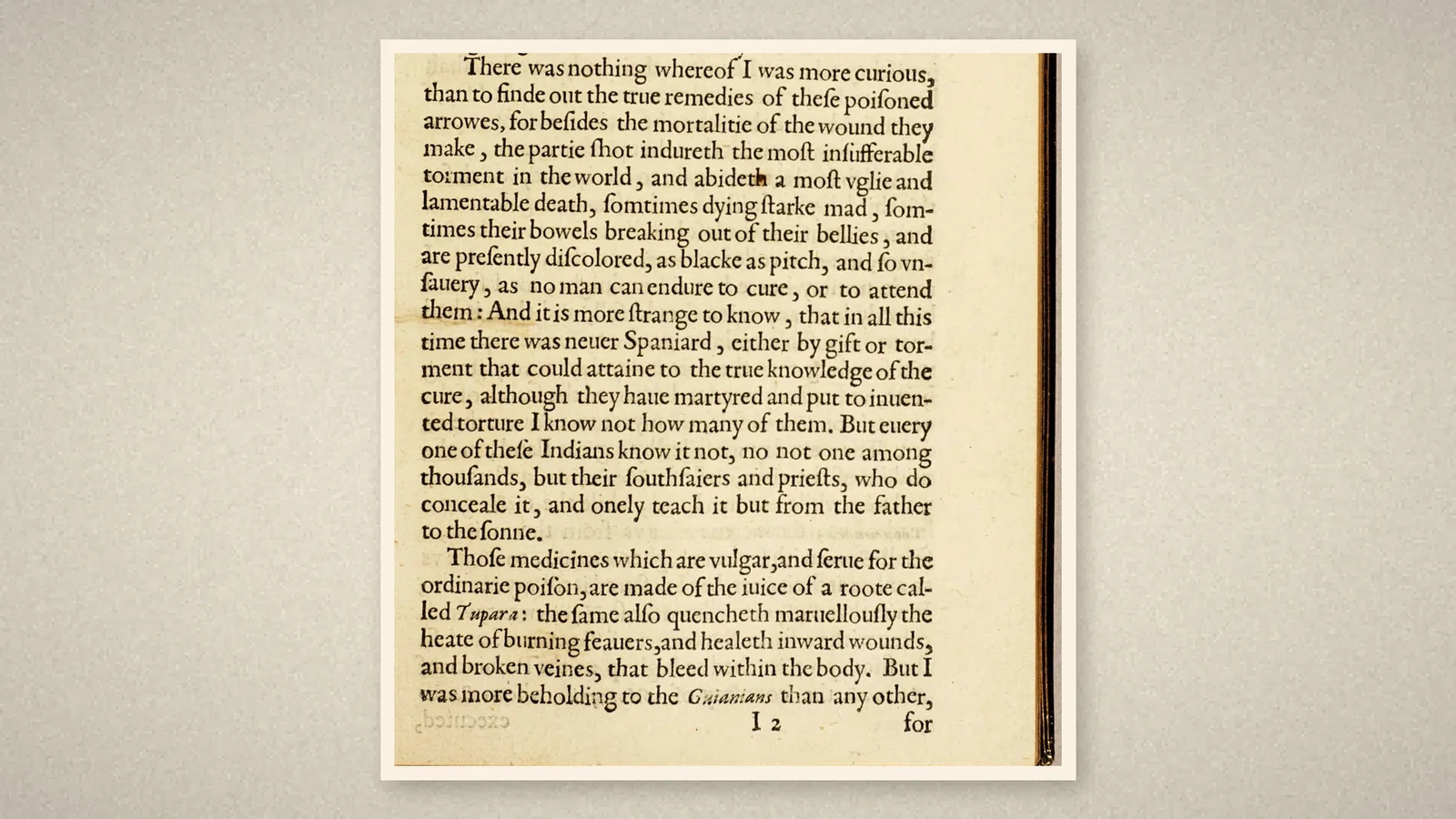
"There was nothing whereof I was more curious, than to find out the true remedies of these poisoned arrows." The wounded, Ralegh writes, endure "the most insufferable torment in the world", and die "a most ugly and lamentable death, sometimes dying stark mad". Sometimes the bowels break out of the belly, and the wound turns "as black as pitch" and smells so foul that nobody can bear to treat it. No Spaniard, by gift or by torture, had ever learned the true cure. Even among the Indians, not one in thousands knew it; only "their soothsayers and priests" did, and they kept it secret and taught it "from the father to the son". [1, p. 59]
For the ordinary poison, Ralegh reports, there was a common medicine made from the juice of a root called Tupara, which also cooled fevers and healed internal bleeding. Antonio de Berrío had never learned the cure for the strong poison, but the Guianians, Ralegh says, taught the travellers the best way of treating it and other poisons. [1, pp. 59-60]
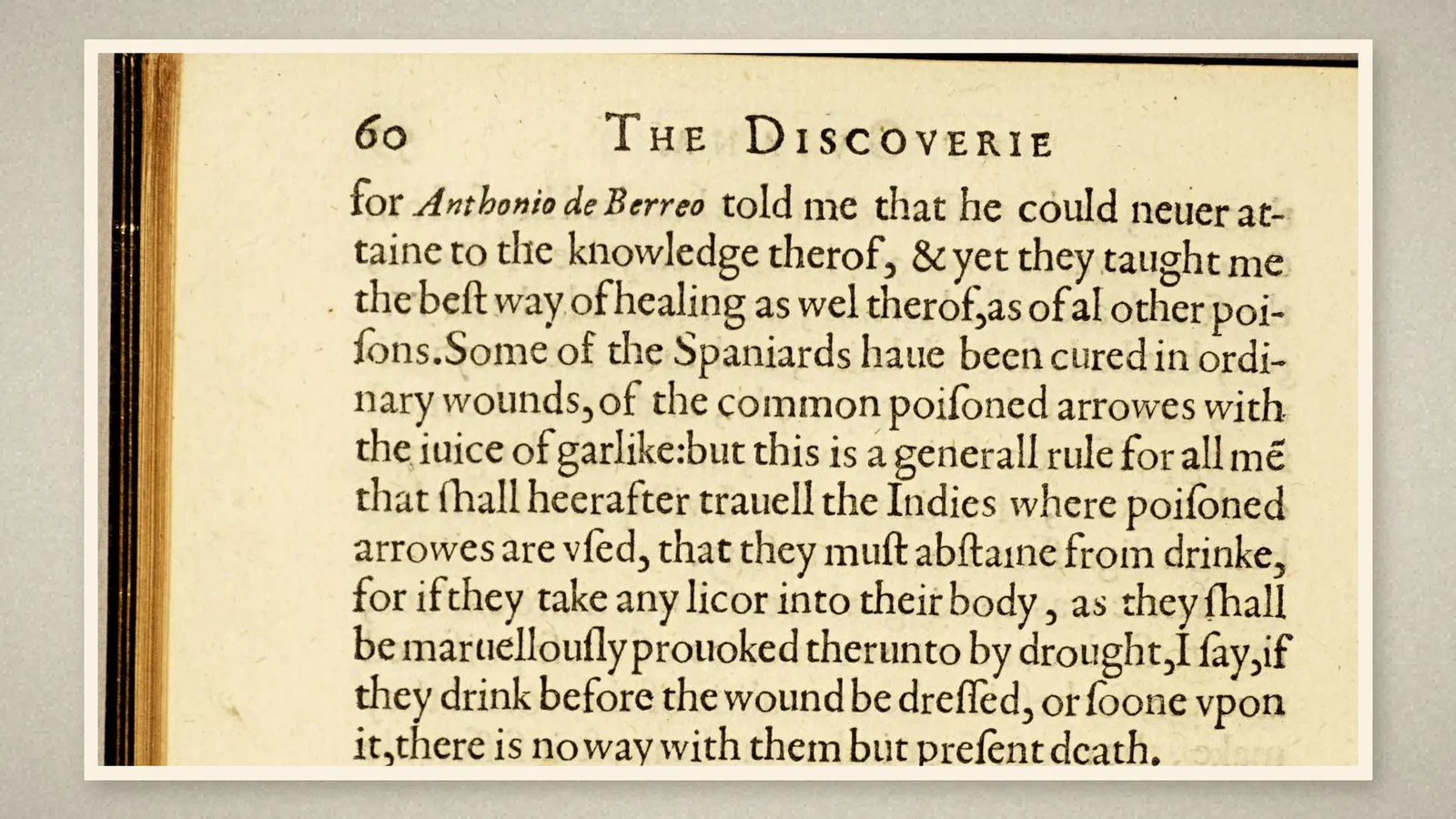
The digression ends with two practical points. Some Spaniards had been cured of wounds from the common poisoned arrows with garlic juice. And Ralegh lays down "a general rule" for anyone who travels where poisoned arrows are used: drink nothing before the wound is dressed, because otherwise "there is no way with them but present death". [1, p. 60]
What the text does not say
The passage names no poison, no plant and no method of preparation. Above all, it describes no paralysis. The symptoms Ralegh lists are agony, madness, blackening and rotting of the wound. Those are not the quiet muscular paralysis that later articles in this series describe for curare, in Brodie and Waterton's animal experiments and in Bernard's work on the motor nerve. Whatever the Aroras put on their arrows, this text does not show that it was curare. The timeline's one-line entry is accurate as far as it goes: an arrow poison was described. [1, pp. 58-60][2]
What the record shows
An early English printed account of a South American arrow poison, written by a traveller who wanted the antidote more than the poison. The cure was a secret held by priests and passed from father to son. Read closely, the passage also marks a limit: describing a poison is not the same as describing curare.
Sources and reading limits
Read: Ralegh, "The Discoverie of the large, rich, and bewtiful Empyre of Guiana" (London, 1596), the title page and the digression on poisoned arrows, pp. 58-60 (John Carter Brown Library copy); the New Zealand Society of Anaesthetists' online history timeline, entry for 1596.
Not covered: Spanish accounts of the same peoples; any later identification of the Aroras' poison; the rest of the book in detail.
Limits: what Ralegh reports was heard and seen on the voyage, not observed clinically. The text does not identify the poison, and this article does not identify it either. Names are given as printed. Ralegh's physical description of the Aroras is not repeated and is outside the crop. Quotations are given in modern spelling.
Three illustrations are crops of the 1596 book (title page, pp. 59-60); one is a text diagram drawn from it, with no people or weapons drawn.
- Ralegh W. The discoverie of the large, rich, and bewtiful empyre of Guiana. London: Robert Robinson; 1596. p. 58-60. Internet Archive
- New Zealand Society of Anaesthetists. History of anaesthesia. NZSA
Continue exploring
Related reading connects shared questions and contexts; it does not by itself establish historical influence.
- 1812: Inflating the Lungs Outlasts Curare Poisoning
- 1856: Bernard Shows Curare Paralyses Movement but Not Feeling
Anesthesia Epochs · The Source Room · About & Editorial Method
Published November 3, 2026. Sources and reading limits are stated above. Illustrations are labelled as original source images or AI-made. Historical accounts are educational; they are not current treatment instructions.