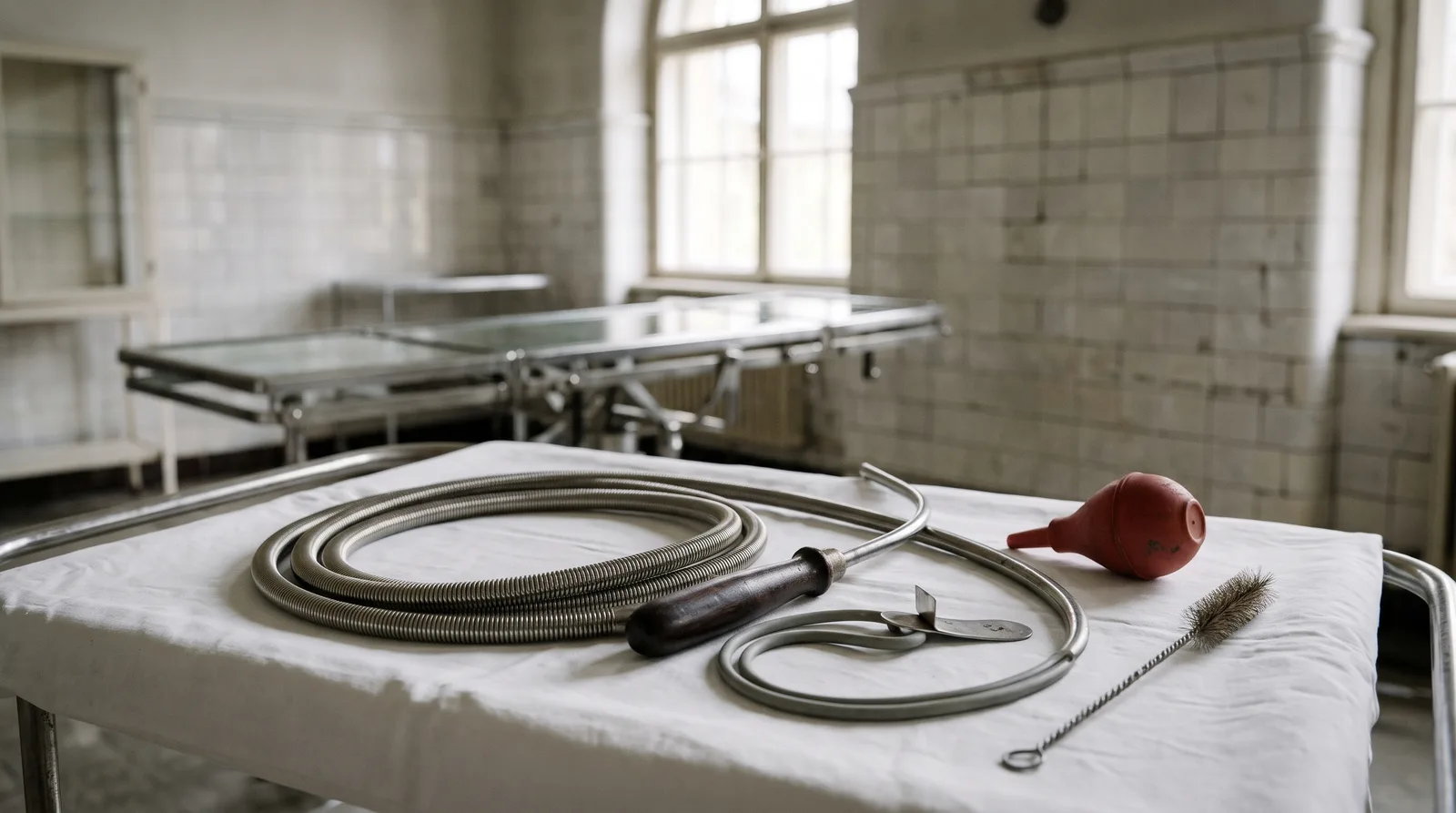
On 28 December 1901 Franz Kuhn of Kassel described passing a flexible spiral metal tube through the mouth into the trachea on a curved wire guide, so that goitre surgery, operations in the mouth and everyday anaesthesia could proceed with an open airway and without tracheotomy.
Reading Library · Anesthesia Epochs · 中文版
Watch the education video (for clinicians)
1901: Peroral Intubation — Franz Kuhn · Anesthesia Epochs Education Series
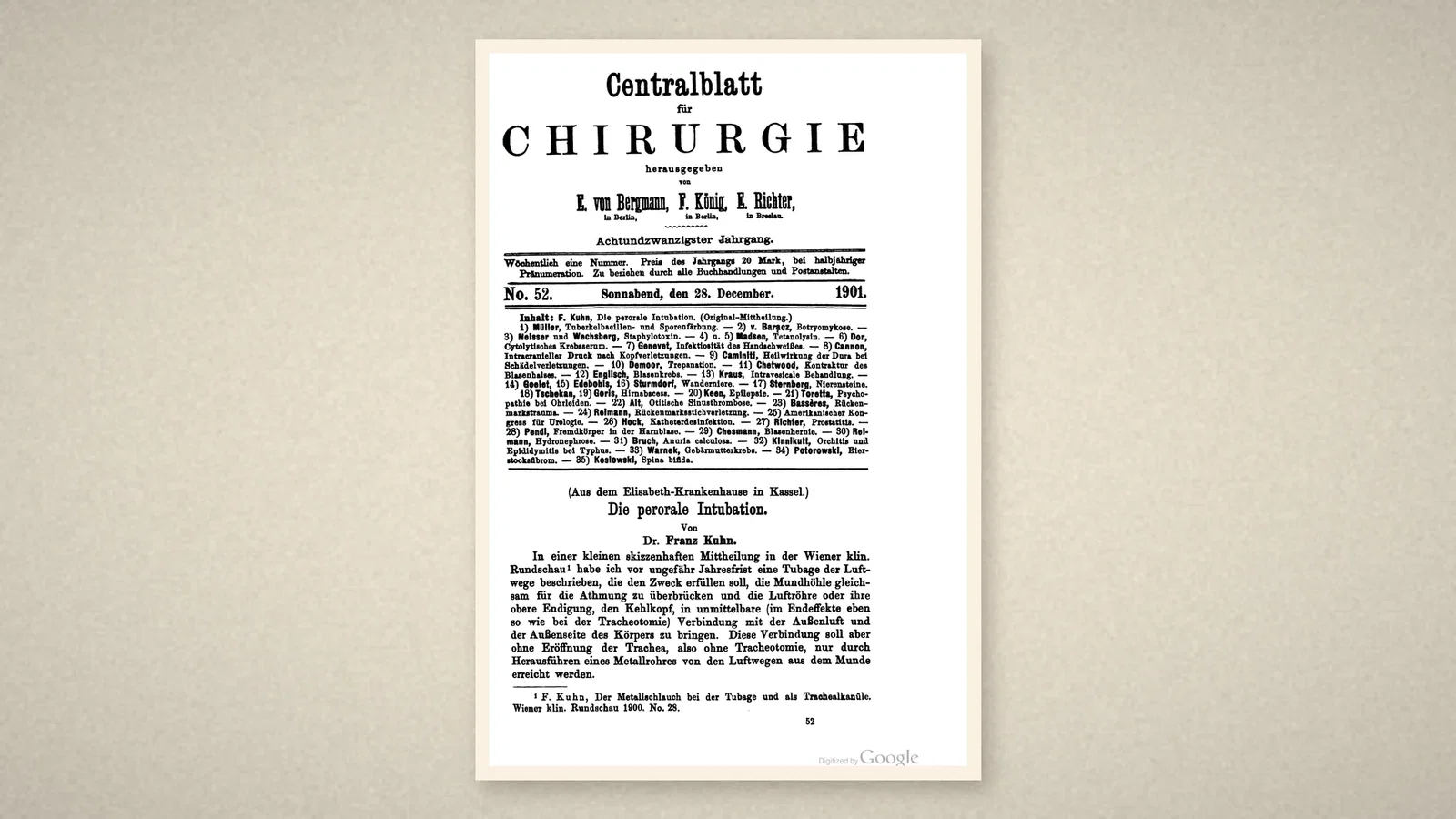
The tracheal tube is now the default airway for general anaesthesia, and the reinforced "flexometallic" tube still carries the name of its ancestor. The Australian Society of Anaesthetists' timeline credits Franz Kuhn, surgeon in Kassel, with introducing "flexo-metallic endotracheal tubes" in 1900. Kuhn described the method in “Die perorale Intubation” (peroral intubation), printed in the Centralblatt für Chirurgie on 28 December 1901; an earlier patent of Kuhn’s covers the metal hose from which the tube was made. [1][2][3]
A bridge across the mouth
Kuhn, writing from the Elisabeth Hospital in Kassel, recalled a short note published in Vienna about a year earlier, describing a tubage of the airway whose purpose was "to bridge the mouth, as it were, for breathing", bringing the trachea or larynx into direct connection with the outside air, "in the end effect just as in tracheotomy", but "without opening the trachea, that is without tracheotomy, only by bringing a metal tube out of the airway through the mouth". The idea, Kuhn wrote, was not far from the mind of anyone who knew and practised intubation. It became compelling once there was a prospect of giving a patient air during narcosis "in every case and under all circumstances and in any quantity". Then "all prophylactic or temporary tracheotomy would fall away". [1]
The instruments
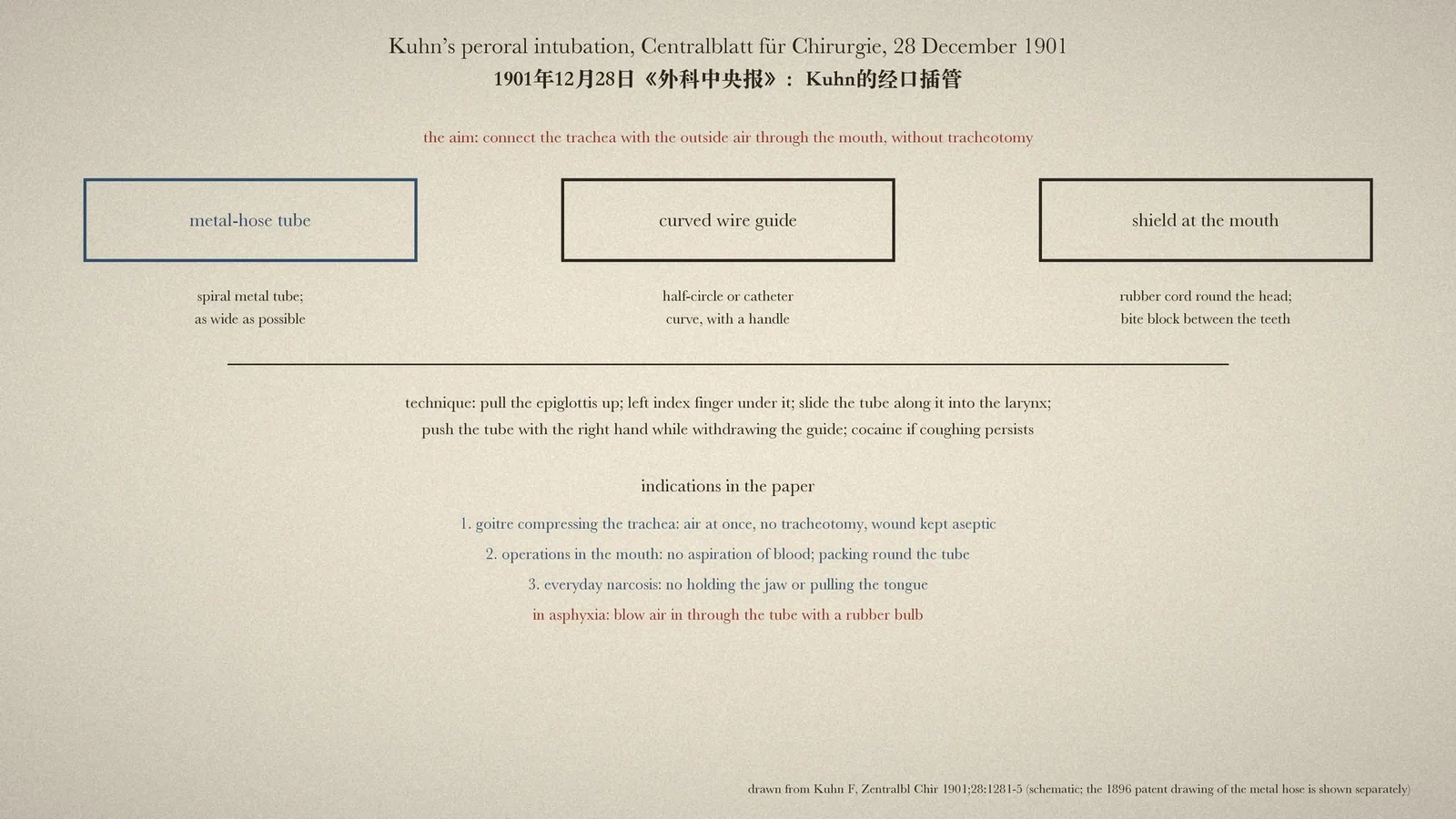
The kit was deliberately simple. The tube was "a metal-hose tube". To get it round the bend of the pharynx into the larynx, Kuhn used a guide quite unlike O'Dwyer's: "a thick wire bent in a half-circle or catheter shape, with a handle". Outside the mouth, a cross-piece like the shield of a tracheotomy tube was fixed at the corner of the mouth by a rubber cord round the head; from it a projection reached between the teeth, holding them apart for the tube and "strong enough to withstand a convulsive bite by a narcotised patient". Kuhn added that the details of construction were still open to improvement; what mattered was the principle. [1]
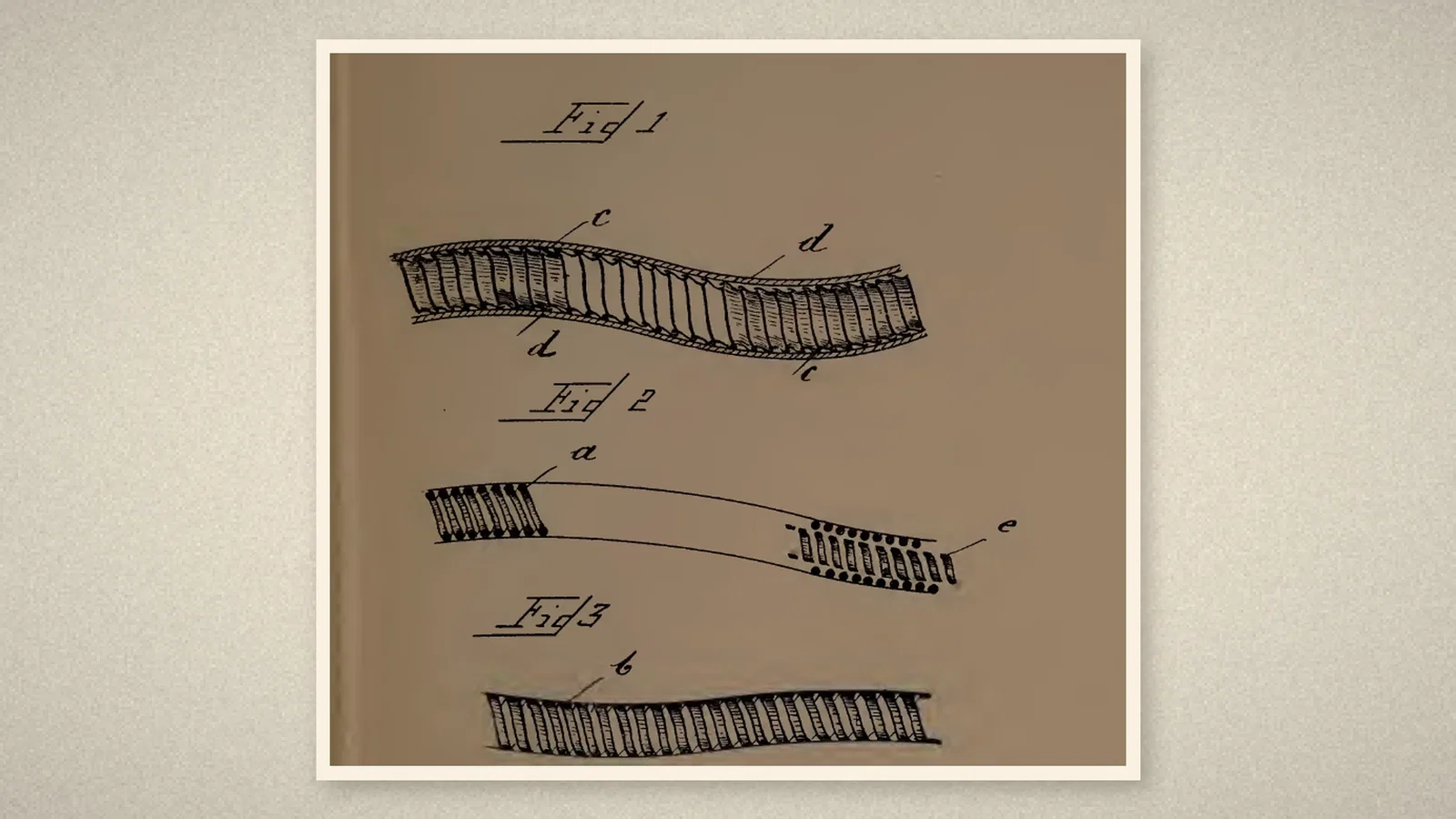
The metal hose itself had been patented by Kuhn, then a physician in Giessen, in 1896, as a sound for the stomach and intestine. The British specification describes a tube "composed of metal wire or metal strips in narrow spiral turns", made air- and water-tight with rubber threads or a rubber covering, with "very great flexibility", which "does not break and does not bend at an acute angle", so that "its interior is always open and accessible". Those are exactly the properties a tracheal tube in a moving, bent airway needs. [2]
The technique
In children, O'Dwyer's method required the tip of the cannula to be placed against the arytenoids felt by the left index finger. In adults, Kuhn wrote, it was enough to pull the epiglottis well up (traction on the tongue would do it), hook the left index finger round its underside, and slide the tube along that underside into the laryngeal inlet; slight turning or sideways movements let it slip deeper, while the right hand, holding the guide, pushed the tube on and gradually withdrew the guide. If narcosis was light, inserting the tube caused coughing, some choking and more tracheal secretion; a little cocaine or antipyrine could reduce the irritability, but the mucosa soon became tolerant. Because the tube was much longer than a tracheotomy cannula, Kuhn wanted it as wide as possible, and the anaesthetic assistant had to clean it often with a thin spiral brush. [1]
Three indications
The first and most important was goitre compressing the trachea. In Kuhn's experience the tube made it possible to restore the airway at once, continue the narcosis undisturbed and finish the thyroidectomy calmly, and the tube could stay for hours after waking. It was quicker than tracheotomy and, above all, kept the surgical wound sterile. The second was operations in the mouth, where blood or secretions might run into the airway: with the tube in place aspiration was impossible, the back of the pharynx could be packed around it, and the head-hanging position was often unnecessary. Kuhn found that even with the nose closed and every other route sealed, the tube alone carried "the whole supply of air, in the form of quite calm, strong breaths". The third was everyday narcosis, keeping the airway open "even without pulling the tongue forward and without holding the jaw". [1]
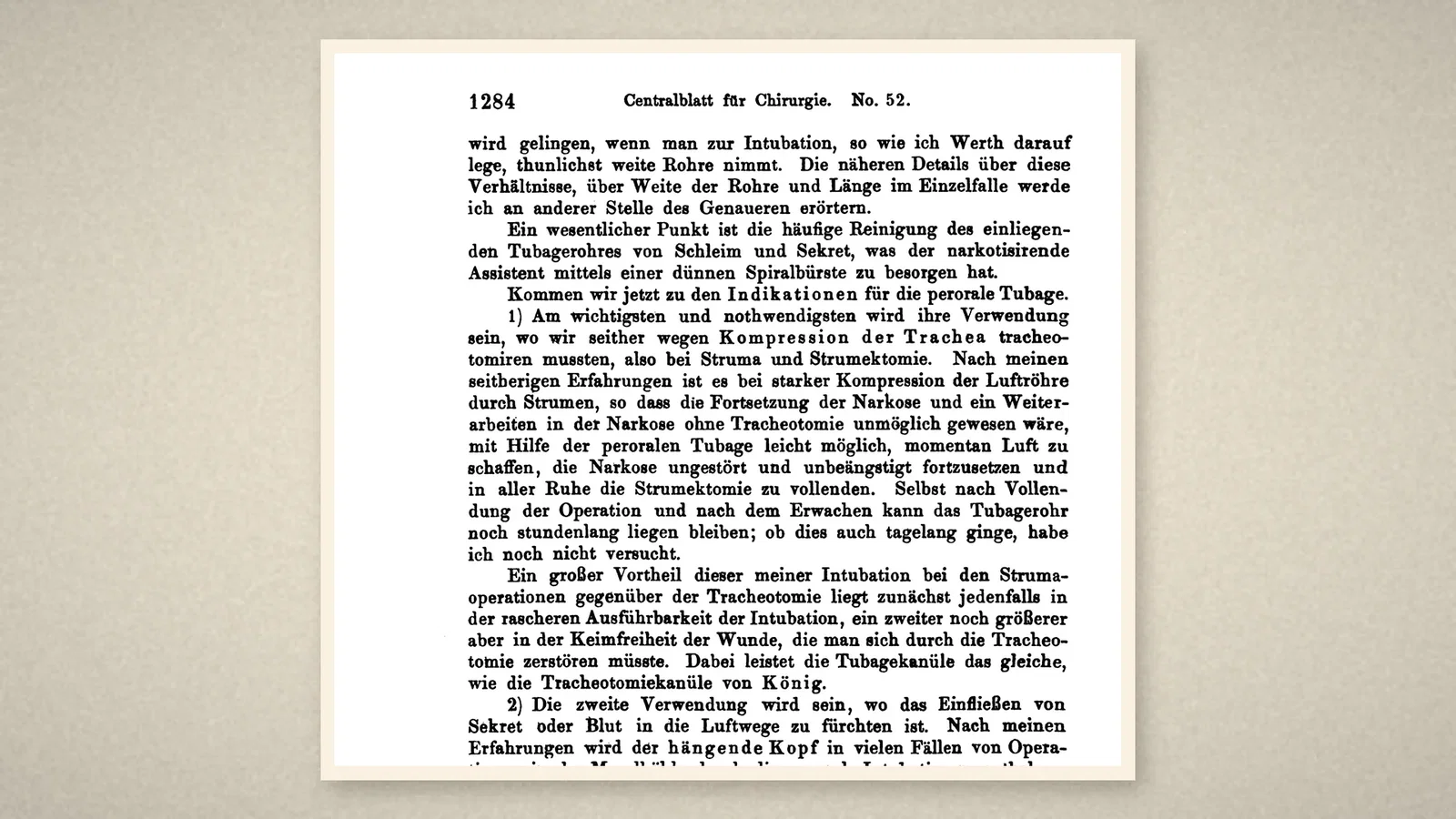
The paper ends with one sentence that points further: with the tube in place, "even a direct blowing of air into the airway is possible with a rubber bulb", and in asphyxia this should be tried first. [1]
What the record shows
Kuhn's paper sets out the anaesthetic case for oral tracheal intubation: a secure, open airway that does not depend on holding the jaw, protects the lungs from blood, lets the surgeon pack the pharynx, avoids a tracheotomy in a sterile neck operation, and allows air to be blown in. The metal hose solved the problem of a tube that must bend without kinking. The intubation itself was still done blind, by touch; Kuhn's paper does not use the direct laryngoscopy that Kirstein had described in Berlin six years earlier.
Sources and reading limits
Read: Kuhn’s “Die perorale Intubation”, Centralblatt für Chirurgie, 28 December 1901, pp. 1281–1285, with page images of pp. 1281, 1283 and 1284; Kuhn’s British patent 15,231 of 1896 with its drawing sheet; the ASA timeline entry for 1900.
Not covered: Kuhn’s first note in the Wiener klinische Rundschau of 1900, on which the timeline’s date rests; Kuhn’s later papers on peroral tubage and the 1911 book. The 1901 paper has no figure; the drawing shown is of the 1896 metal hose for the digestive tract, and the timeline’s details of a patient dying of pharyngeal haemorrhage and of the shape of the tubes are not in the 1901 paper.
- Kuhn F. Die perorale Intubation. Zentralbl Chir. 1901;28:1281-5. Internet Archive
- Kuhn F. Metal-sound-pipe for medical purposes. British patent 15,231. London: HMSO; 1896. Internet Archive
- Australian Society of Anaesthetists. Anaesthesia history timeline. 2024. ASA
Continue exploring
Related reading connects shared questions and contexts; it does not by itself establish historical influence.
Anesthesia Epochs · The Source Room · About & Editorial Method
Published November 2, 2026. Sources and reading limits are stated above. Illustrations are labelled as original source images or AI-made. Historical accounts are educational; they are not current treatment instructions.