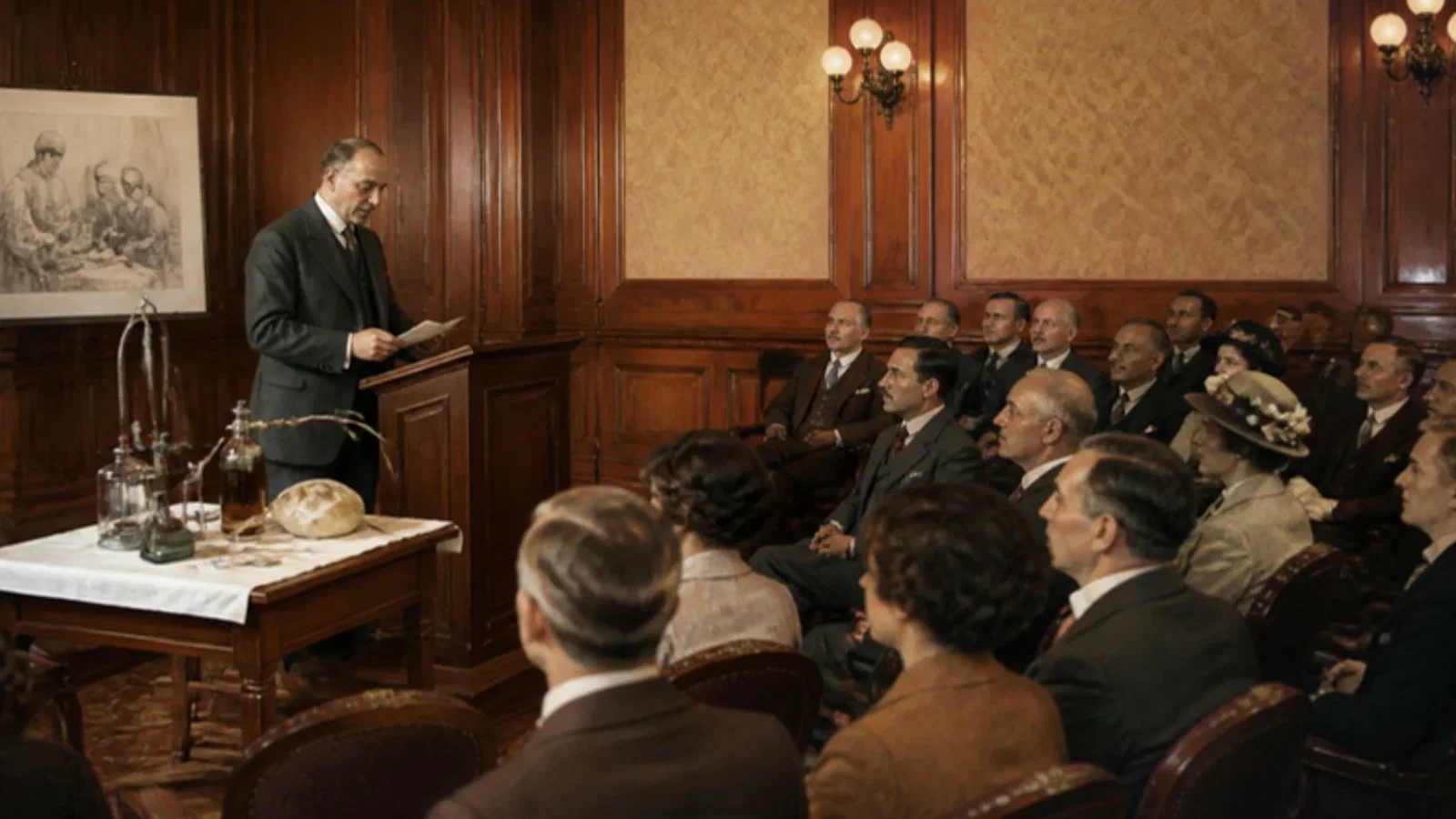
In 1997 Selma Harrison Calmes, writing for the California Society of Anesthesiologists in the 150th-anniversary year of Simpson's discovery of chloroform, celebrated as the 150th anniversary of obstetric anaesthesia, found little record of obstetric anaesthesia in California until 1928, when the obstetrician Frank W. Lynch of the University of California Medical School read 'Anesthesia in Obstetrics' to the anesthesiology section of the California Medical Association. Printed that September in California and Western Medicine (29:173-6), the paper ranges from the metabolic changes of pregnancy to Cesarean section, forceps and labour analgesia, limits chloroform, favours nitrous oxide-oxygen and admits that no good method yet existed for the first stage of labour.
Reading Library · Anesthesia Epochs · 中文版
Watch the education video (for clinicians)
1928: Frank Lynch — 'Anesthesia in Obstetrics' in California · Anesthesia Epochs Education Series
In 1997, the year obstetric anaesthesia was celebrating its 150th anniversary, the anaesthesiologist and historian Selma Harrison Calmes looked for the history of obstetric anaesthesia in California and found almost nothing for eighty years. Then, in 1928, an obstetrician stood up at a meeting of anaesthetists and spoke about anaesthesia for childbirth. This article reads Calmes's account and the paper itself. [1][2]
A state with little to record
"One hundred fifty years ago, California had no hospitals, no medical schools, no medical societies, no pharmacies and no medical journals." Physicians came with the Gold Rush of 1849; when the state's first medical journal appeared in 1854 it reported 13 anaesthetics for surgery and two for labour, and "both laboring patients demanded chloroform". After that, Calmes writes, little is known about obstetric anaesthesia in the state "until 1928". [1, p. 21]
That year the Anesthesiology Section of the California Medical Association held its sixth meeting, and Frank W. Lynch, an obstetrician at the University of California Medical School, presented "Anesthesia in Obstetrics", which Calmes calls "the first paper on this topic at an anesthesia meeting in the state". Why an obstetrician? Because "nearly all obstetric anesthesia was performed by obstetricians or nurses, not anesthesiologists. There were not yet enough anesthesiologists to meet obstetric needs." [1, p. 21]
The paper
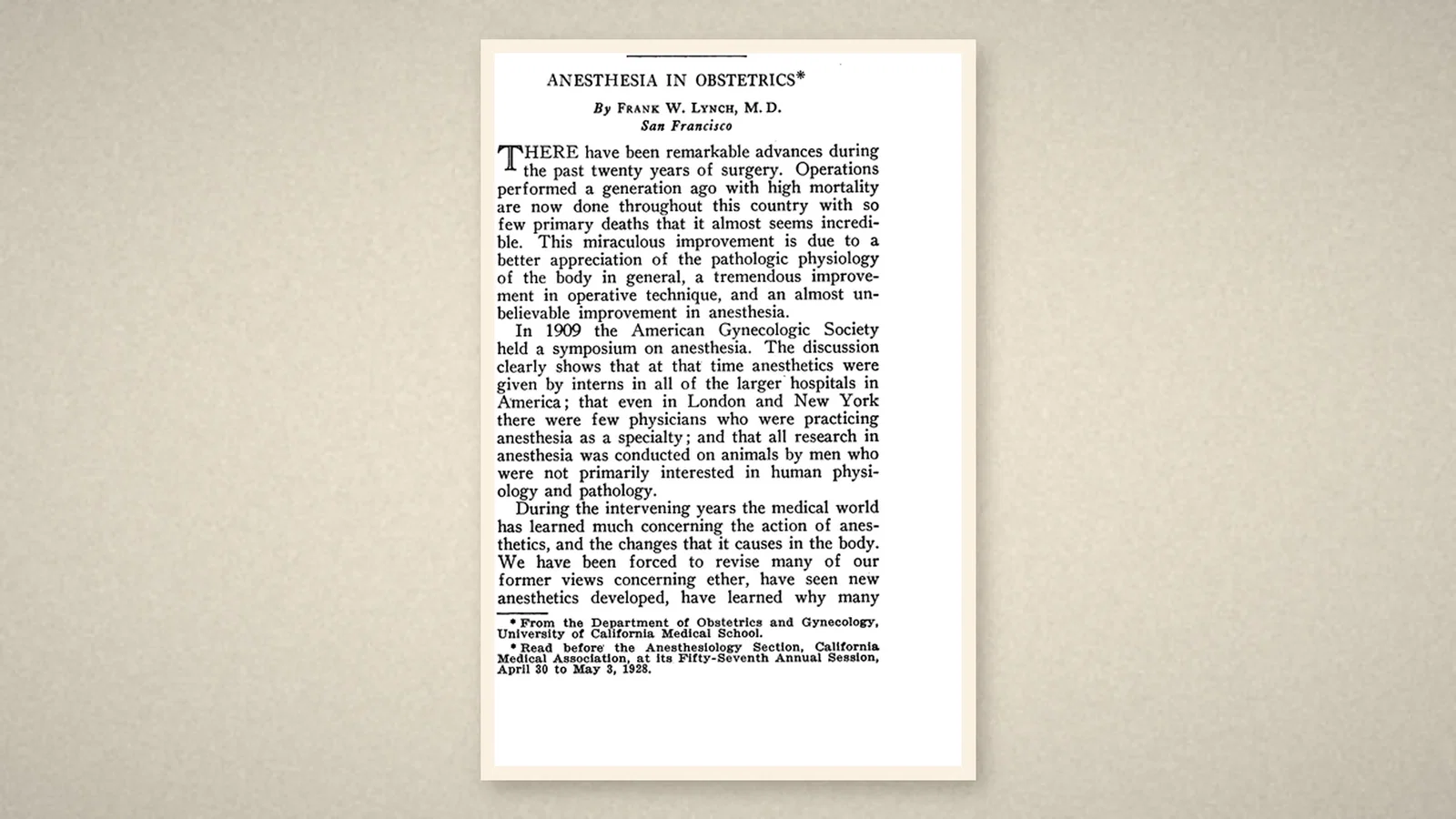
The paper was printed in California and Western Medicine in September 1928, with a footnote saying it was read before the Anesthesiology Section "at its Fifty-Seventh Annual Session, April 30 to May 3, 1928". Lynch opened with the progress of surgery and anaesthesia, and with a reminder that at a symposium of the American Gynecologic Society in 1909 anaesthetics in the larger American hospitals had still been given by interns. [2, p. 173]
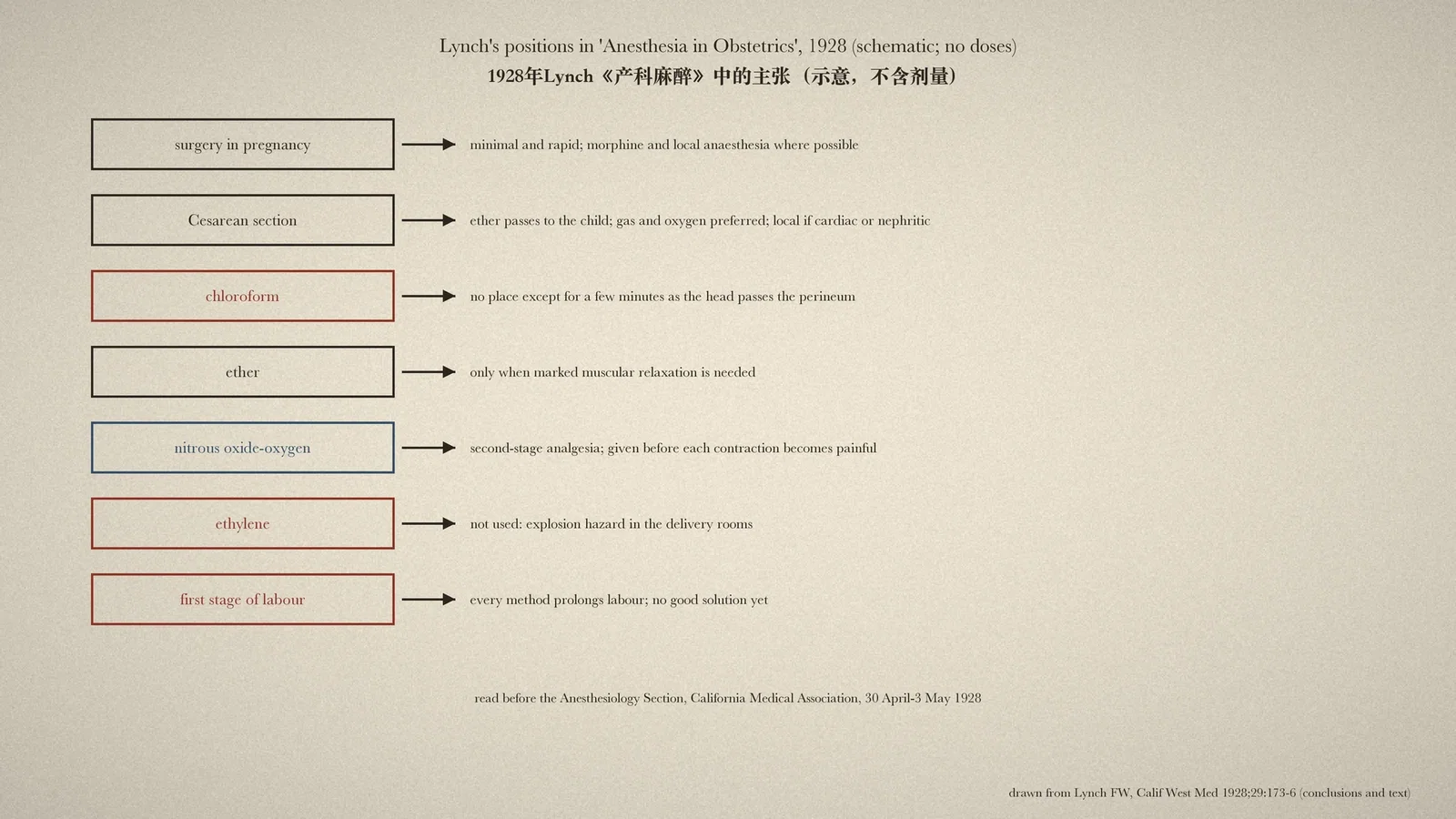
The core of the argument was physiological. "The profession as a whole has not yet appreciated that the pregnant woman as a class is never so good a risk for prolonged anesthesia as the very same woman in the nonpregnant condition." Lynch cited studies showing that inhalation anaesthesia changed the blood chemistry, and concluded that surgery in pregnancy "should be restricted to the minimum; performed as rapidly as is consistent with safety, and be done under morphin and local anesthesia whenever possible". [2, p. 174]
At Cesarean section Lynch was blunt: "There is no doubt that ether passes over to the child and may cause fetal death." A child born under ether "very often has to be resuscitated, while the one born under gas and oxygen usually cries as soon as born". Patients with cardiac or kidney disease should be delivered under local anaesthesia. [2, pp. 174-5]
Labour
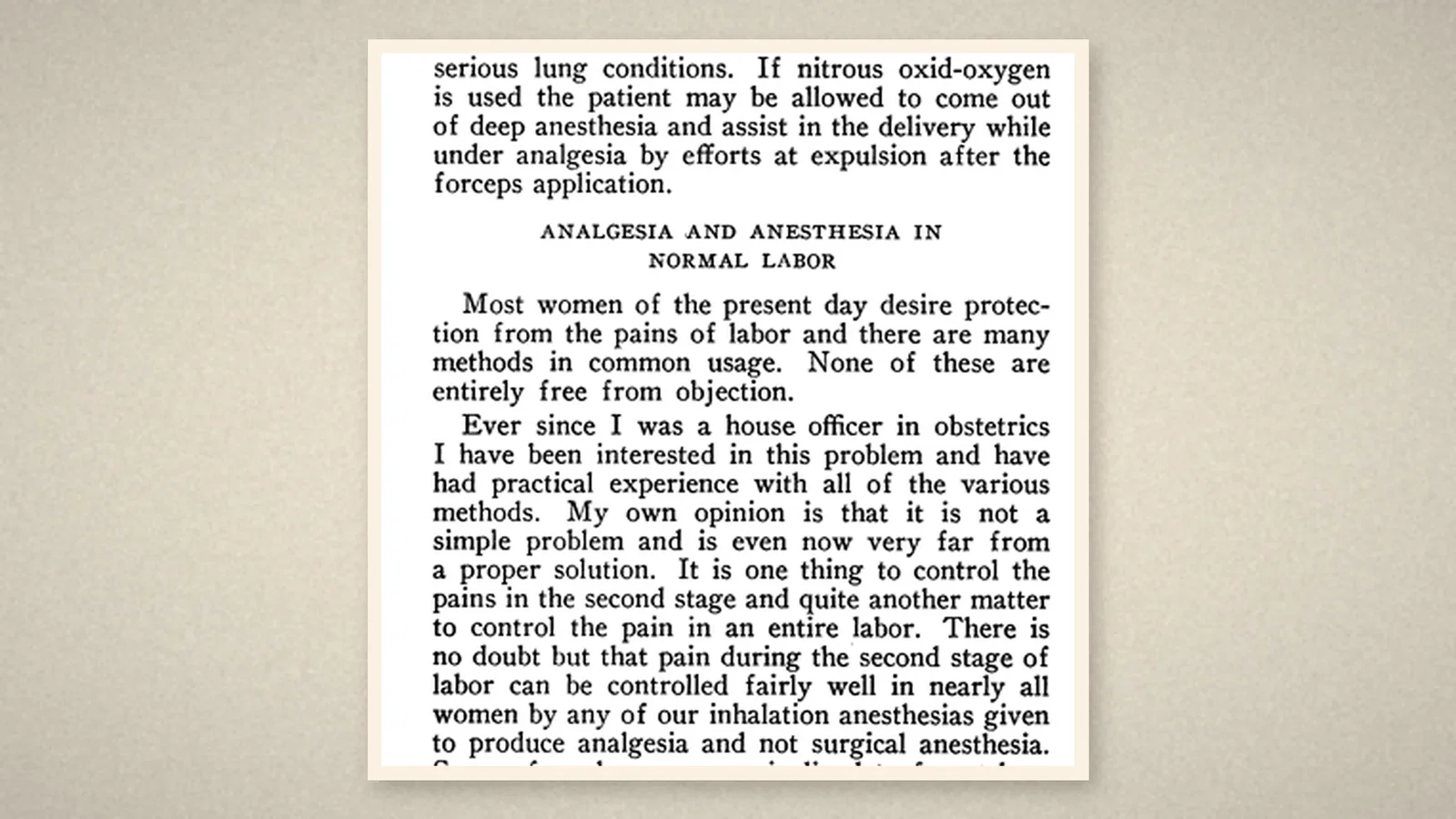
"Most women of the present day desire protection from the pains of labor and there are many methods in common usage. None of these are entirely free from objection." Lynch, interested in the problem since serving as a house officer, thought it "not a simple problem" and "even now very far from a proper solution": second-stage pain could be controlled by inhalation, but every method used in the first stage prolonged labour, and strong contractions were "absolutely necessary for the success of labor". [2, pp. 175-6]
On the agents, Lynch was decided. Chloroform and ether impaired the uterine contractions and favoured haemorrhage. "Personally I know of several deaths following surgical anesthesia with chloroform which can be attributed to the drug. For this reason I have never used chloroform since entering private practice." Nitrous oxide-oxygen "has proved a true blessing to many thousands of parturient women", if the physician gave it before each contraction became painful. Ethylene, the new gas, was ruled out on practical grounds: "My delivery rooms do not permit of giving it with safety since there is a burner in the preparation room but a short distance from the delivery room." [2, p. 175]
What Calmes added
Reading the paper seventy years later, Calmes found that Lynch "knew many of the principles we understand today as the basics of obstetric anesthesia", with one gap: "There is no mention of the danger of aspiration of gastric contents". The University of California hospital had Mary Botsford, in Calmes's account the first physician in the state to specialise in anaesthesia, yet Lynch or the interns gave most obstetric anaesthetics there, and in other hospitals nurses gave them; that shortage was, Calmes argues, one reason nurse anaesthetists persisted in California. Things changed with national interest by anaesthesiologists in obstetric anaesthesia "after 1970", more physician anaesthetists and the means for continuous epidural analgesia. [1, pp. 23-4]
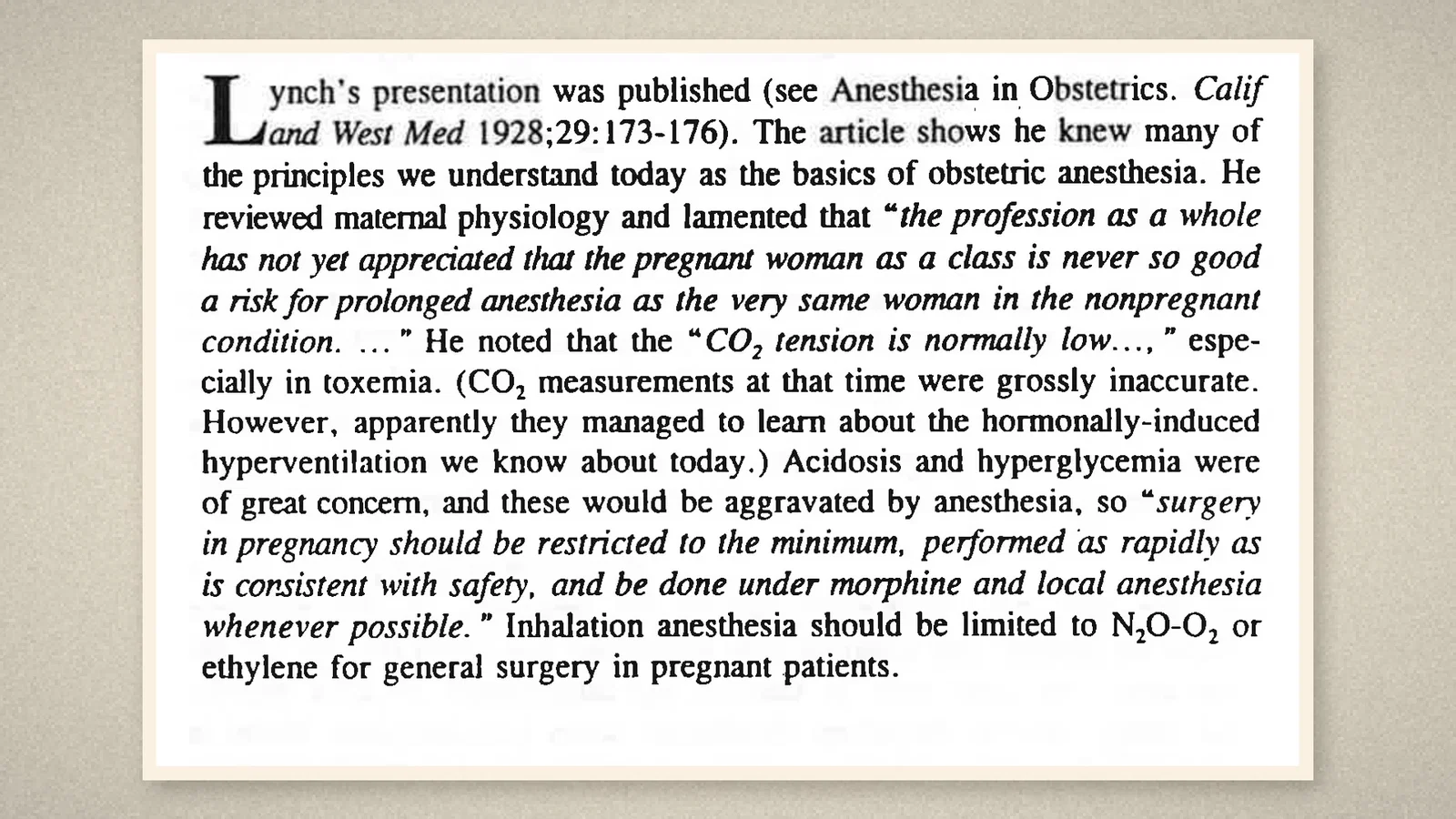
What the record shows
An obstetrician explaining obstetric anaesthesia to anaesthetists, because the anaesthetists were too few to give it. The paper already holds the main ideas of the later specialty: the pregnant patient is a different risk, the drug reaches the baby, labour pain matters to women, and no method is free of cost.
Sources and reading limits
Read: Lynch's paper in California and Western Medicine 1928;29:173-6, in full on the four PubMed Central page scans (the PDF versions could not be accessed), with the title and footnote from the PMC page; Calmes's 1997 article in the CSA Bulletin, in full from an archived copy of the CSA's PDF.
Not covered: the proceedings of the 1928 meeting and any discussion of the paper; the 1854 California journal and the 1909 symposium that Calmes and Lynch cite; Stander's 1927 blood studies cited by Lynch.
Limits: "the first paper on this topic at an anesthesia meeting in the state" is Calmes's claim and is not tested here. Calmes speaks of the section's sixth meeting, the paper of the association's fifty-seventh annual session; both are reported. The paper's drugs, strengths, durations and percentages are not repeated, and quotations were chosen to avoid them. Lynch's statements on fetal and maternal risk are clinical opinions of 1928. Quotations are from the English originals.
Three illustrations are crops of the 1928 paper (pp. 173 and 175) and of Calmes's article; one is drawn from the paper.
- Calmes SH. Obstetric anesthesia in California. CSA Bulletin. 1997 Sep-Oct;46:21-4. Internet Archive
- Lynch FW. Anesthesia in obstetrics. Calif West Med. 1928;29(3):173-6. PMC
Continue exploring
Related reading connects shared questions and contexts; it does not by itself establish historical influence.
- 1968: Six Anaesthesiologists Meet at O'Hare and Start SOAP
- 1924: Kokatnur Begins Sacral Anaesthesia for Perineal Surgery
Anesthesia Epochs · The Source Room · About & Editorial Method
Published November 3, 2026. Sources and reading limits are stated above. Illustrations are labelled as original source images or AI-made. Historical accounts are educational; they are not current treatment instructions.