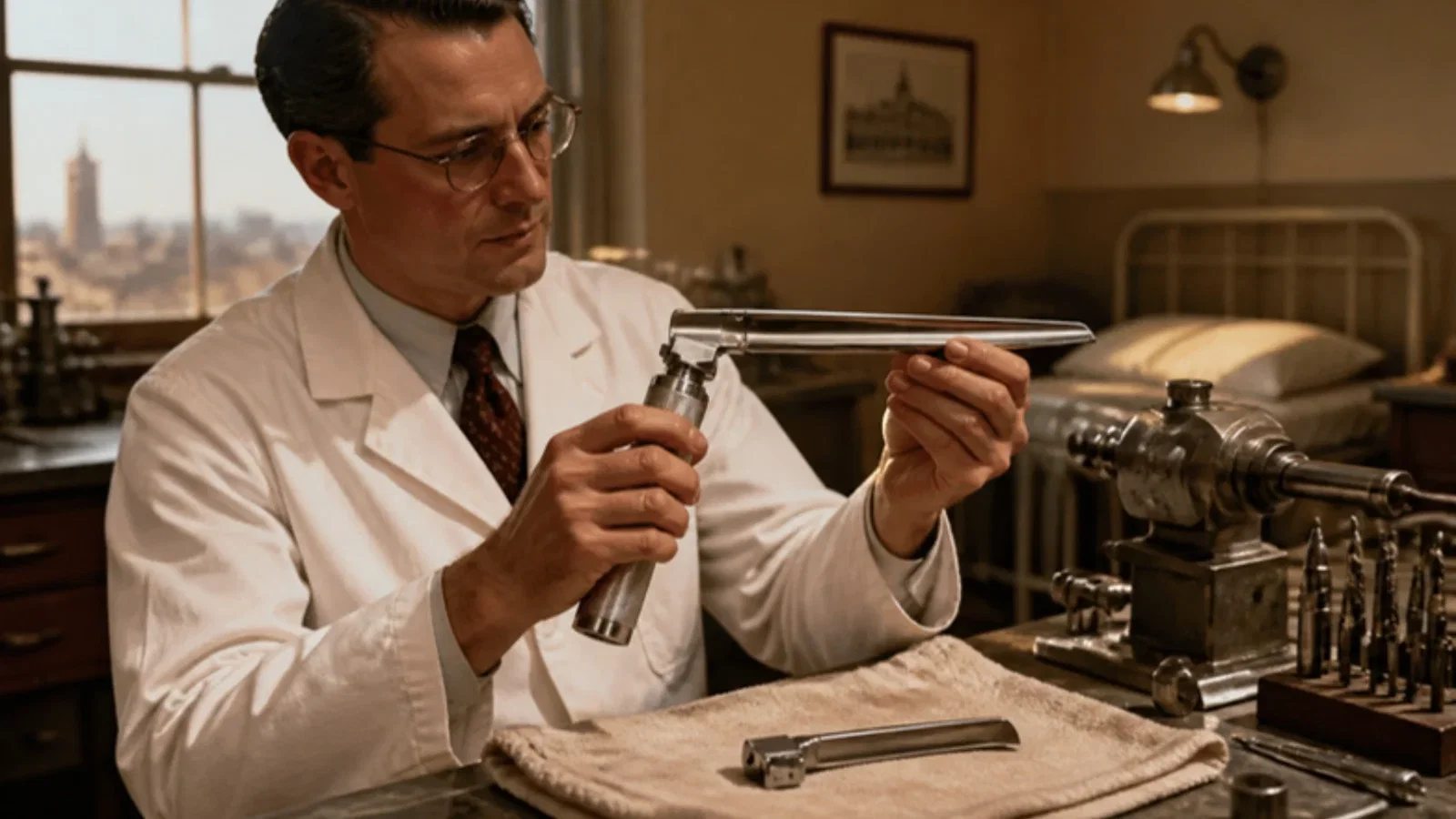
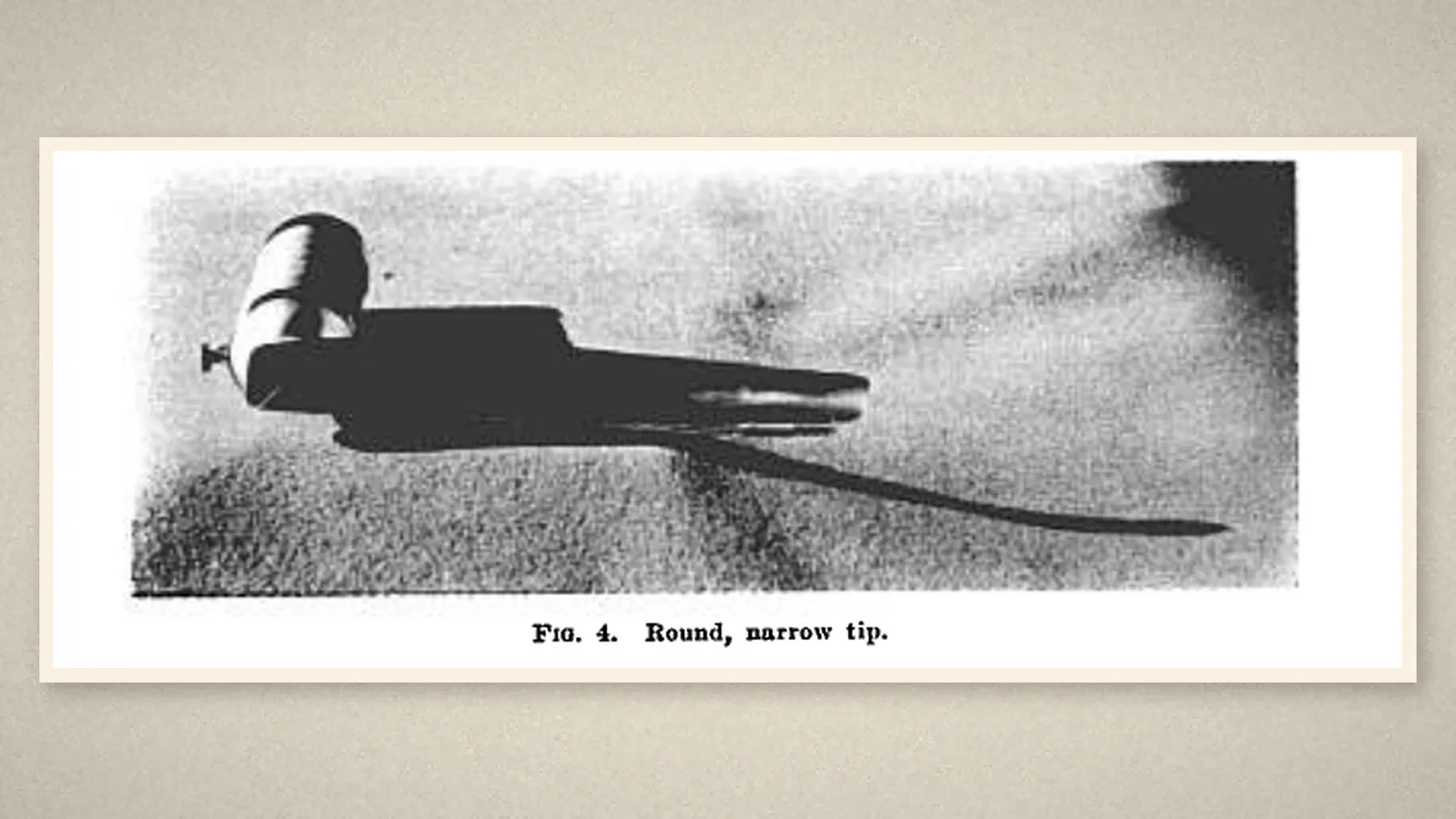
Robert A. Miller of San Antonio described in Anesthesiology a blade longer than the old medium size, rounded on the bottom, smaller at the tip and with an extra curve about two inches from the end; its shallow base still passed a 38 catheter, so the mouth need not open so widely and the mandible moved forward more freely, while the small round tip pressed a channel in the tongue through which the larynx was seen; one size served all patients except infants.
Reading Library · Anesthesia Epochs · 中文版
Watch the education video (for clinicians)
1941: Miller's Laryngoscope Blade · Anesthesia Epochs Education Series
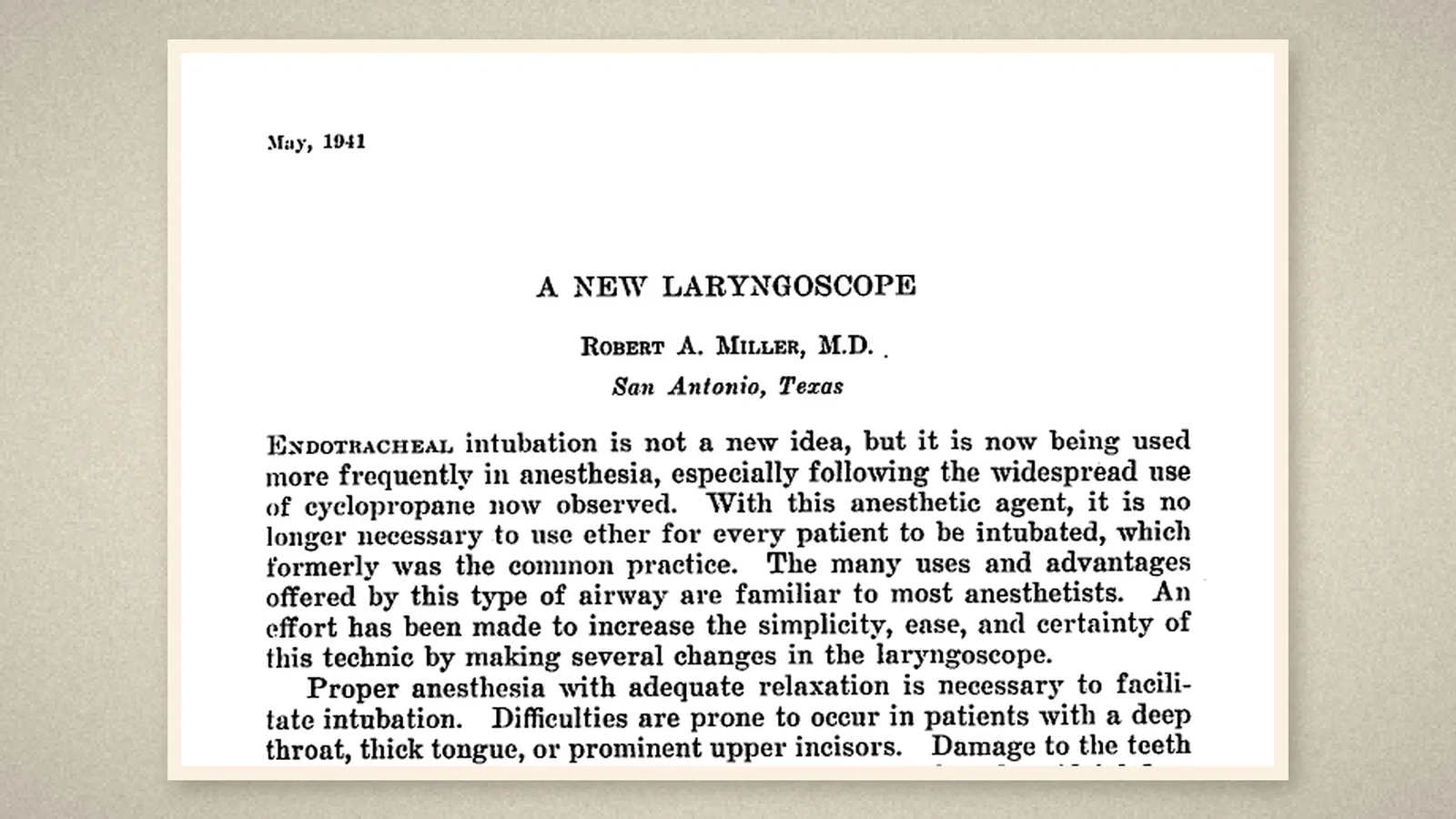
A straight laryngoscope blade carries Miller's name. The Australian Society of Anaesthetists (ASA) timeline records under 1941 that the Miller laryngoscope blade was "produced" by Dr Robert Arden Miller of San Antonio, Texas, and under 1946 a version for paediatric use. This article reads Miller's own four-page description, "A new laryngoscope", in Anesthesiology of May 1941. [1][2]
Why a new blade
Miller began with the context. "Endotracheal intubation is not a new idea, but it is now being used more frequently in anesthesia, especially following the widespread use of cyclopropane now observed. With this anesthetic agent, it is no longer necessary to use ether for every patient to be intubated." An effort had been made "to increase the simplicity, ease, and certainty of this technic by making several changes in the laryngoscope". [1]
Adequate relaxation was needed, and difficulties were "prone to occur in patients with a deep throat, thick tongue, or prominent upper incisors". Teeth, natural or artificial, were easily damaged "when they are employed as a fulcrum and the laryngoscope as a lever". Miller listed the faults of "the anesthetist's laryngoscope commonly used". It was too thick at the base, which raised the danger to the teeth. Its tip often lacked the right shape to lift the epiglottis, and the blade was often too short. Its curve was too near the end, while "its flat bottom tends to push the tongue into the floor of the mouth". [1]
The design
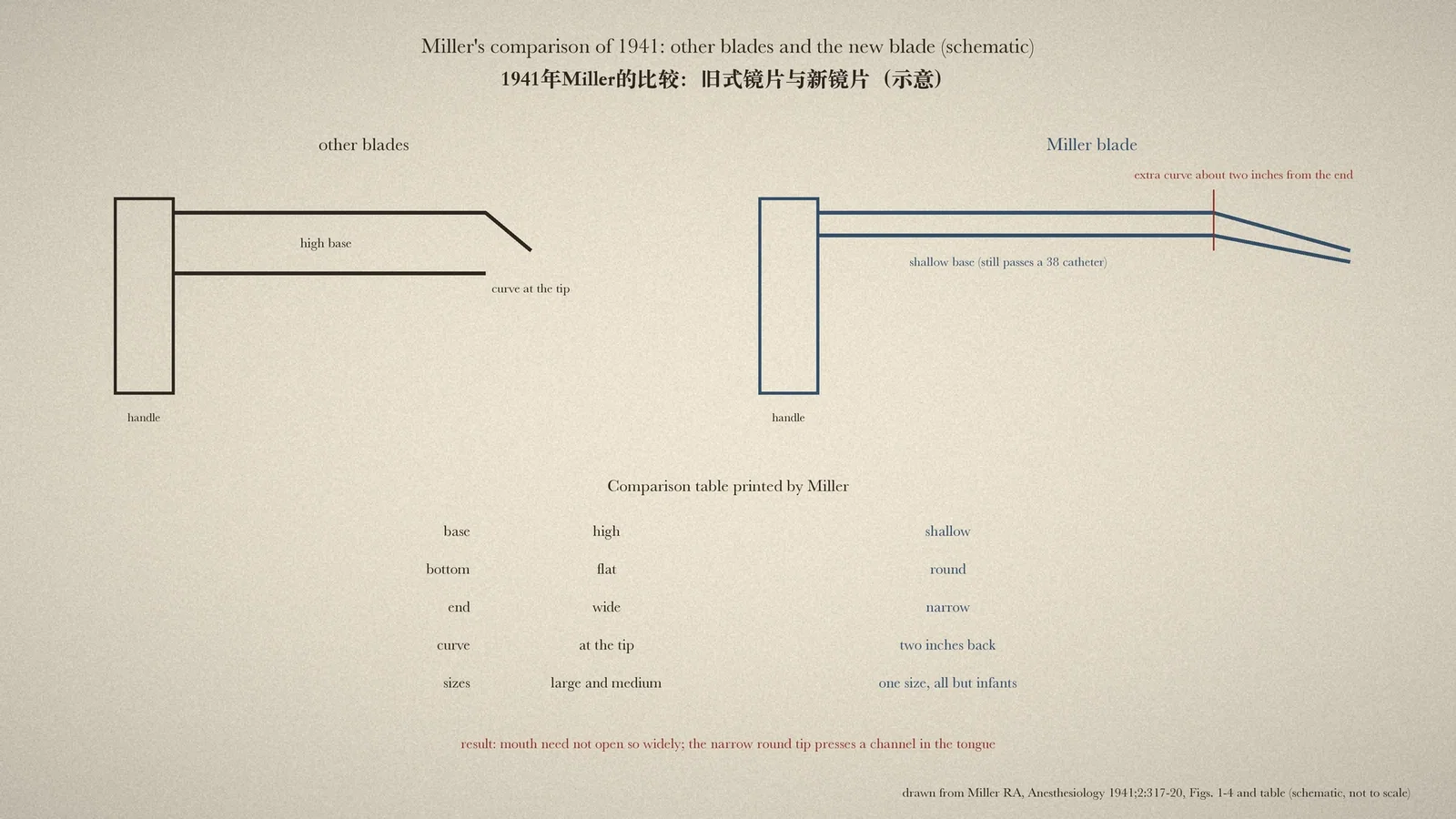
"The new model is longer than the old style medium sized blade. It is rounded on the bottom, smaller at the tip, and has an extra curve beginning about two inches from the end." The internal diameter of the base was shallow, but large enough to pass a 38 catheter. Therefore the mouth did not need to be opened as widely as with the older blade, which "allows a freer anterior movement of the mandible", itself an aid to exposure. "The small round end of the blade when pressed against the tongue makes a channel through which the larynx is exposed." The length suited "all patients except infants", so one blade was enough for ordinary use. The laryngoscope could be obtained from the Welch-Allyn Company of Auburn, New York. [1]
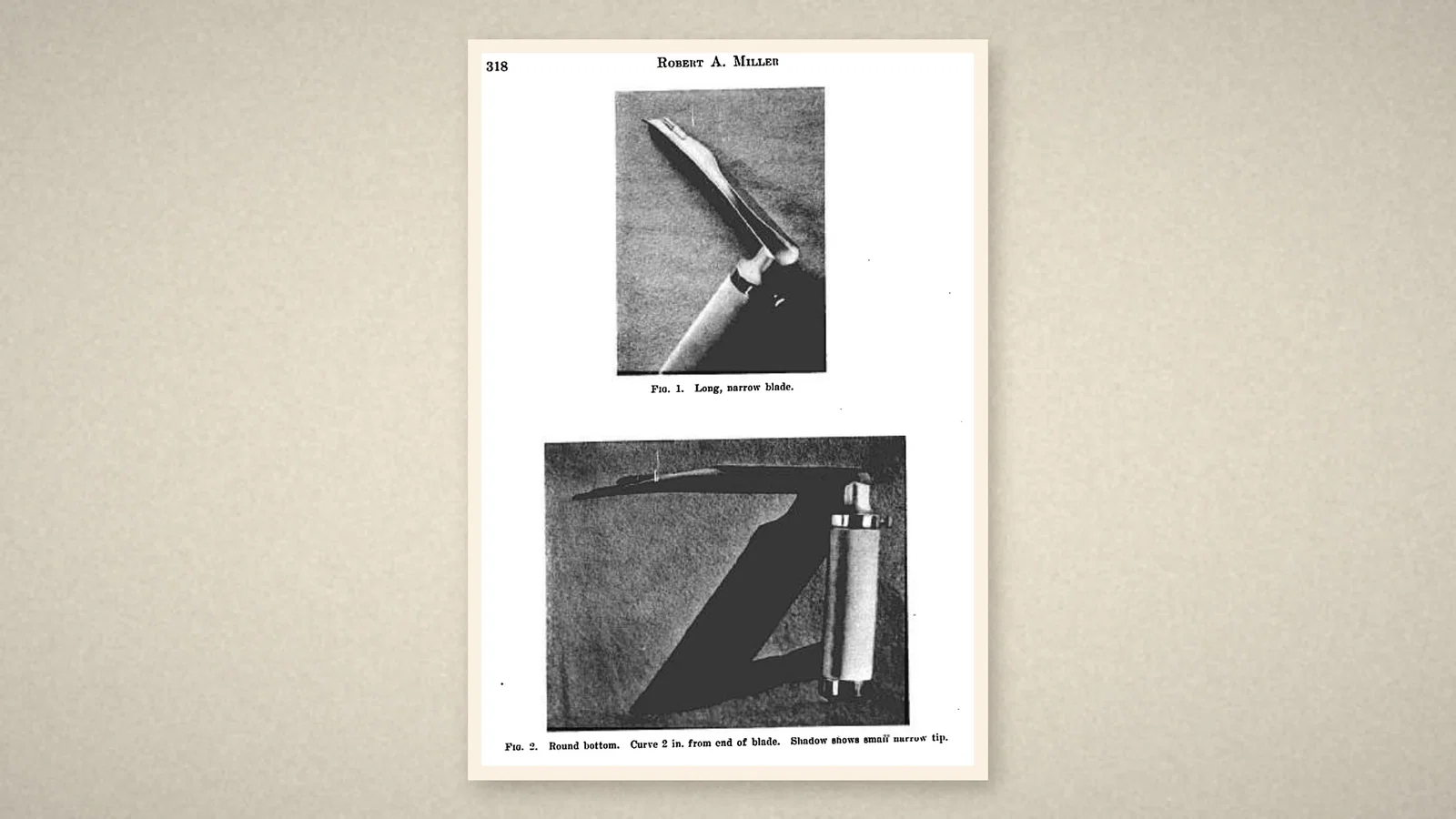
To protect the teeth, a lead plate could be moulded over them and the hard palate, "extending the stress to the maxillae instead of on the teeth". [1]
Using it
"No change from the usual technic of intubation is indicated by the use of this new laryngoscope." The anaesthetist would notice, however, that the mouth did not open as widely, so there was less room to work. A larger cuffed tube through the mouth was probably easier to place with a stylet than with forceps; a smaller tube might be easier by the nasal route, where the cords could be seen through the laryngoscope and the tube rotated into place. [1]
Miller closed with a table comparing "other blades" with the new one: high base against shallow, flat bottom against round, wide end against narrow, curve at the tip against "curve two inches back", and large and medium sizes against one size "useful in all patients except infants". The summary was modest: a blade "which has overcome most of the difficulties of intubation for the writer". [1]
What the record shows
Miller's paper shows a blade designed around the anatomy of difficult patients. A lower profile spared the teeth, a narrow rounded tip worked like a channel through the tongue, and the curve was moved two inches back from the end. The paper also shows how such devices were introduced in 1941: by one clinician, with photographs and a comparison table, judged by the author's own experience rather than by a trial.
Sources and reading limits
Read: Miller RA, Anesthesiology 1941;2:317-20, in full, including Figs. 1-4 and the comparison table; the ASA timeline entries for 1941 and 1946.
Not covered: Miller's 1946 paper on a blade for infants; Welch-Allyn catalogues; later evaluations of the blade. The paediatric blade of 1946 is stated only as the ASA's. The ASA gives the name as Robert Arden Miller; the paper prints Robert A. Miller. Miller's claims for the blade are the author's own, without case numbers. Quotations are from the English original.
Three illustrations are crops of pp. 317-19, including Figs. 1, 2 and 4; one is drawn from the paper and its table.
- Miller RA. A new laryngoscope. Anesthesiology. 1941;2(3):317-20. Anesthesiology
- Australian Society of Anaesthetists. Anaesthesia history timeline. 2024. ASA
Continue exploring
Related reading connects shared questions and contexts; it does not by itself establish historical influence.
- 1895: Kirstein Looks at the Vocal Cords Without a Mirror
- 1931: Guedel and Waters' Cuffed Endotracheal Tube
Anesthesia Epochs · The Source Room · About & Editorial Method
Published November 2, 2026. Sources and reading limits are stated above. Illustrations are labelled as original source images or AI-made. Historical accounts are educational; they are not current treatment instructions.