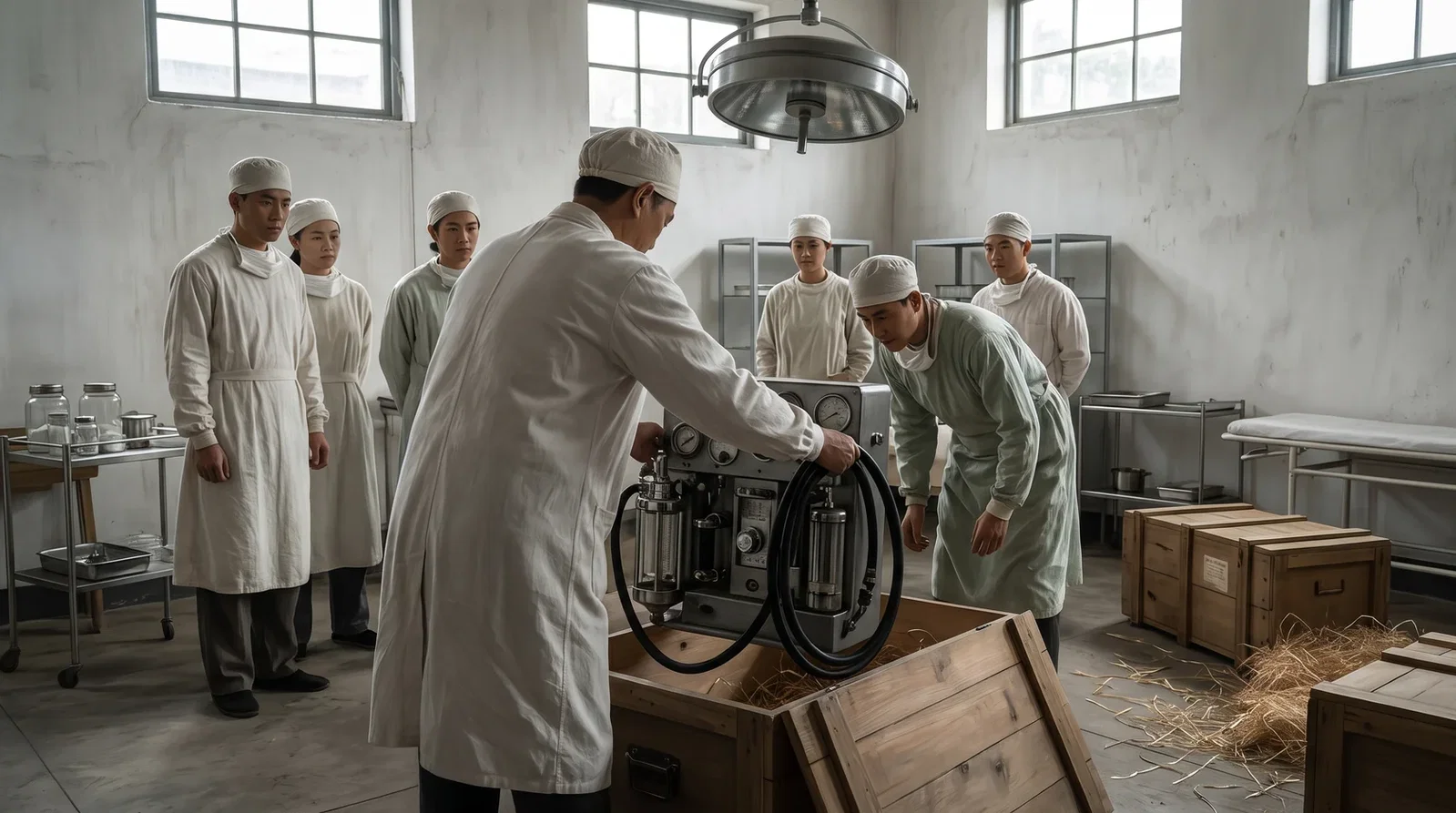
According to a 2023 Fudan University memorial article, excerpted from a book of profiles of Shanghai Medical College teachers, Wu Jue graduated from the National Shanghai Medical College in 1938, went in 1947 on a government scholarship to the University of Wisconsin to study clinical anaesthesia under Ralph M. Waters, and later headed anaesthesia at a hospital in Salt Lake City; in October 1950 Wu declined offers to stay and returned with cases of anaesthetic equipment and books, setting up and heading the anaesthesia department at Zhongshan Hospital. There were only two old machines and no tracheal tubes or monitors; Wu made tracheal tubes from rubber tubing and worked with Shanghai factories on domestic equipment. From 1952 anaesthesia was placed in the hands of specialist doctors, and Wu introduced American-style residency training: a year each in medicine and surgery, open-drop ether, a record and review for every case, and a daily 4 p.m. 'evening meeting'. Clinical Anesthesia appeared in 1954, its photographed preface signed February 1954. Larson's 2008 column also records Wu's training under Waters.
Reading Library · Anesthesia Epochs · 中文版
Watch the education video (for clinicians)
1950: Wu Jue at Zhongshan Hospital — Building a Department · Anesthesia Epochs Education Series
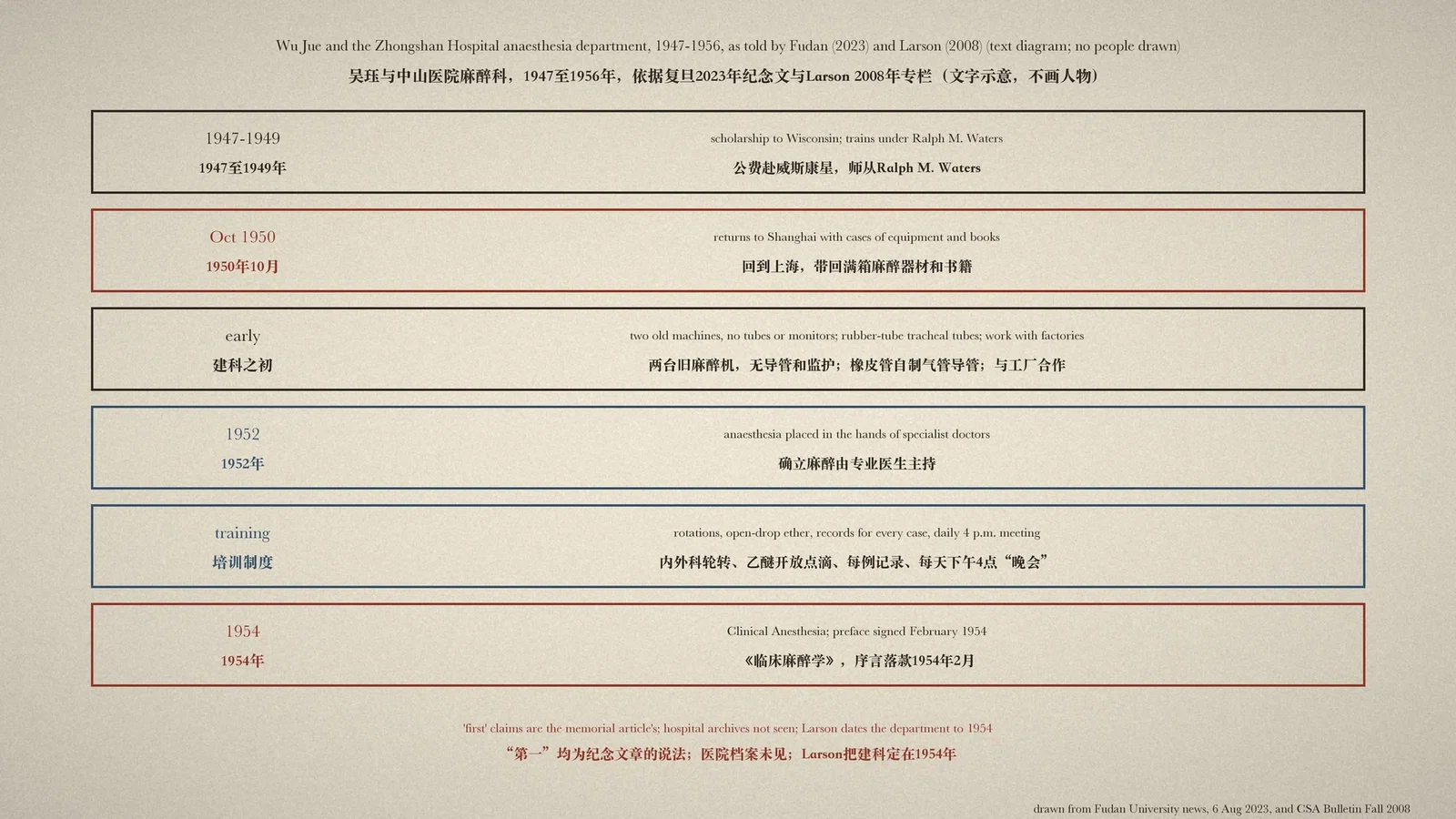
In hospitals today the anaesthetist is an obvious specialist. Yet according to a 2023 memorial article from Fudan University, before 1949 China had no full-time anaesthetists, and anaesthesia was given in passing by surgeons or nurses. One of the people who changed this was Wu Jue, who came back from the United States to Shanghai in October 1950. This article rests mainly on that memorial article and on a 2008 column by the American historian of anaesthesia Merlin D. Larson; both are secondary accounts. [1][2, p. 85]
Back from Madison
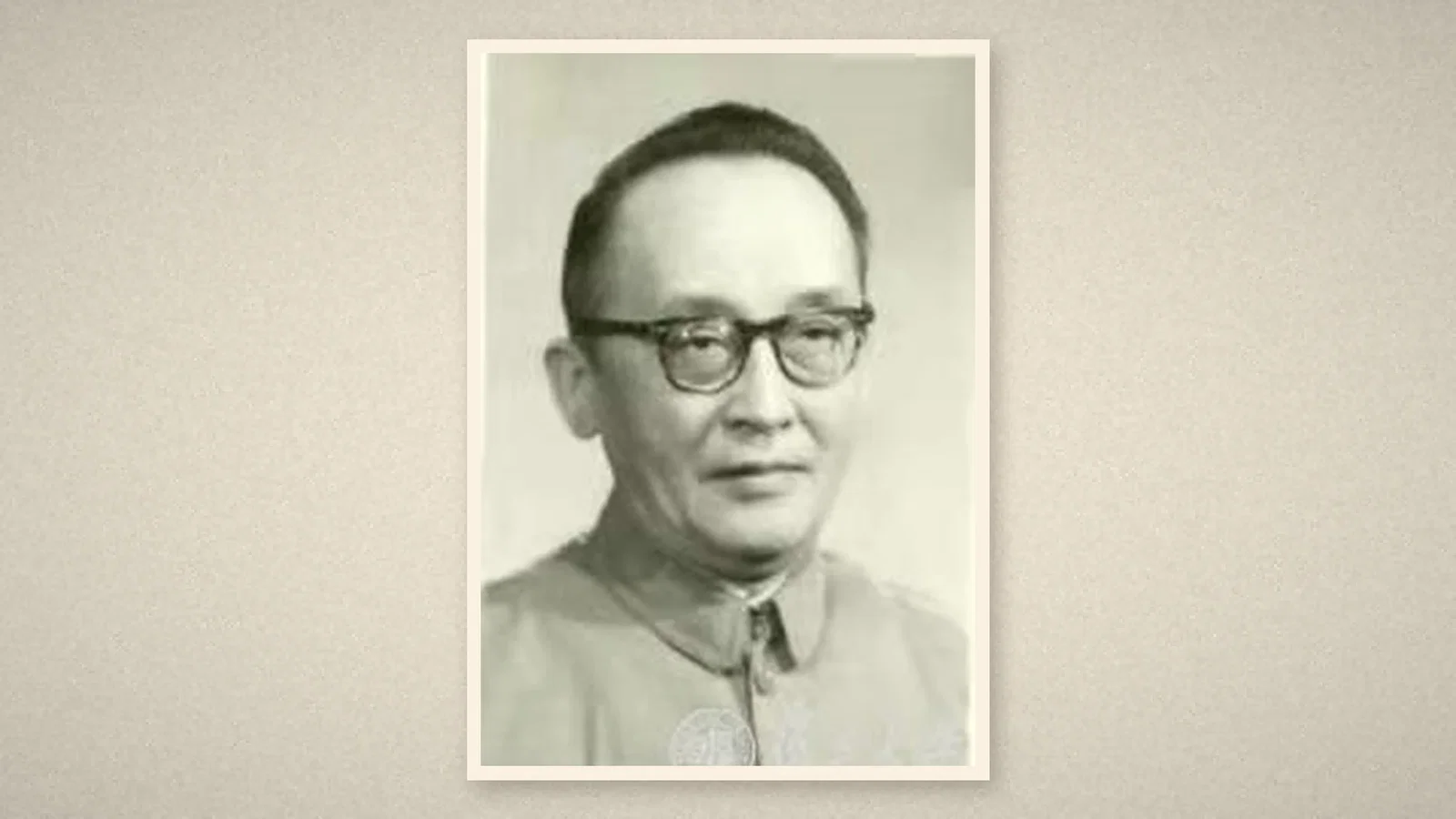
According to the Fudan article, Wu Jue (1912-2008), of Jiangyin in Jiangsu, graduated from the National Shanghai Medical College in 1938 and stayed to teach; in 1947, having done well in the government scholarship examination, Wu was sent to the hospital of the University of Wisconsin medical school to study clinical anaesthesia under Ralph M. Waters, and was later appointed head of anaesthesia at a Salt Lake City hospital affiliated with the University of Utah. In October 1950 Wu declined offers to stay and came home carrying, besides a few changes of clothes, cases of anaesthetic equipment and books. [1]
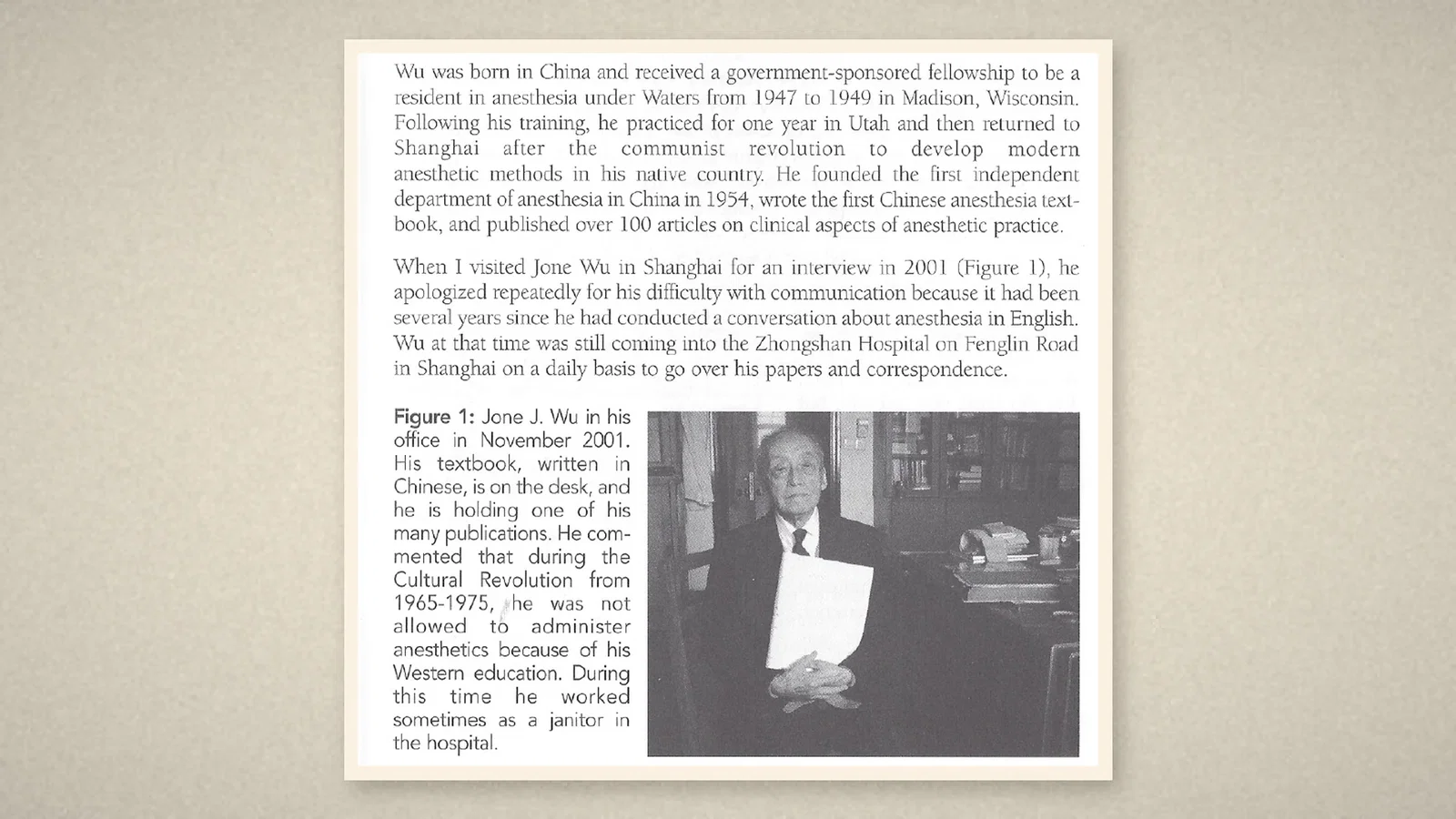
Larson's column tells much the same story: Wu was a resident under Waters in Madison from 1947 to 1949, practised for a year in Utah and returned to Shanghai to develop anaesthesia. When Larson visited in 2001, Wu still came daily to Zhongshan Hospital to go through papers and correspondence. [2, p. 85]
A department starting from nothing
The article says that Wu set up the anaesthesia department at Zhongshan Hospital and became its head. The hospital already had nearly ten operating rooms, but the equipment was very poor: apart from the few instruments Wu had brought back, there were only two old anaesthesia machines and no tracheal tubes, anaesthetic blood pressure gauges, ECG monitors or ventilators. As a stopgap Wu made the body of a tracheal tube from plain rubber tubing and glued on a home-made cuff. [1]
But China, Wu believed, needed its own anaesthesia industry, so Wu went round Shanghai's electronics, medical equipment, mould-making and drug factories, helping to design anaesthesia machines, ventilators, blood pressure gauges, monitors, tracheal tubes and epidural catheters and revising them in clinical use. The article says this gave China its "first generation" anaesthesia machine, the Tao Genji machine, but gives no year or model. [1]
A residency system
In 1952, the article says, a system in which anaesthesia was led by specialist doctors was established at Wu's urging, and planned training of anaesthesia staff began. Wu brought the strict American residency system into Zhongshan Hospital and adapted it to local conditions: residents rotated for a year each through medicine and surgery, spent eight months mastering open-drop ether, and wrote a detailed preoperative consultation, anaesthetic record and postoperative summary for every operation, treating each anaesthetic as a lesson in clinical pharmacology. [1]
Wu also set a rule of a daily 4 p.m. "evening meeting" to review that day's anaesthetics and plan the next day's; there were weekly literature reports, monthly oral reports, quarterly written summaries and a fixed Thursday afternoon lecture. Many of the visiting trainees, the article says, became leading anaesthetists in hospitals across the country. [1]
A textbook
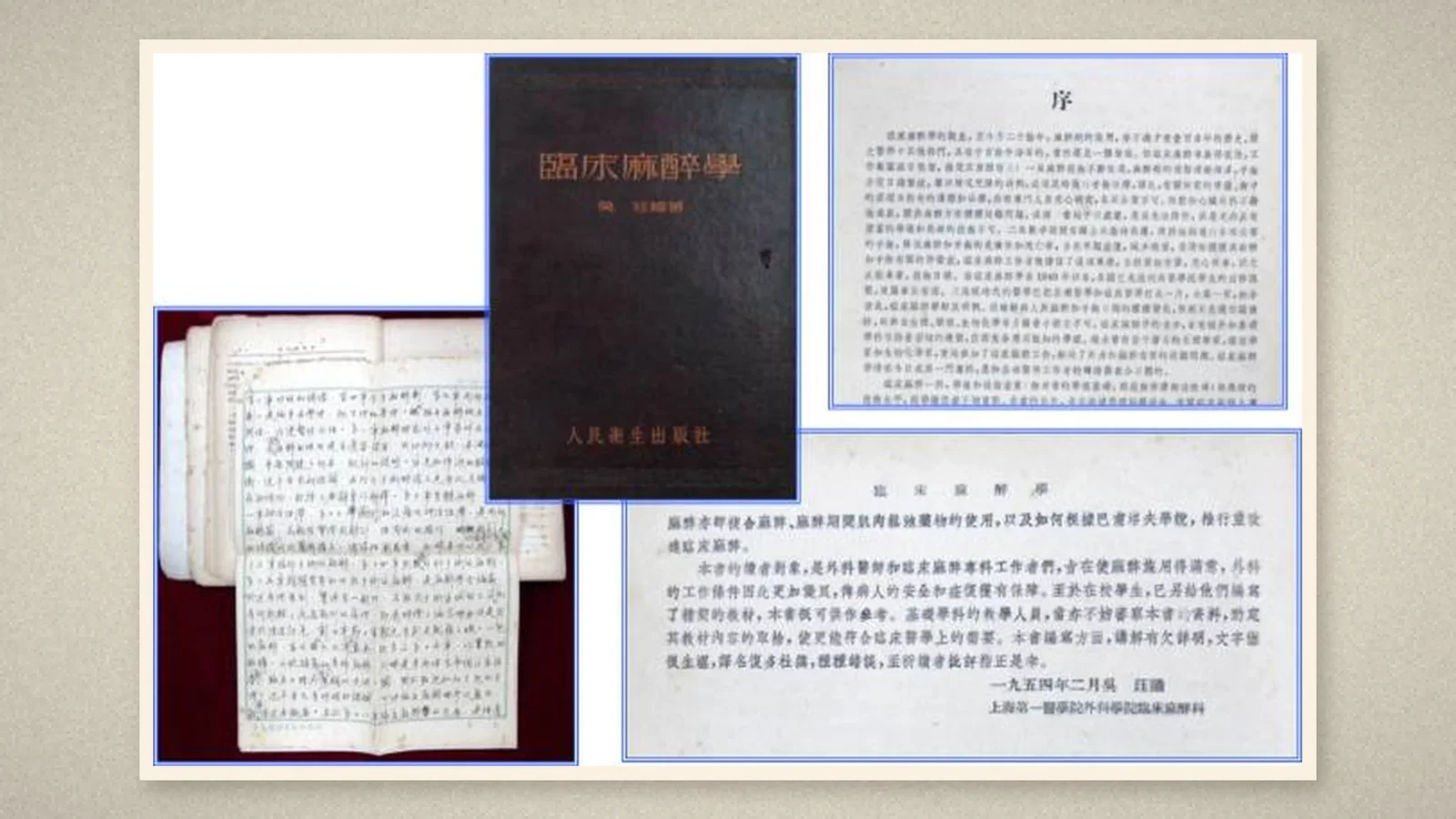
In 1954, the article continues, Wu wrote and published Clinical Anesthesia and formally established the anaesthesia teaching section of the medical college; in 1956 Wu became a professor of anaesthesiology. The article's illustration shows Clinical Anesthesia published by People's Medical Publishing House, with a preface signed "February 1954, Wu Jue, Department of Clinical Anaesthesia, Surgical College, Shanghai First Medical College". What Larson saw on Wu's desk in 2001 was the 1959 edition. [1][2, p. 86]
What the record shows
Building a specialty means more than opening a department: it needs people, equipment and textbooks, and above all a way of turning young doctors into anaesthetists. The most concrete and most worth keeping detail in the memorial article is exactly that: the daily 4 p.m. meeting and the anaesthetic record written for every case.
Sources and reading limits
Read: the Fudan University news article of 6 August 2023 on Wu Jue in full (by Jin Lin and Cang Jing, excerpted from a book of profiles of Shanghai Medical College teachers) with its two illustrations (photographs of the cover, preface and manuscript of Clinical Anesthesia, and a portrait of Wu); Larson's column in the CSA Bulletin, Fall 2008, pp. 85-86.
Not covered: Zhongshan Hospital or Shanghai Medical College archives on the founding of the department and the 1952 system; Clinical Anesthesia itself and its first-edition copyright page; the book the memorial article is excerpted from; factory or object records of the Tao Genji machine; Chinese studies of the history of Chinese anaesthesiology.
Limits: the Fudan article is a commemorative piece by the university's medical publicity office and repeatedly calls Wu's achievements national firsts (first department, first monograph, first professor of anaesthesiology); these are the article's claims; this library already has an article on Shang Deyan's department of 1949, so the "first department" claim is contested. Larson dates the independent department to 1954, while the Fudan article implies a department soon after the 1950 return; the article keeps both. The textbook date follows the preface shown in the illustration (February 1954); Larson saw the 1959 edition. No doses or patients are involved.
Of four illustrations, two are taken from the Fudan article (the photographs of Clinical Anesthesia and a portrait of Wu) and one is a crop of the CSA Bulletin, Fall 2008, p. 85; one is a text diagram drawn from the sources, with no people drawn.
- Jin L, Cang J. Memorial article on Wu Jue ("Remembering grade-three professors" series, excerpted from a book of profiles of Shanghai Medical College teachers). Fudan University News. 6 August 2023. Fudan University News
- Larson MD. Guedel's anesthetic depth chart, Jone J. Wu, and Noel A. Gillespie. CSA Bulletin. Fall 2008:85-9. PDF
Continue exploring
Related reading connects shared questions and contexts; it does not by itself establish historical influence.
- 1943: Gillespie Adds Nine Reflexes to Guedel's Depth-of-Anaesthesia Chart
- 1949: Shang Deyan Organises Anesthesia and Its Teaching in Lanzhou
Anesthesia Epochs · The Source Room · About & Editorial Method
Published November 4, 2026. Sources and reading limits are stated above. Illustrations are labelled as original source images or AI-made. Historical accounts are educational; they are not current treatment instructions.