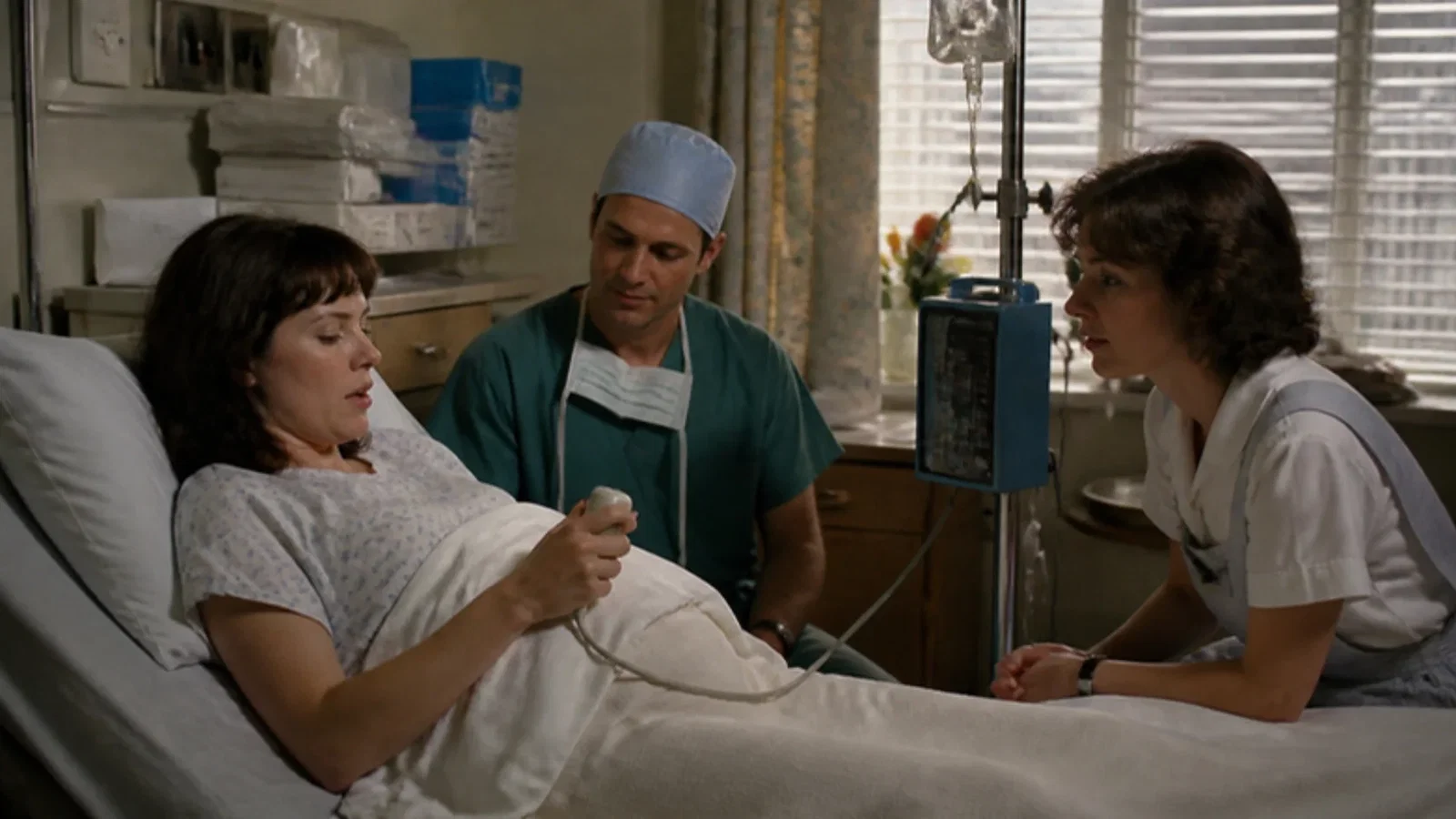
David R. Gambling and colleagues at the University of British Columbia and Grace Hospital reported in the Canadian Journal of Anaesthesia a randomised, single-blinded, placebo-controlled study in 27 nulliparous women in labour: one group had a low background infusion and could add boluses on demand; the other had the same button deactivated and a larger fixed infusion; pain relief was similar, the self-dosing group used significantly less local anaesthetic, and the women valued control of their own pain relief; the authors stated that PCEA in labour had not been described before.
Reading Library · Anesthesia Epochs · 中文版
Watch the education video (for clinicians)
1988: Patient-Controlled Epidural Analgesia — Gambling in Vancouver · Anesthesia Epochs Education Series
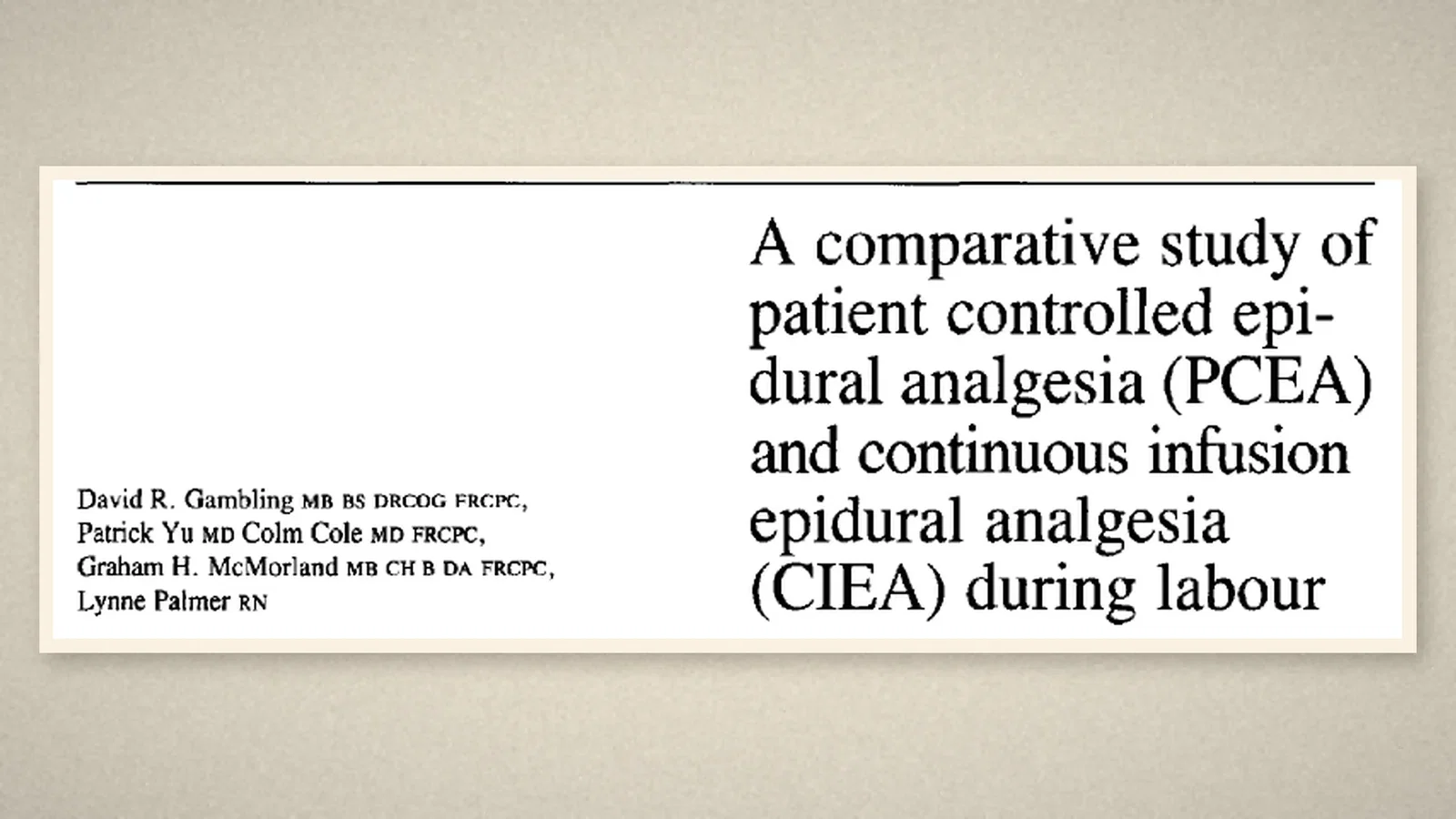
Who should decide how much epidural analgesia a woman in labour receives? The Australian Society of Anaesthetists (ASA) timeline records under 1988 that patient-controlled epidural analgesia (PCEA) was "introduced" by Dr David R. Gambling and colleagues in Canada. This article reads their paper: "A comparative study of patient controlled epidural analgesia (PCEA) and continuous infusion epidural analgesia (CIEA) during labour", by David R. Gambling, Patrick Yu, Colm Cole, Graham H. McMorland and Lynne Palmer of the University of British Columbia and Grace Hospital, Vancouver, in the Canadian Journal of Anaesthesia of 1988, presented in part at the Society for Obstetric Anesthesia and Perinatology meeting in Halifax in May 1987. [1][2]
Why try it
The authors recalled that patient-controlled analgesia "in obstetrics was first described by Scott (1970)", with an intravenous infusion of meperidine whose rate was varied by a hand-held clamp, and that later studies suggested women in labour "were capable of controlling their own pain relief". Epidural infusions gave better analgesia than intravenous narcotics, and continuous infusion was more consistent than intermittent top-ups by a physician or midwife. But stronger infusions caused more motor block, weaker ones often needed supplements, and "patients receive a constant infusion of local anaesthetic, without regard to their individual needs". Patient-controlled epidural infusion of local anaesthetic in labour, the authors wrote, "has not been described previously". [1]
The study
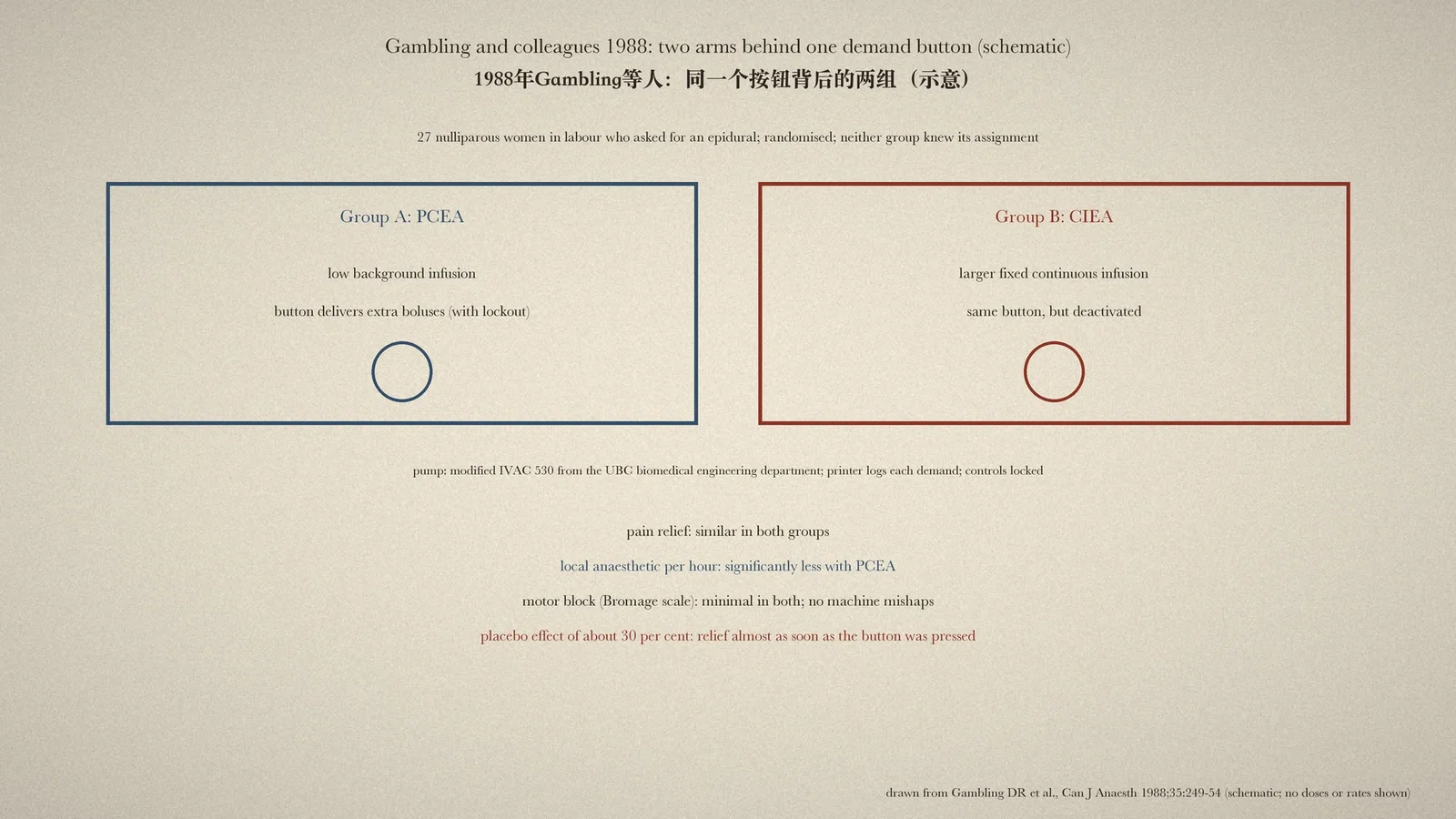
Twenty-seven nulliparous women at term, in established low-risk labour, who had requested epidural analgesia, took part after ethics approval and informed consent. The pump was built by the university's biomedical engineering department from a modified IVAC 530; infusion rate, bolus dose and lockout were programmable, a printer recorded every demand, and the program controls were "locked behind a plexiglass door". [1]
Patients were randomised. Group A had a low background infusion and could trigger extra boluses, within a lockout. Group B had the same apparatus delivering a larger fixed infusion, "but with the demand-button deactivated". Neither group knew its assignment, and both were told to press the button as soon as they needed more relief. Pain was scored on a visual analogue scale, sensory level with ice, and motor block "using Bromage's scale". [1]
Results
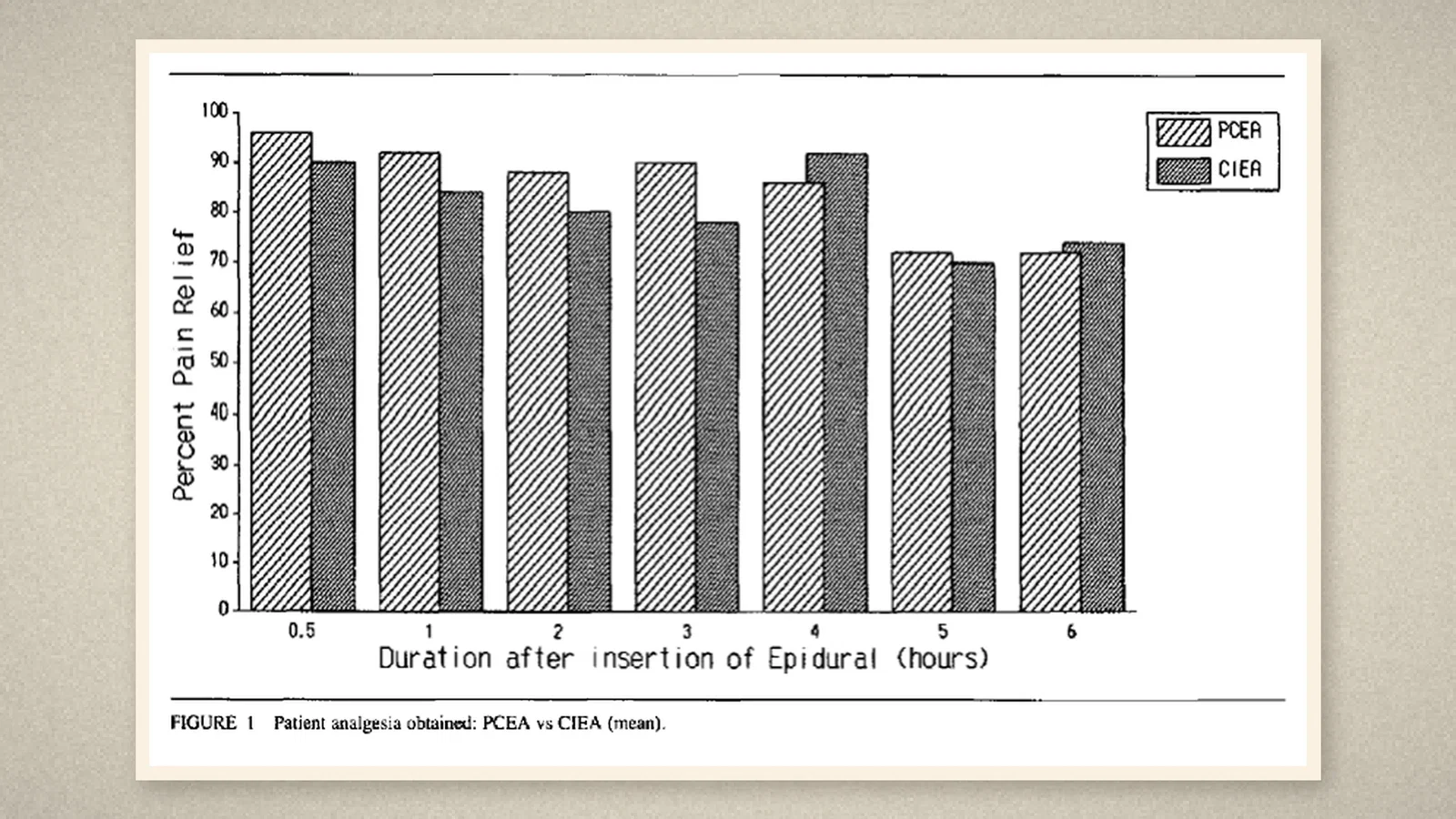
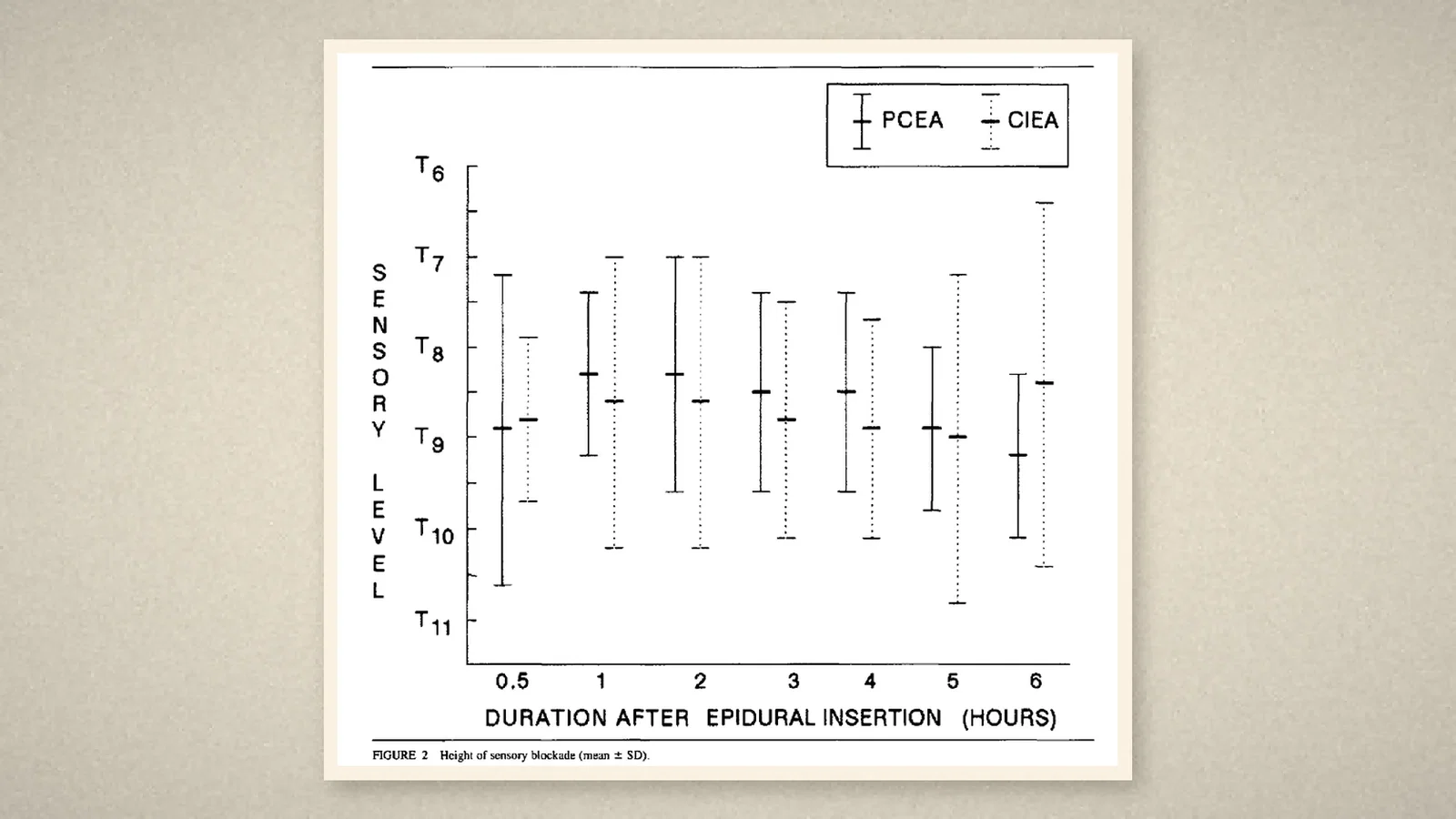
Two women were withdrawn, one because of machine failure. "Pain relief was similar in both groups." Women in the PCEA group made more demands per hour, "as they had to titrate their analgesia, but overall required less bupivacaine". Motor block was minimal in both groups, and "there were no mishaps due to tampering with or malfunction of the PCA machine". Some women were content with partial relief while others aimed for none, which "suggests that patient satisfaction does not necessarily equate with the degree of analgesia". A marked placebo effect, about 30 per cent, appeared in both groups, as considerable relief "almost immediately after pushing the demand button". [1]
The authors' judgement
The authors concluded that women in labour were capable of reaching an optimal level of analgesia themselves, with a lower overall dose, and that PCEA allowed "greater patient participation and control". They named the costs: expensive infusion systems, extra effort to instruct patients and nurses, a technique "not without risk" despite safety features, and the need to select patients who understood epidural analgesia and were willing to accept some control; those exhausted after a long labour might not be the best candidates. Further work was needed on concentrations, bolus sizes and lockouts. [1]
What the record shows
The Vancouver study moved control of epidural dosing, within limits set by the anaesthetist, to the woman in labour. Its design shows the care that idea required: a sham button to blind the comparison, locked controls, a printed record of every demand, and an honest note that pressing a button relieved pain partly by itself.
Sources and reading limits
Read: Gambling DR, Yu P, Cole C, McMorland GH, Palmer L, Can J Anaesth 1988;35:249-54, in full from the Springer PDF (text layer), with page images of pp. 249, 251 and 252; the ASA timeline entry for 1988.
Not covered: Scott's 1970 paper; the earlier PCA apparatus paper the authors modified; later PCEA studies. The authors' "has not been described previously" and the ASA's "introduced" are quoted as theirs. The study was small and its conclusions are the authors'. Concentrations, bolus volumes, infusion rates, lockout times and hourly doses are not repeated. Patients are not identified. Quotations are from the English original.
Three illustrations are crops of pp. 249, 251 and 252, including Figures 1 and 2; one is drawn from the methods and results.
- Gambling DR, Yu P, Cole C, McMorland GH, Palmer L. A comparative study of patient controlled epidural analgesia (PCEA) and continuous infusion epidural analgesia (CIEA) during labour. Can J Anaesth. 1988;35(3):249-54. Springer
- Australian Society of Anaesthetists. Anaesthesia history timeline. 2024. ASA
Continue exploring
Related reading connects shared questions and contexts; it does not by itself establish historical influence.
- 1965: Bromage Grades Epidural Motor Block in Four Steps
- 1847: Let the Woman in Labour Hold the Ether Sponge
Anesthesia Epochs · The Source Room · About & Editorial Method
Published November 2, 2026. Sources and reading limits are stated above. Illustrations are labelled as original source images or AI-made. Historical accounts are educational; they are not current treatment instructions.