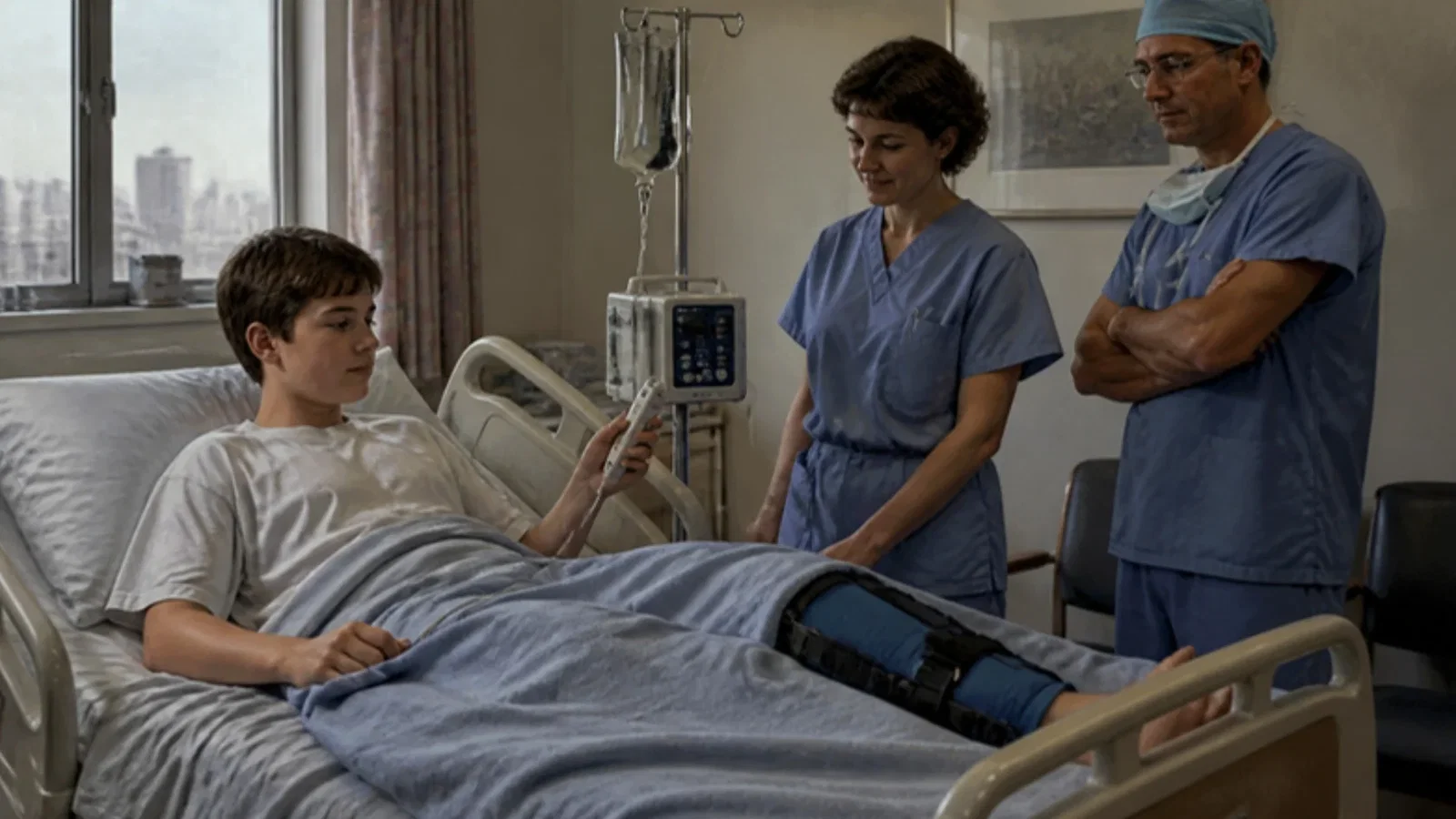
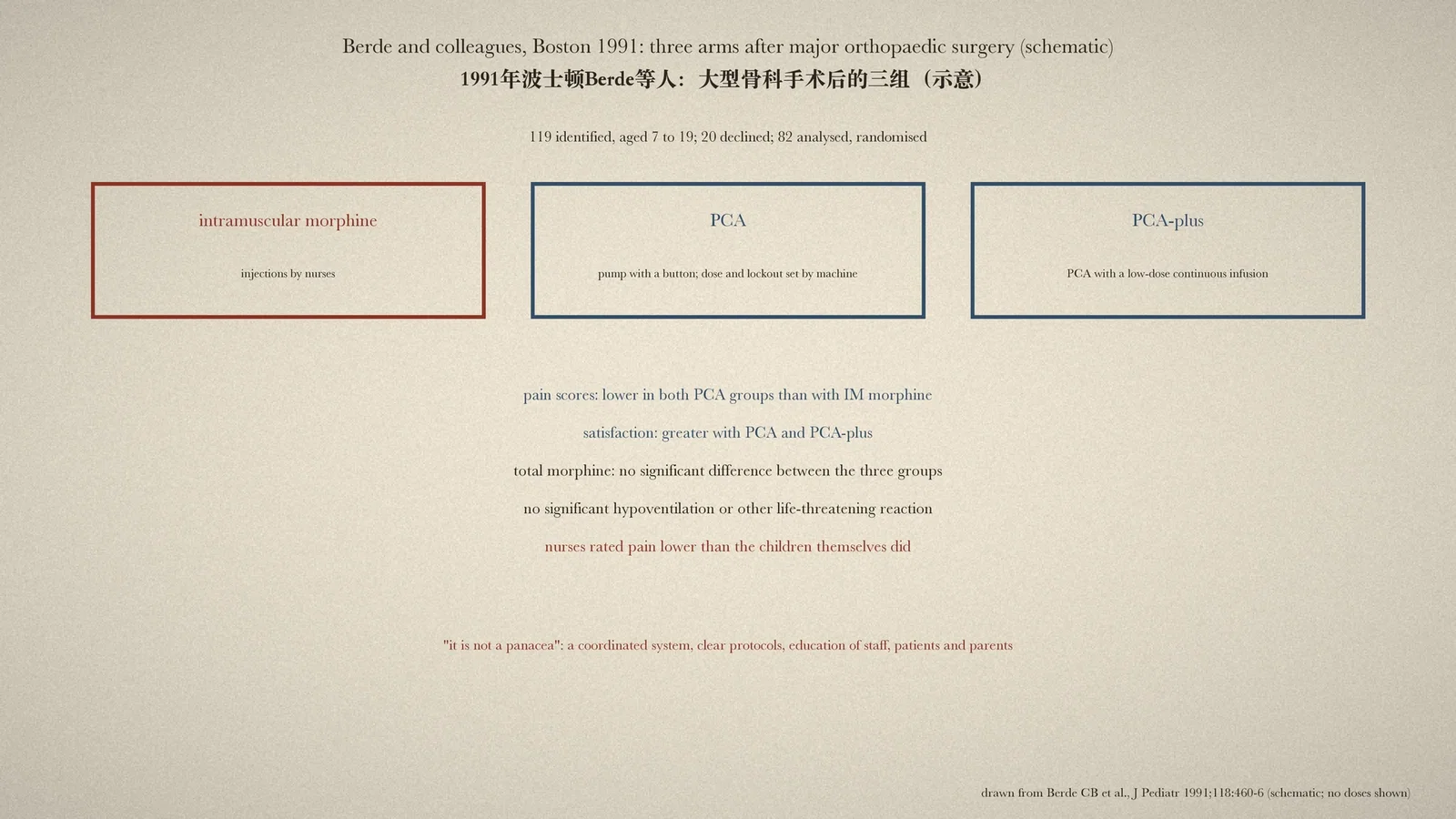
Charles B. Berde and colleagues of the departments of anesthesia and psychiatry at Children's Hospital and Harvard Medical School, Boston, reported in the Journal of Pediatrics that 82 children and adolescents aged 7 to 19 after major orthopaedic surgery were randomised to intramuscular morphine, patient-controlled analgesia (PCA), or PCA with a low continuous infusion; both PCA groups had lower pain scores and greater satisfaction, morphine use was equal, opioid complications did not increase, and the authors insisted that PCA was not a panacea and needed a coordinated system of management and education.
Reading Library · Anesthesia Epochs · 中文版
Watch the education video (for clinicians)
1991: Berde's Paediatric PCA Trial — Boston Children's Hospital · Anesthesia Epochs Education Series
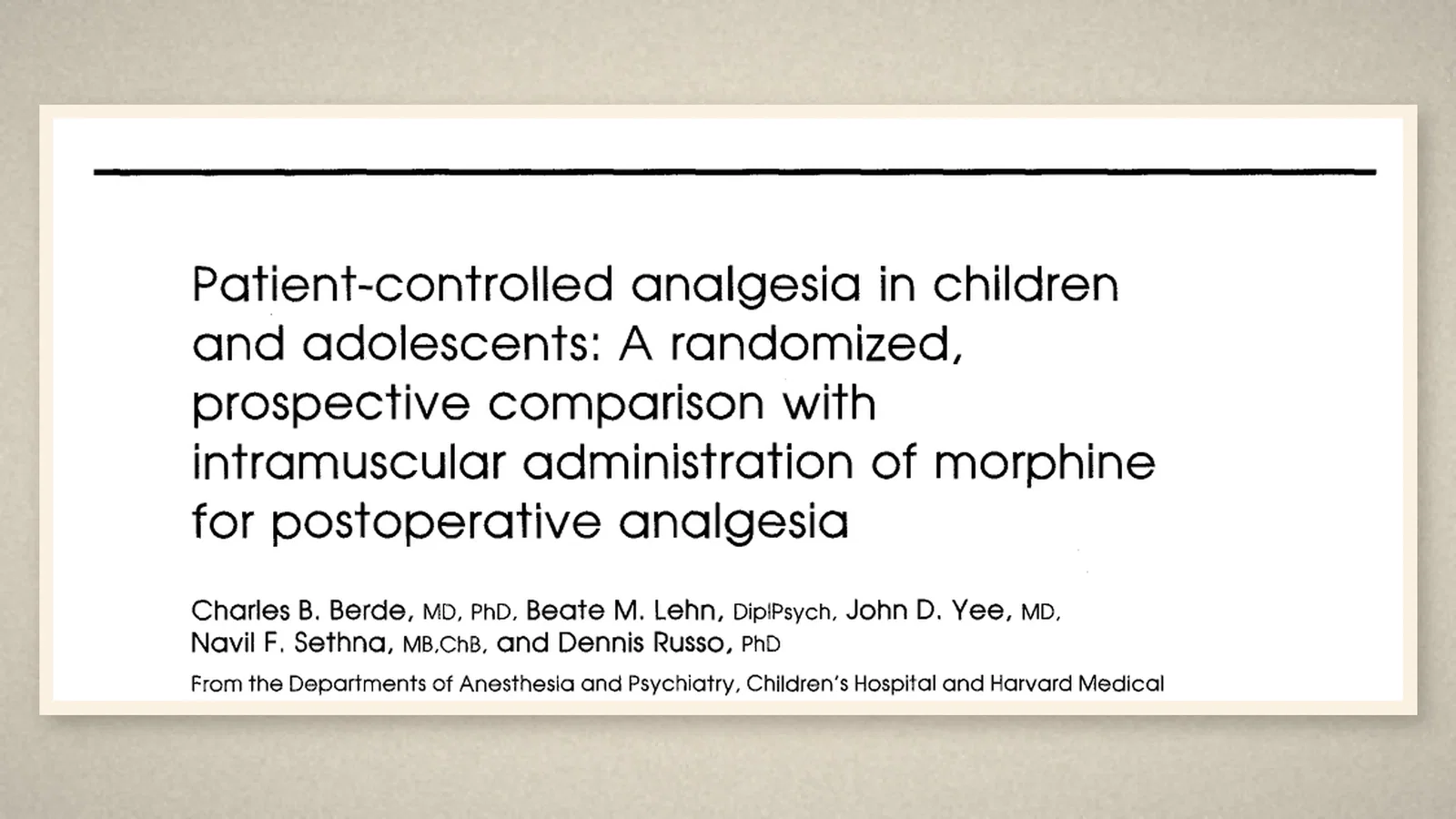
Can a child be trusted with the button? The Australian Society of Anaesthetists (ASA) timeline answers with two entries. Under 1985 it records the founding at Boston Children's Hospital of a unit "known as the 'Pain Treatment Center'", which it calls "the first paediatric pain unit in the world"; under 1990 it records that the Center conducted a randomised trial of patient-controlled analgesia in children, with results "published in the Journal of Pediatrics in 1991". This article reads that paper: Charles B. Berde, Beate M. Lehn, John D. Yee, Navil F. Sethna and Dennis Russo, "Patient-controlled analgesia in children and adolescents: a randomized, prospective comparison with intramuscular administration of morphine for postoperative analgesia", Journal of Pediatrics, March 1991. [1][2]
The problem with the needle
The authors came from the Departments of Anesthesia and Psychiatry at Children's Hospital and Harvard Medical School, and from the Department of Behavioral and Pediatric Programming of NewMedico Associates in Boston. Their introduction set out the usual practice plainly: "Severe postoperative pain in children and adolescents is most commonly managed by intramuscular injections of opioids." Such injections could cause fluctuating drug levels and "cycles of pain, comfort, and sedation", and the fear and distress caused by frequent injections might lead children to underreport their pain. Continuous intravenous infusions gave steadier levels, but patients varied widely in what they needed. [1, p. 460]
Patient-controlled analgesia (PCA) offered another route: "a computer-driven pump with a button that the patient may press" to receive a small dose. The patient controlled how often; the machine was programmed to limit the size of each dose, the minimum wait between doses (the lockout interval) and the total over a period. Earlier reports in children were encouraging, but, the authors noted, most of the children studied "have not been randomly assigned to treatment and control groups". [1, p. 461]
The trial
Patients were enrolled from February to July 1989 at Children's Hospital, Boston, under a protocol approved by the committee on clinical investigation, with parental consent and patient assent. Eligible patients were aged 7 to 19 and scheduled for elective orthopaedic surgery with significant pain expected; orthopaedic operations were chosen to standardise the type of pain. Each candidate was screened for the ability to understand PCA and a visual analogue scale, and practised by marking the pain of a mosquito bite, an injection or a fall from a bike. [1, p. 461]
Of 119 patients identified, 20 (or their parents) declined: ten objected to the burden of a study, four gave medical reasons, five gave no reason, and one "because of concerns about the safety of the PCA machine". Of the 99 who agreed, 17 did not complete the protocol, and 82 were analysed. A random numbers table assigned them to intramuscular morphine given by nurses, PCA alone, or PCA with a low-dose continuous background infusion ("PCA-plus"). Nurses were trained in PCA before the study began, and anaesthesia and recovery-room care followed a standard protocol. [1, p. 461-2]
What the children reported
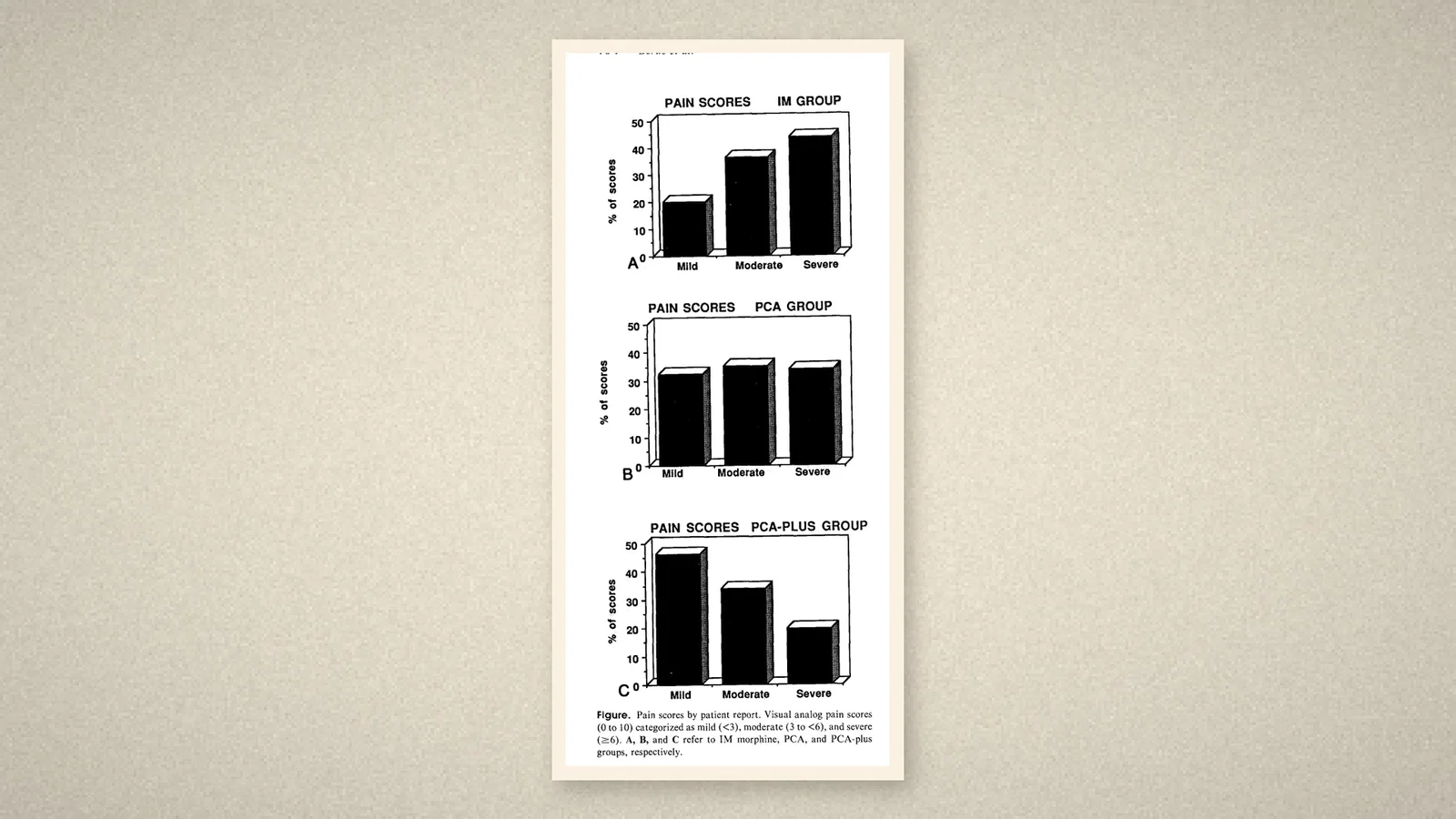
The Figure on p. 464 shows the result most directly: the share of each group's own pain scores that fell in the mild, moderate and severe ranges. With intramuscular morphine the bars rise towards severe; with PCA-plus they fall. Both PCA groups had significantly lower patient-reported pain than the intramuscular group. Nurses' scores showed the same pattern, but nurses "rated the patient's pain lower than did the patients themselves", a gap the authors measured and found significant. [1, p. 464]
The three groups received similar amounts of morphine once weight and time were taken into account. No group had clinically significant respiratory depression; nausea, urinary retention, the return of eating and the length of stay did not differ; and patients on PCA-plus reported less sedation than those receiving injections. Satisfaction was high in all three groups: the abstract summarises both PCA groups as more satisfied, while the results show that only the PCA-plus group differed significantly from the other two. [1, p. 460, 464-5]
Not a panacea
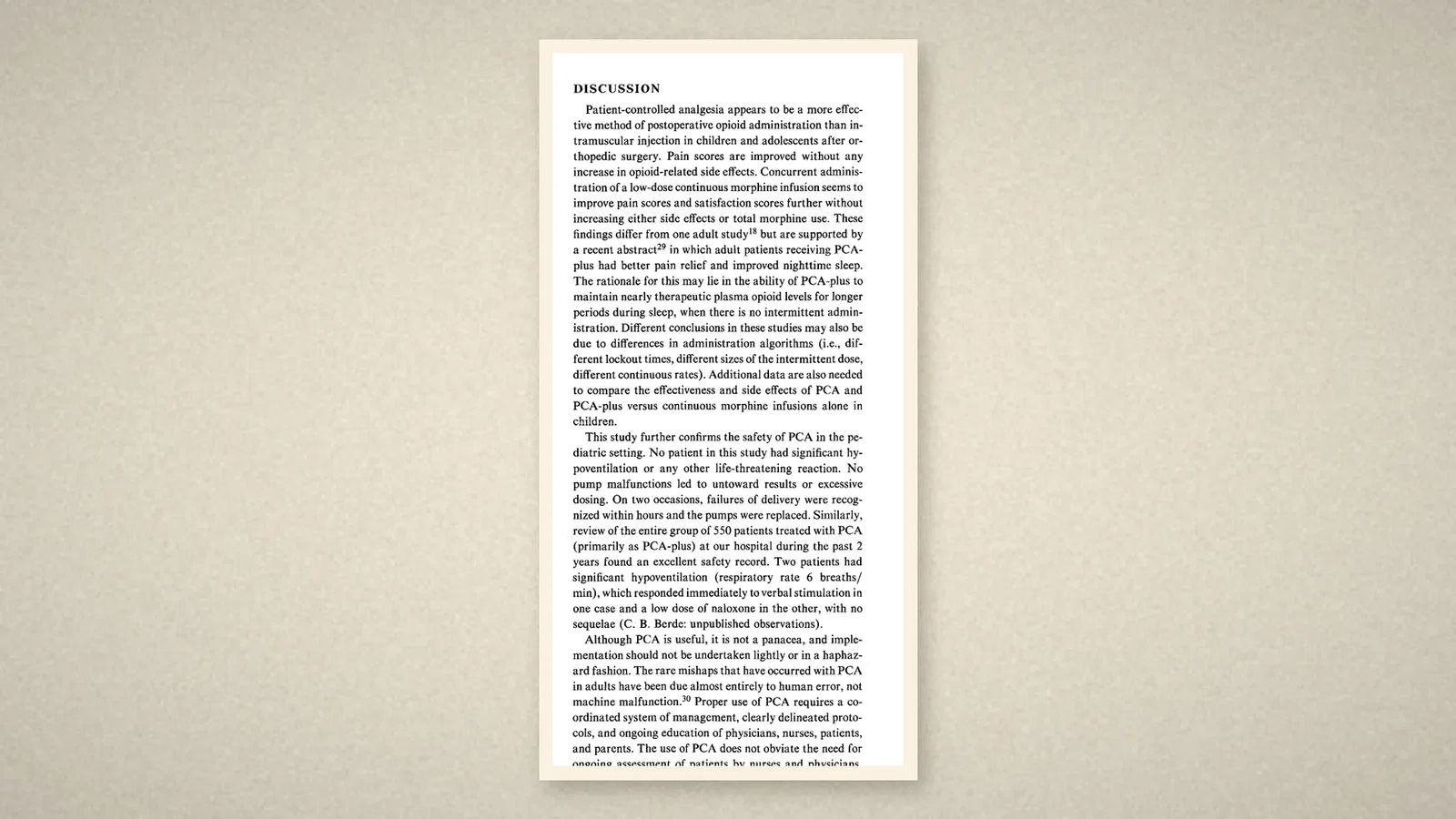
The discussion began: "Patient-controlled analgesia appears to be a more effective method of postoperative opioid administration than intramuscular injection in children and adolescents after orthopedic surgery." No patient had significant hypoventilation or another life-threatening reaction, and no pump malfunction caused harm. The authors added an unpublished review of 550 patients treated with PCA at the hospital over two years, with an excellent safety record. [1, p. 465]
Then came the caution that gives the paper its lasting value. "Although PCA is useful, it is not a panacea", and it should not be introduced "lightly or in a haphazard fashion". The rare mishaps with PCA in adults had been "due almost entirely to human error, not machine malfunction". Proper use required "a coordinated system of management, clearly delineated protocols, and ongoing education of physicians, nurses, patients, and parents", and the button did not remove the need for nurses and physicians to keep assessing the patient. Children, like adults, often did not press until pain was gone, and the authors did not claim to know why. [1, p. 465]
What the record shows
The trial asked whether children could hold the button, and it answered with a design rather than an anecdote: a random allocation, a pain scale practised in advance, and a comparison with the standard treatment. Its own numbers show why the question mattered: the nurses consistently judged pain lower than the children did. The authors' closing warning puts the device in its place. The pump is safe within a system of protocols, training and observation, not on its own.
Sources and reading limits
Read: Berde CB, Lehn BM, Yee JD, Sethna NF, Russo D, J Pediatr 1991;118:460-6, in full; the ASA timeline entries for 1985 and 1990.
Not covered: original records of the founding of the Pain Treatment Center at Boston Children's Hospital in 1985 (hospital history or annual reports; not covered, so the founding date and the unit's name rest on the ASA alone); the separate publication on psychological and developmental modifiers that the paper announces; the earlier uncontrolled paediatric PCA reports. The ASA dates the trial to 1990; the paper shows enrolment in 1989, submission in May 1990 and publication in March 1991. The ASA's "first paediatric pain unit in the world" and its description of the trial as the world's earliest of its kind are the ASA's claims. The 550-patient review is the authors' unpublished observation. Morphine doses, lockout times, infusion rates and naloxone doses are not repeated. Patients are not identified. Quotations are from the English original.
Three illustrations are crops of pp. 460, 464 and 465; one is drawn from the text.
- Berde CB, Lehn BM, Yee JD, Sethna NF, Russo D. Patient-controlled analgesia in children and adolescents: a randomized, prospective comparison with intramuscular administration of morphine for postoperative analgesia. J Pediatr. 1991;118(3):460-6. Elsevier
- Australian Society of Anaesthetists. Anaesthesia history timeline. 2024. ASA
Continue exploring
Related reading connects shared questions and contexts; it does not by itself establish historical influence.
- 1988: Gambling Lets Women in Labour Top Up Their Own Epidurals
- 1847: Let the Woman in Labour Hold the Ether Sponge
Anesthesia Epochs · The Source Room · About & Editorial Method
Published November 2, 2026. Sources and reading limits are stated above. Illustrations are labelled as original source images or AI-made. Historical accounts are educational; they are not current treatment instructions.