The 1947 appointment and differing dates for around-the-clock service.
Reading Library · Anesthesia Epochs · 中文版
Watch the companion film
1947: Bonica and Around-the-Clock Obstetric Anesthesia · Watch on YouTube
Historical anchor: 1947. Date details and source qualifications are explained below.
In 1947 John J. Bonica became chief of anesthesia at Tacoma General Hospital. H. S. Chadwick's 2005 account dates one of its early around-the-clock labor anesthesia services to 1947; Bonica's own 1993 oral history dates complete obstetric anesthesia coverage to 1948. Around-the-clock refers to the service's availability, not to giving every patient an anesthetic lasting twenty-four hours. [1,p.518;2,February p.3;4,p.47]
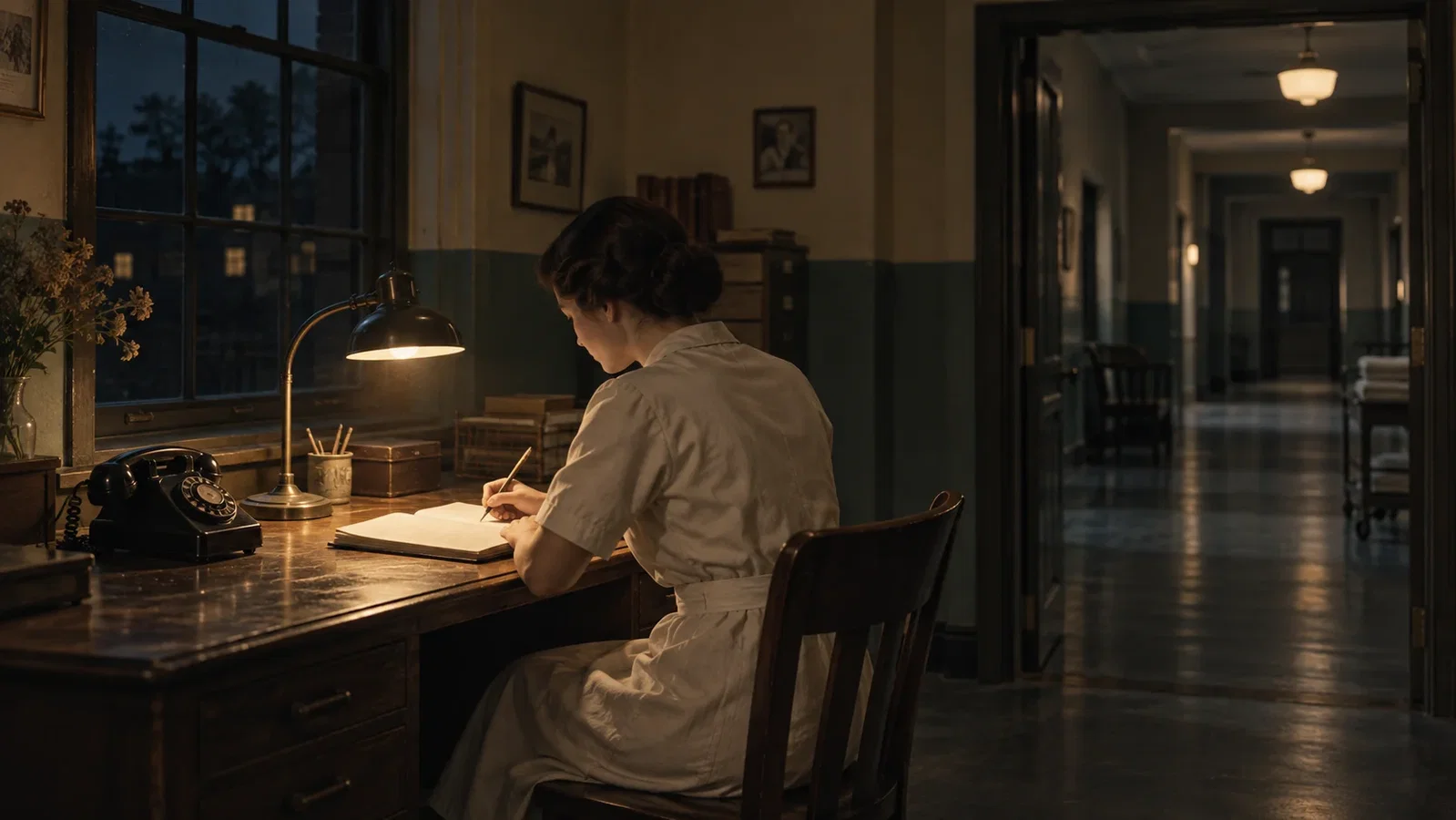
The people and setting are editorial inventions, not portraits of Bonica, an authentic duty roster or a record of a particular patient encounter.
An announcement and a retrospective account
The local medical society's February 1947 bulletin announced that Bonica would arrive at the end of January to begin his duties as chief of anesthesia. The notice retained the future tense. In his later oral history, he recalled returning to Tacoma in February 1947. The forecast and recollection differ on the month; neither establishes the exact opening date of the labor anesthesia service. [2,February p.3;4,p.70]
Chadwick places the organization of the service in 1947 and calls it one of the first. Bonica recalled complete obstetric anesthesia coverage in Tacoma for twenty-four hours a day, seven days a week and 365 days a year in 1948. The available records do not resolve whether the one-year difference reflects a date recalled differently or a different description of service scope. They do not establish two separate stages of development. The bulletin concerns an appointment, while the later accounts describe a service; their attributed dates remain distinct, without a claim to worldwide priority. [1,p.518;2;4,pp.47–48]

The paired cards represent coverage across the day and night, without inventing shift assignments, patient coverage rates or clinical outcomes.
A technique's duration and a service's availability
Edwards and Hingson had addressed a related timing problem in their 1943 report. A single caudal injection might not last through labor, while the timing of delivery was difficult to predict. Their continuous approach sought to maintain analgesia. At the end of the article they emphasized specialist hospital practice and invited further evaluation and trial.[3,pp.509,517]
Read alongside Bonica's service history, this report raises two concrete questions: how a technique could maintain pain relief during labor, and how a hospital could make a service continuously available. Chadwick also discusses Hingson's caudal work in his historical account. These records do not establish that Bonica learned directly from the particular article read here, or give a complete account of his equipment and drug regimen in Tacoma in 1947.[1,p.518;3]
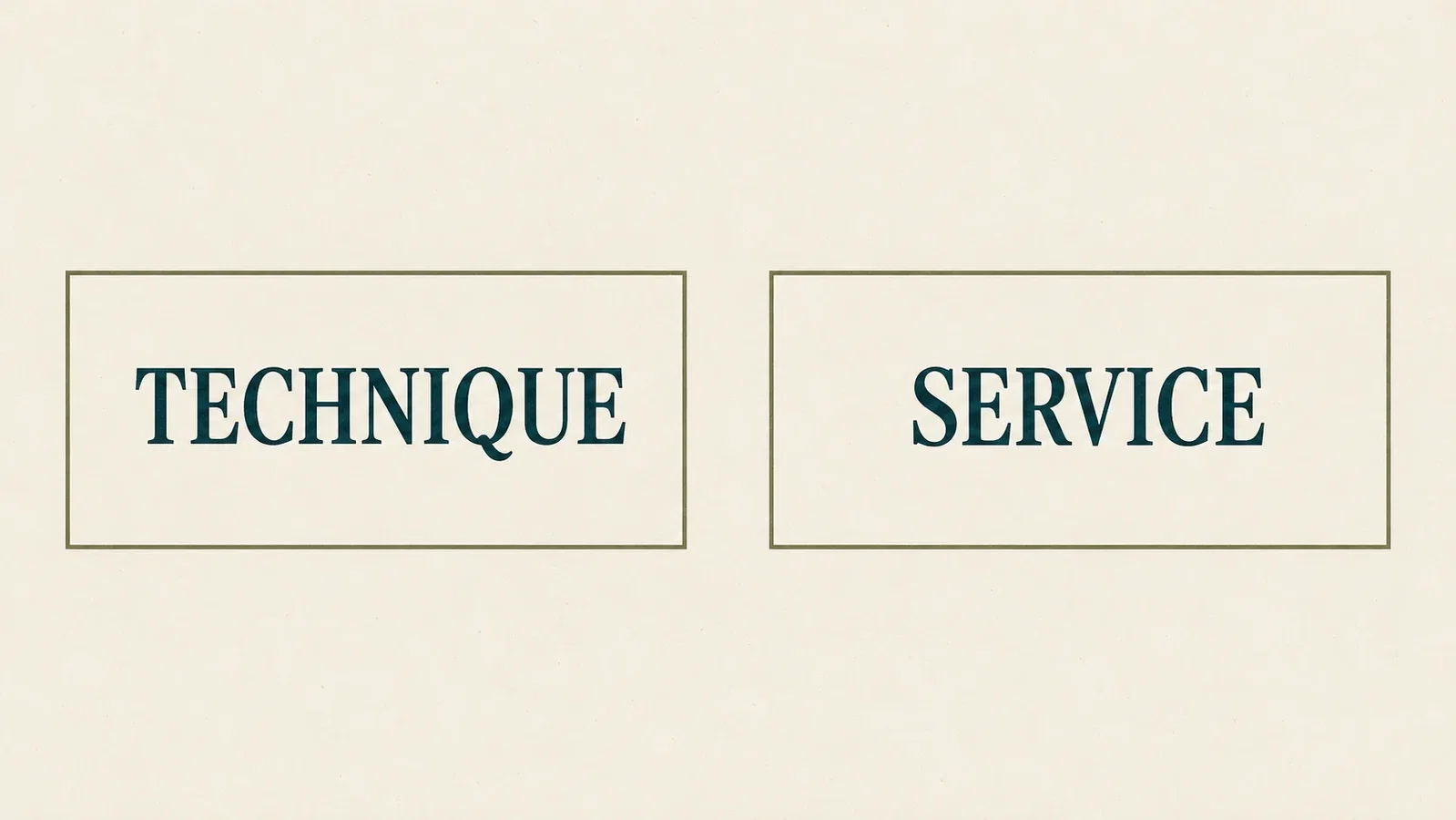
One card concerns maintaining analgesia; the other concerns organizing care. This is a comparison, not evidence of personal transmission or a causal link.
Teaching in 1947, a textbook later
The October 1947 bulletin records a further activity: doctors who had completed their internships were coming from Madigan General Hospital each month for thirty days of anesthesia instruction under Bonica. This is a contemporary record of general anesthesia teaching. It does not identify those doctors as a dedicated obstetric anesthesia team or explain their shifts.[2,October p.15]
Later developments retain their own dates. Chadwick reports that caudal anesthesia was the main labor analgesia technique at the University of Washington when Bonica became the new department's first chairman in 1960. The first volume of his Principles and Practice of Obstetric Analgesia and Anesthesia appeared in 1967. These accounts of later work cannot be treated as a uniform description of Tacoma practice in 1947.[1,p.518]

The books symbolize later teaching and writing. They do not reproduce the 1967 textbook's cover or its unread interior.
The records support an account of appointment, service organization and teaching. They provide no 1947 proportion of laboring patients reached, waiting-time measure or controlled comparison of outcomes. What they preserve is a specific organizational contribution: making labor anesthesia part of a hospital service available across the day and night.[1–3]
Sources and reading limits
- Chadwick HS. Obstetric anesthesia - Then and now. Minerva Anestesiologica. 2005;71(9):517–520. PMID 16166910. Publisher's free full text. All four original pages, the Italian summary and fourteen references were read. A retrospective account comparing the Bonica years at the University of Washington with practice in 2005; its present-tense descriptions are not current guidance.
- Pierce County Medical Society. Tacoma General Hospital News. Bulletin. February 1947;17(2):3; October 1947;18(2):15. Digitized annual volume. The arrival notice (February, p. 3) and training paragraph (October, p. 15) were read, with four issue/context pages. The remaining contents of the 306-page volume were not read. The February issue retains future tense about an arrival at the end of January.
- Edwards WB, Hingson RA. The present status of continuous caudal analgesia in obstetrics. Bulletin of the New York Academy of Medicine. 1943;19(7):507–518. Archived original article. Original pages 507, 509 and 517 were read from an archived copy. This is a different paper from the authors' 1943 Anesthesiology review cited by Chadwick.
- Oral History Interview with John J. Bonica, 9–12 March 1993 (Ms. Coll. no. 127.7). Interviewer: John C. Liebeskind. UCLA Biomedical Library; transcript prepared 2005. IASP-hosted original transcript · Archived copy. Printed pages 47–48 and 70 were read from an archived copy. Page 47 reports complete coverage in 1948; page 70 recalls a February 1947 return. This edited retrospective interview does not resolve the difference from Chadwick. Twenty-two selected pages of the 160-page file have been read, including its identifying front matter; the remaining 138 pages and the audio have not been read or heard. The misleading Howard Fields metadata does not match the Bonica cover and dialogue.
Continue exploring
Related reading connects shared questions and contexts; it does not by itself establish historical influence.
The Source Room · About & Editorial Method
Sources and reading limits are stated above. Illustrations are labelled as original source images or AI-made. Historical accounts are educational; they are not current treatment instructions.