Eleven anaesthetists from four cities, and a society limited to those practising the speciality.
Reading Library · Anesthesia Epochs · 中文版
Watch the education video (for clinicians)
1914: The Scottish Society of Anaesthetists — Founded After a Dinner · Anesthesia Epochs Education Series
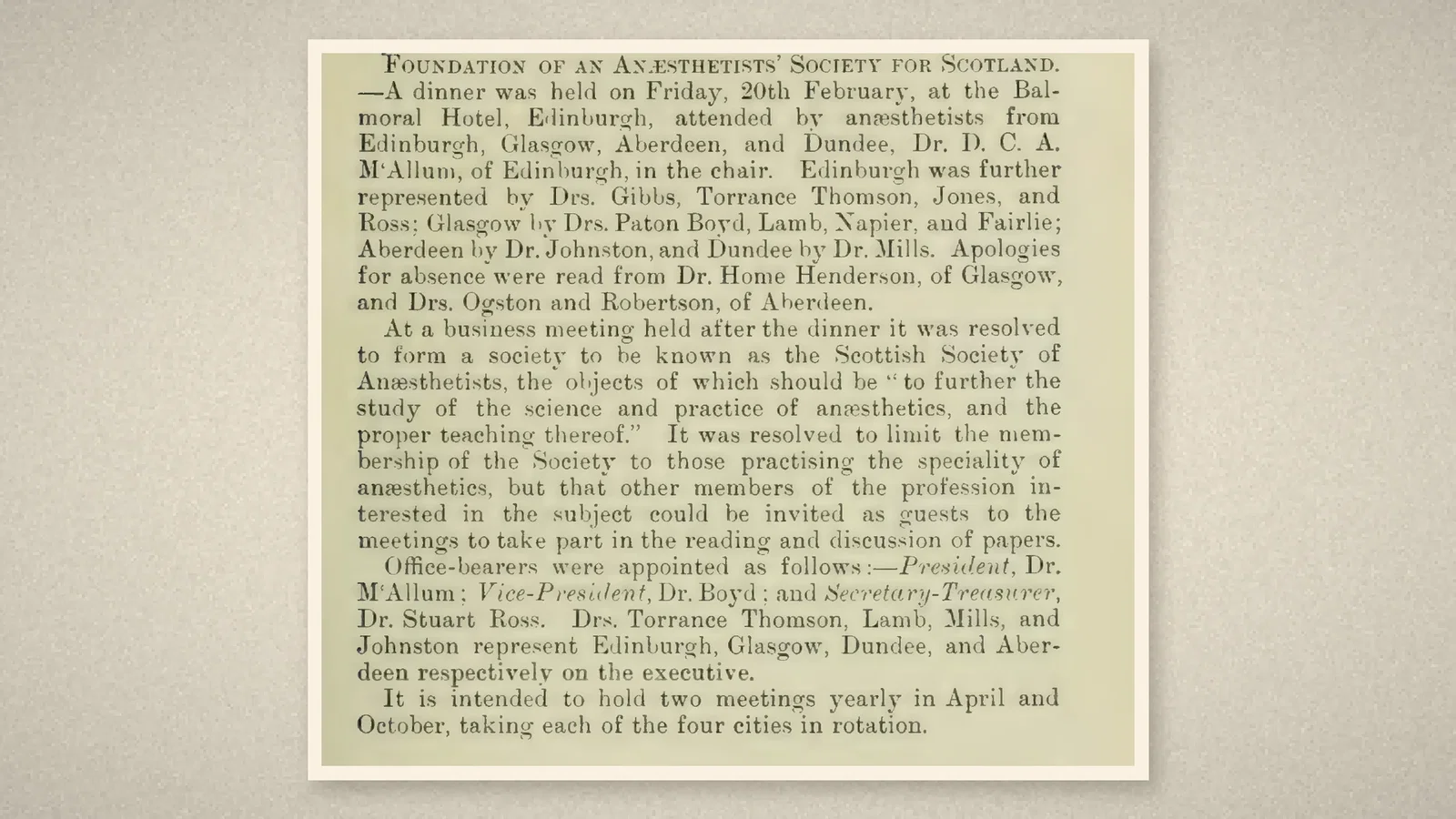
The April 1914 issue of the Glasgow Medical Journal carried a short item in its "Current Topics" column headed "Foundation of an Anaesthetists' Society for Scotland". [1, p. 289] In under three hundred words it set out how a society came into being: who came, where, what they decided, and how they meant to meet.
A dinner
On Friday 20 February, the report begins, a dinner was held at the Balmoral Hotel, Edinburgh, attended by anaesthetists from Edinburgh, Glasgow, Aberdeen and Dundee, with Dr D. C. A. M'Allum of Edinburgh in the chair. [1, p. 289]
Then the names. Edinburgh was further represented by Drs Gibbs, Torrance Thomson, Jones and Ross; Glasgow by Drs Paton Boyd, Lamb, Napier and Fairlie; Aberdeen by Dr Johnston; and Dundee by Dr Mills. [1, p. 289] With the chairman, that makes eleven. Apologies for absence were read from Dr Home Henderson of Glasgow and Drs Ogston and Robertson of Aberdeen. [1, p. 289]
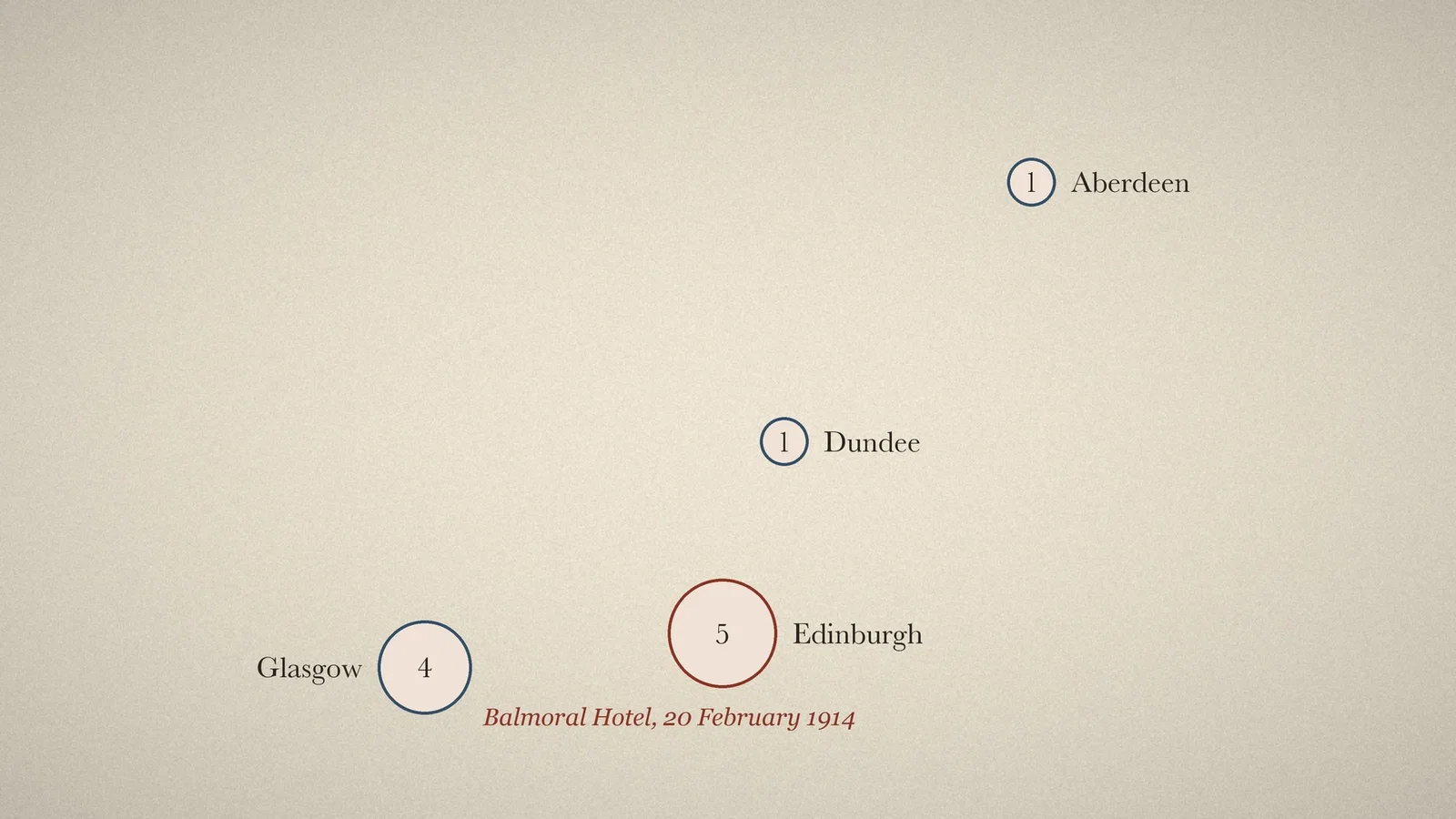
The list shows that by 1914 each of Scotland's four cities with a medical school or large hospitals had doctors practising anaesthesia as a speciality: few in number, but enough to fill a dinner table.
The business meeting
At a business meeting after the dinner, the report continues, it was resolved to form a society to be known as the Scottish Society of Anaesthetists, its objects being "to further the study of the science and practice of anaesthetics, and the proper teaching thereof". [1, p. 289]
The meeting also took a significant decision: membership was limited "to those practising the speciality of anaesthetics", while other members of the profession interested in the subject could be invited as guests to take part in reading and discussing papers. [1, p. 289] The rule made the Society an organization of specialists rather than a club for the interested, while keeping the door open to surgeons and physicians.
Office-bearers and executive
The office-bearers appointed were: President, Dr M'Allum; Vice-President, Dr Boyd; Secretary-Treasurer, Dr Stuart Ross. [1, p. 289] Drs Torrance Thomson, Lamb, Mills and Johnston were to represent Edinburgh, Glasgow, Dundee and Aberdeen respectively on the executive. [1, p. 289]
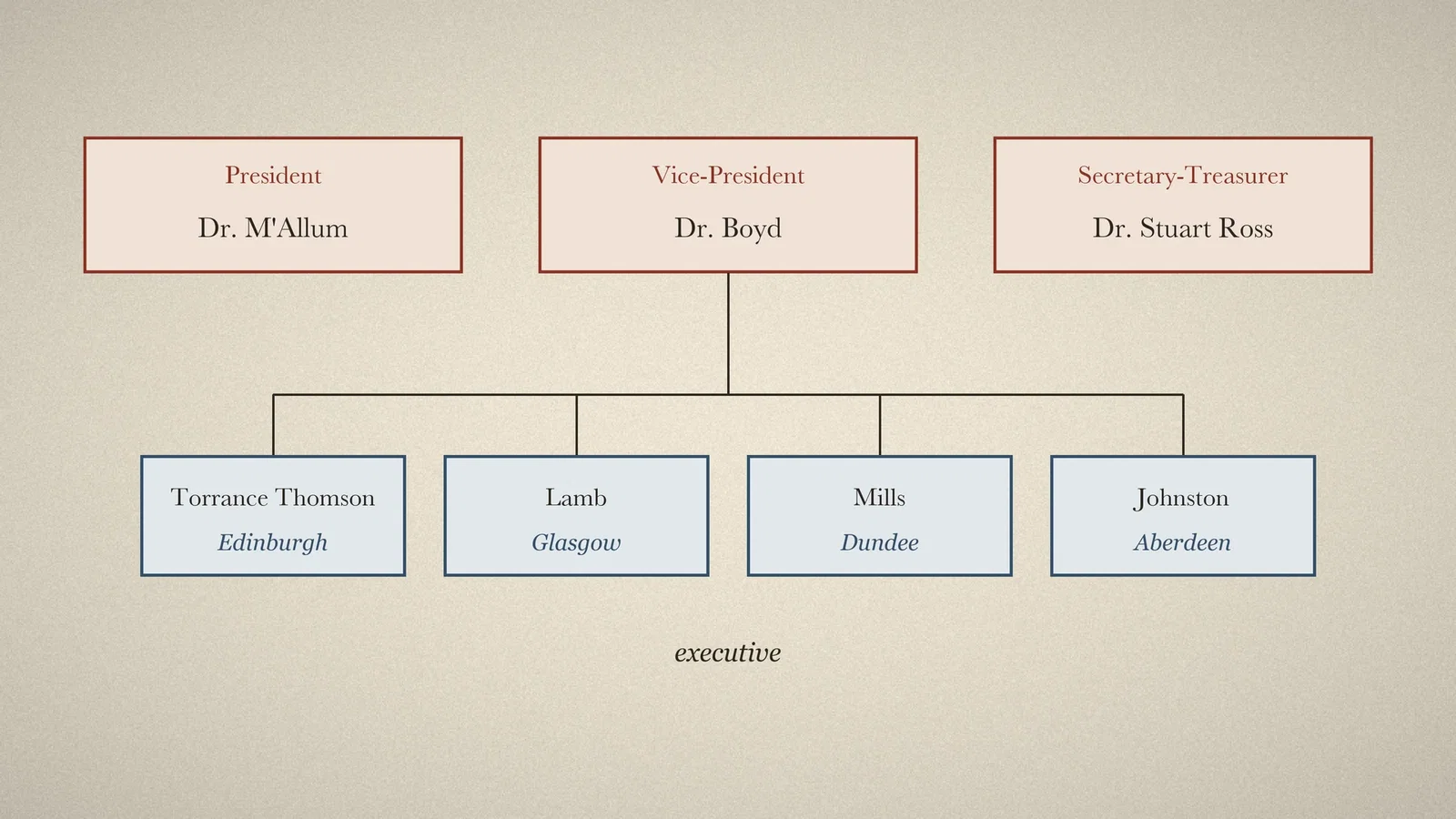
The President and Secretary came from Edinburgh, the Vice-President from Glasgow, and the executive had one member for each city. From the start the Society belonged to all four cities, not to a single hospital or town.
Twice a year, in turn
The report's last sentence: it was intended to hold two meetings yearly, in April and October, taking each of the four cities in rotation. [1, p. 289]
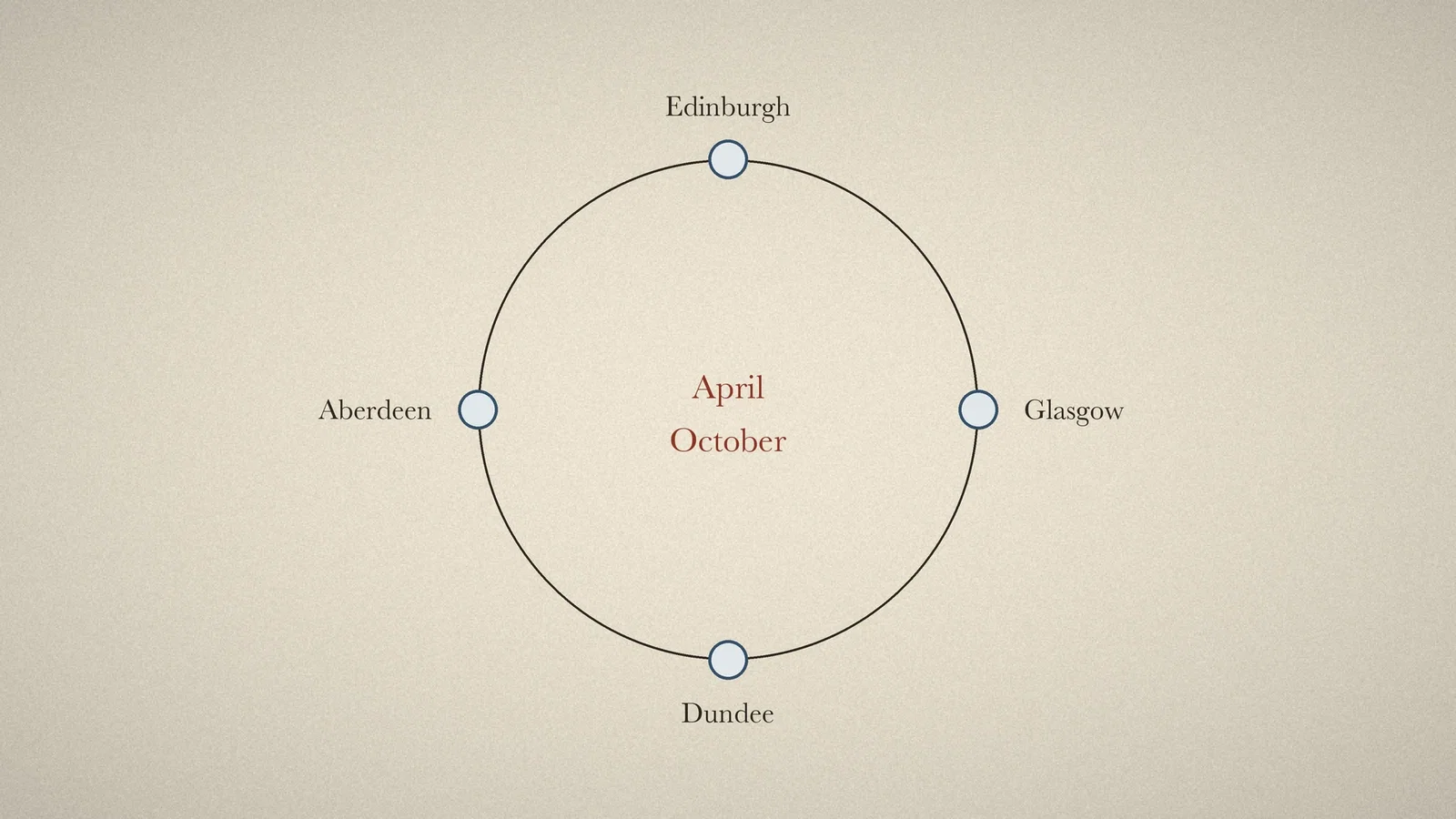
When the report appeared, the First World War was only months away. Whether the Society's meetings went ahead as planned, and how the war affected it, this report cannot say.
What the record shows
The Edinburgh dinner of 20 February 1914 left the basic elements of a specialist society: a name, a statement of objects, a rule that members must practise the speciality, a set of officers and a rhythm of meetings. Its objects put teaching beside study, in step with the contemporary British movement to make instruction in anaesthetics a requirement for medical students.
Sources and reading limits
Read: "Foundation of an Anaesthetists' Society for Scotland", Current Topics, Glasgow Medical Journal 1914, vol. 81, no. 4, p. 289. A search of 45 Lancet and BMJ issues of 1914 on the Internet Archive found no other report.
Not covered: the Society's own minutes and any later history of it were not read. The report does not call it the first national society of anaesthetists, and says nothing of its later role in training or its fate in the First World War. The month of the issue is inferred from its number (no. 4 of a volume beginning in January) and from April 1914 dates in the same issue.
Of the four illustrations, one is a crop of the original page and three are diagrams drawn for this article from the report.
- Foundation of an Anaesthetists' Society for Scotland [Current Topics]. Glasgow Med J. 1914;81(4):289. Internet Archive
Continue exploring
Related reading connects shared questions and contexts; it does not by itself establish historical influence.
- 1911: Hewitt on How Anaesthetics Entered the Medical Curriculum
- 1914: Gwathmey and Baskerville Publish Anesthesia
Anesthesia Epochs · The Source Room · About & Editorial Method
Published November 2, 2026. Sources and reading limits are stated above. Illustrations are labelled as original source images or AI-made. Historical accounts are educational; they are not current treatment instructions.