In a paper read at the Royal Society in February 1745, Fothergill summarized Tossach's rescue of a miner by blowing into his mouth and asked readers to try the method and report the results.
Reading Library · Anesthesia Epochs · 中文版
Watch the education video (for clinicians)
1745: Fothergill's Appeal — Getting a Rescue Method Heard · Anesthesia Epochs Education Series
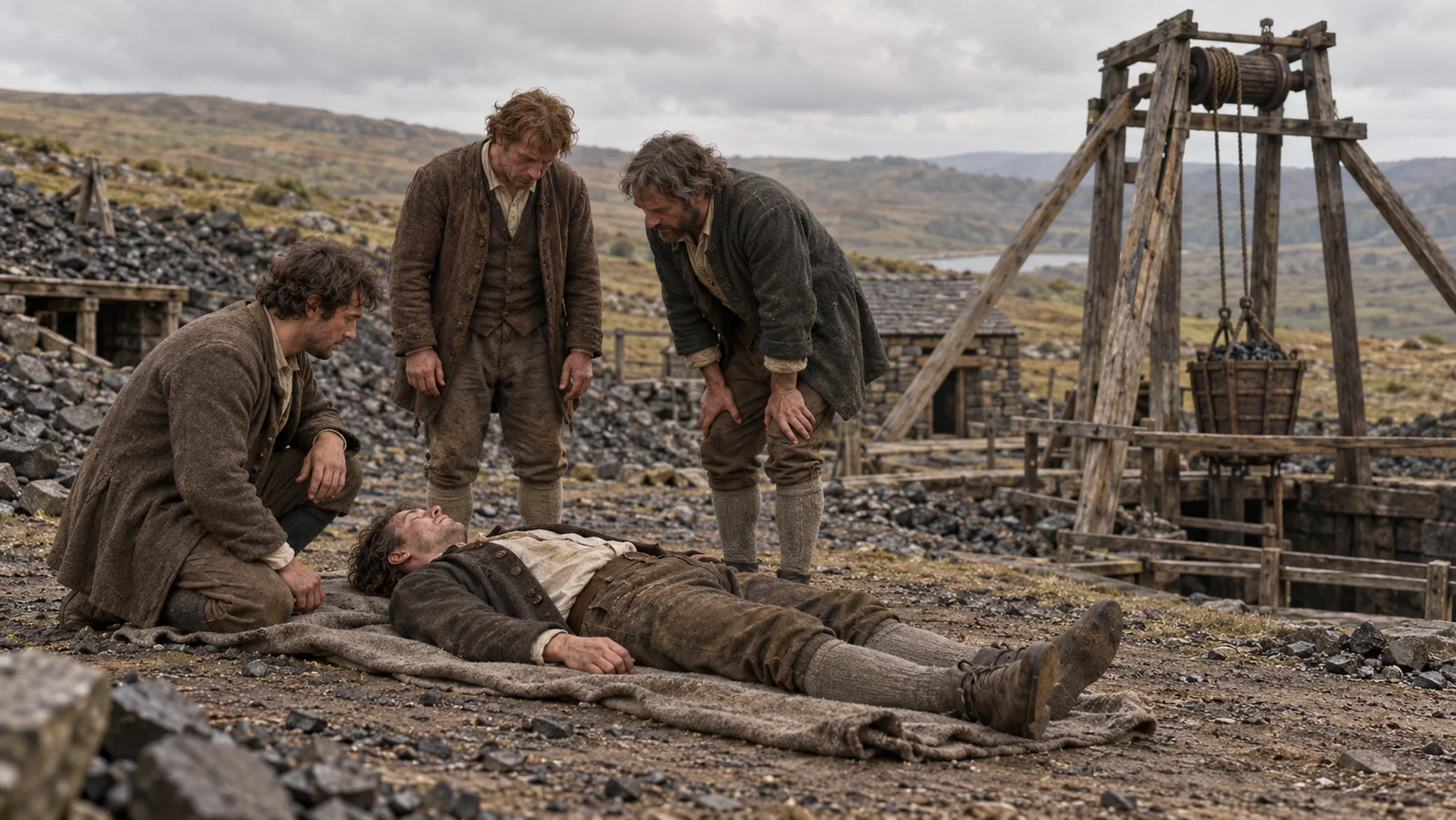
John Fothergill worried that publication might not be enough. An account could sit in a medical volume while the next person standing beside an accident knew nothing of it. He began by urging the widest possible circulation of important facts and ended by asking readers to send accounts of subsequent attempts.[1, pp. 275, 280–281]
His paper turned a rescue report into an appeal for communication. But the rescuer and the commentator were different people, and the writing, reading and accident did not share a single date.
Separate the people and the dates
A marginal note on page 275 records the paper as read on 21 February, “1744–5,” and now printed with additions. The Royal Society’s manuscript catalogue gives the reading date as 21 February 1745.[1, p. 275; 2] This article dates the paper by its 1745 reading. The historical double year is preserved rather than presented as a fully converted modern Gregorian date.
The title also mentions Edinburgh, 1744, and the closing dateline retains 1744.[1, pp. 275, 281] Those details cannot be compressed into a claim that the rescue occurred in 1744. Tossach's own report dates the rescue to 3 December 1732.[4]
Fothergill identified his source as a report by William Tossack, a surgeon in Alloa, in the second part of volume five of the Medical Essays. He explicitly offered an abstract and directed readers seeking more detail to that article.[1, pp. 275–276] Fothergill spells the surgeon's name Tossack; the surgeon's own report is read in full in the article on Tossach's rescue (see Continue exploring).

A recovery with several interventions
The man in the abstract collapsed amid fumes from burning coal in a pit. After he was brought to the surface, his skin was described as cold, with no breathing or pulse detected. The surgeon blew air into his mouth, after which the account reports heartbeat, chest movement and an arterial pulse. Bleeding and physical rubbing and movement followed.[1, p. 276]
Fothergill’s summary says that the man began recovering consciousness in about an hour, walked home within four hours and returned to work in four days.[1, p. 276] These remain reported outcomes in an abstract, not a case record independently reconstructed today. The order of events does not establish the separate efficacy of every intervention. Failure to detect a pulse cannot simply be translated into cardiac arrest confirmed by modern monitoring.
The initial patient was not brought out of water. Drowning appears later among the circumstances in which Fothergill proposed trying the approach. It should not replace the coal-pit account at the start.
What one report might suggest
Fothergill called this the first instance he remembered encountering in which such an experiment had been applied to rescuing someone from imminent danger.[1, pp. 276–277] His memory defines the claim. It does not establish a worldwide first.
He then considered other sudden collapses and suffocations, including incidents in mines, other hazardous air environments and water.[1, pp. 277–279] These were proposed applications. They were not a series of successful rescues already observed in all those settings.
His explanation also belonged to its period. He compared the body to a clock whose parts remained sound but which needed an initial impulse to its pendulum. Inflating the lungs might provide that impulse.[1, pp. 279–280] The image expressed a hope of restoring motion; it was not a complete modern account of ventilation, oxygenation and circulation.
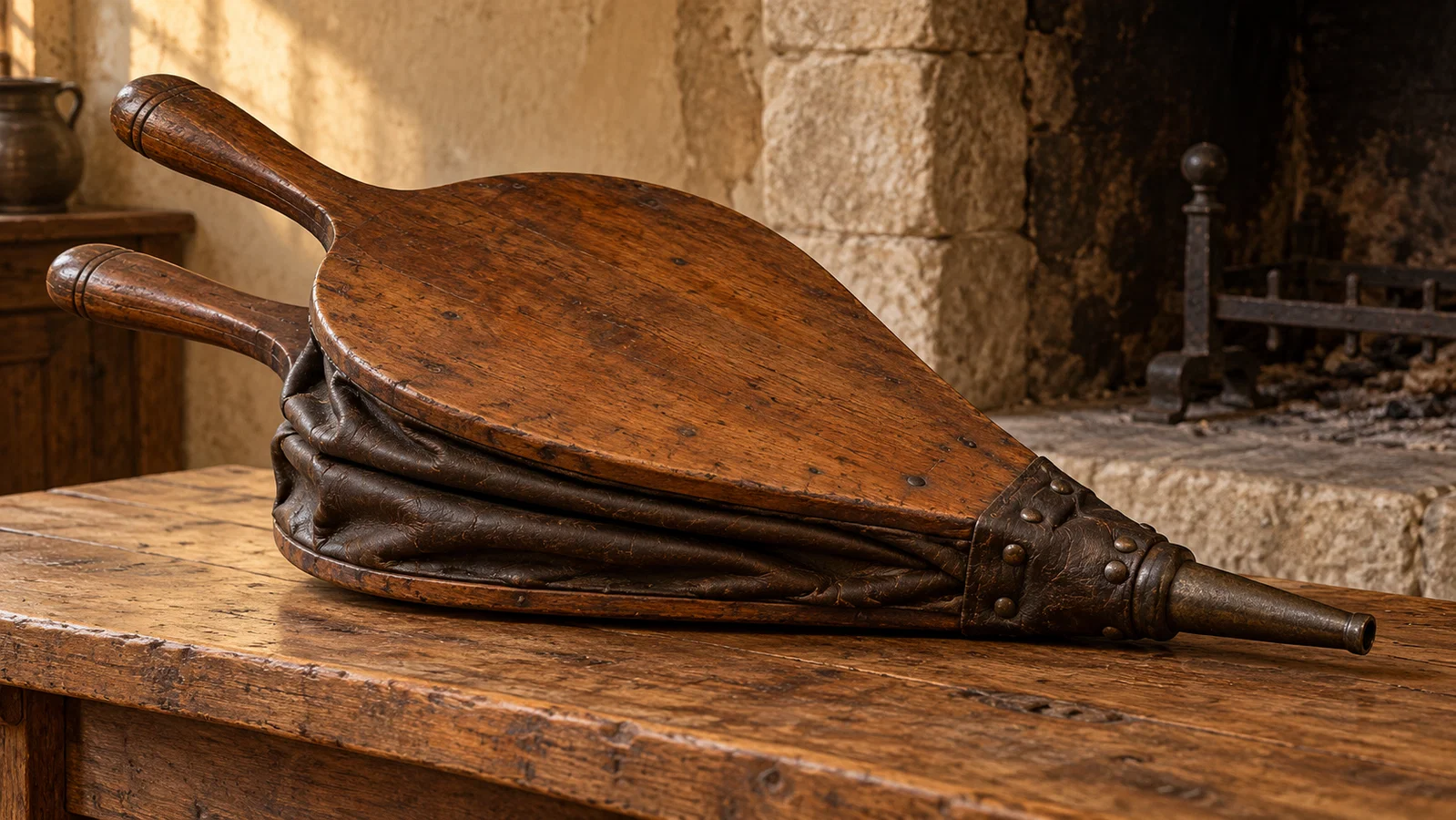
The discussion of bellows
Acquaintances had suggested using bellows. Fothergill preferred a willing person’s breath: bellows might not be available, the force they supplied could be difficult to judge, and he believed warmth and moisture would be helpful.[1, p. 280]
Availability was a practical concern. The arguments about force, warmth and moisture remained his judgments. The paper supplied no comparative trial of the two approaches, and it did not establish the sweeping assurance of harmlessness that followed. His enthusiasm for wider use can be preserved without adopting that assurance as fact.
The text also contains a disturbing proposal. He suggested experiments after judicial execution and discussed extending execution to prevent revival.[1, pp. 278–279] These are proposals in the source, not experiments verified as having taken place. They also complicate any account that presents the paper solely as uncomplicated humanitarian progress.
Publication needed a reply
On the final page, Fothergill asked later experimenters to report their outcomes and the principal circumstances. He hoped that further observations would support the possibility suggested by the original case.[1, p. 281] The requested evidence was still to come. The invitation cannot itself be treated as repeated confirmation.

There is a specific comparison with Stone’s later letter about willow bark. In 1763, Stone too ended by calling for wider trials. Both texts sought observations beyond the author’s immediate reading or experience.[1, p. 281; 3, p. 200] This is a comparison between passages, not evidence that one author influenced the other.
Fothergill’s role is clear within his paper. He identified another surgeon’s report, summarized it, argued about its implications and tried to enlarge its audience. Keeping the rescuer, the advocate and the hoped-for future evidence distinct leaves the story powerful—and closer to the document.
Material and image limits: All seven original printed pages, 275–281, were actually opened and read. Only the Royal Society catalogue was read, not its ten-page manuscript or draft. Case details here are taken from Fothergill’s abstract; Tossach’s own report is read in the article on his rescue. No worldwide priority, modern diagnosis or claim of harmlessness is established. This is historical discussion, not a current first-aid procedure. The opening image is an anonymous reconstruction beside a coal pit; the other images are a modern date comparison, an unused bellows and a clock metaphor. All are AI editorial illustrations, not portraits, accident records or rescue demonstrations.
Sources and reading limits
[1] Fothergill J. Observations on a Case Published in the Last Volume of the Medical Essays, &c. of Recovering a Man Dead in Appearance, by Distending the Lungs with Air. Philosophical Transactions. 43 (1744–1745):275–281. DOI:10.1098/rstl.1744.0061. Original scan. Read in full, pp. 275–281, including the reading note and the closing dateline.
[2] Royal Society Archives. Catalogue record L&P/1/358. The description states “Read 21 February 1745.” A separate linked-publication field displays 31 December 1744; that metadata is not used to override the printed reading note or to establish an issue-distribution date.
[3] Stone E. Philosophical Transactions. 53 (1763):195–200, p. 200. Original scan. Only the closing request for further observations is compared.
[4] Tossach W. A man dead in appearance, recovered by distending the lungs with air. Medical Essays and Observations (Edinburgh). 1744;5(2):605-8. Internet Archive
This article is dated by the recorded 1745 reading.
Continue exploring
Related reading connects shared questions and contexts; it does not by itself establish historical influence.
- 1732: Tossach Revives a Miner by Mouth-to-Mouth Breathing
- 1763: Stone Reports a Local Bark in a Public Letter
Anesthesia Epochs · The Source Room · About & Editorial Method
Updated October 30, 2026. Sources and reading limits are stated above. Illustrations are labelled as original source images or AI-made. Historical accounts are educational; they are not current treatment instructions.