In De motu cordis (1628), Harvey combined the amount of blood the heart sends out, the direction shown by the venous valves, and a still-unseen link between arteries and veins into the argument that blood circulates.
Reading Library · Anesthesia Epochs · 中文版
Watch the companion film
1628: Harvey and the Circulation · Watch on YouTube
Historical anchor: 1628. Date details and source qualifications are explained below.
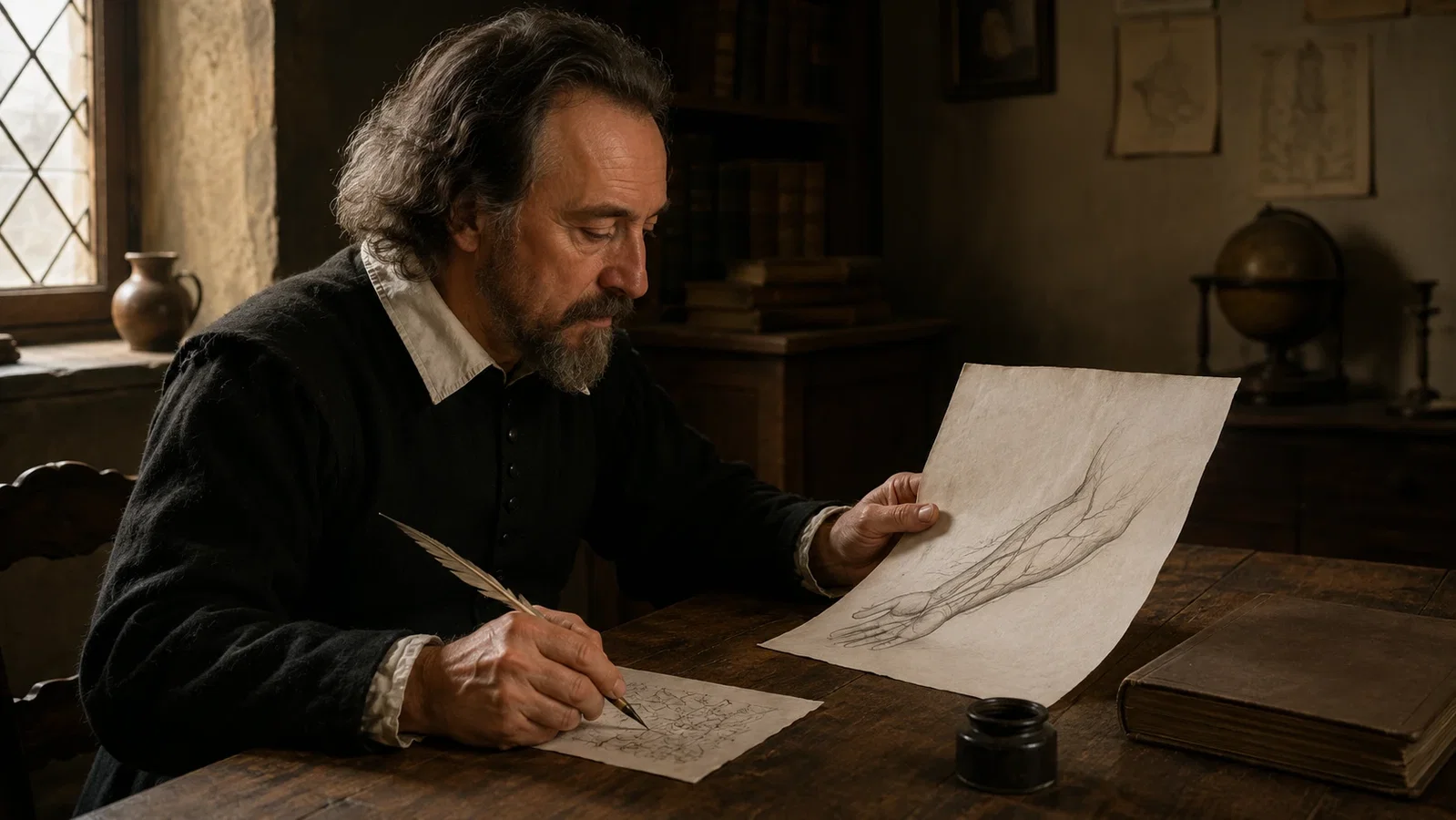
(Figure 1) Bringing different observations to one table. This original historical reconstruction evokes Harvey's inquiry; it is not an authenticated portrait, experimental record, or identified room.[1,2]
The circle was not drawn all at once. In William Harvey's De motu cordis, published in 1628, its argument develops through questions about movement, quantity, and return. The heart sends blood out. How much passes through it as the beats accumulate? Where can that continuing supply come from? And what evidence shows blood coming back?[1,2]
Publication provides a firm date. The original title page names Frankfurt, William Fitzer, and 1628. A single day of discovery is harder to supply. Harvey told his physician colleagues that he had spent more than nine years demonstrating and debating his views; the Royal College of Physicians' account describes ideas developed through lectures beginning in 1616. The printed book gathered a sustained inquiry, not a moment of sudden certainty.[1,2,5]
Seeing the action before explaining the circuit
Harvey began by admitting difficulty. The heart moved so quickly that contraction and relaxation were initially hard to distinguish. Repeated observations across animals helped him separate the movements. His account was not that of an observer who understood everything at a glance.[2, chapter 1]
Chapters 2 and 3 establish an important relationship: contraction expels blood from the ventricles, and the arriving impulse distends the arteries. This identifies an action and its consequence. It does not yet explain an entire circulation. Blood sent toward the lungs must reach the left side of the heart; blood sent into the body must have a way back.[2]
Harvey discussed the pulmonary route in chapters 6 and 7 while engaging with earlier authors, including Galen and Columbus. The work itself makes a solitary discovery from nothing an unsuitable story. Its subject here is the combination of evidence, not an award for having originated every part of vascular knowledge.[2]
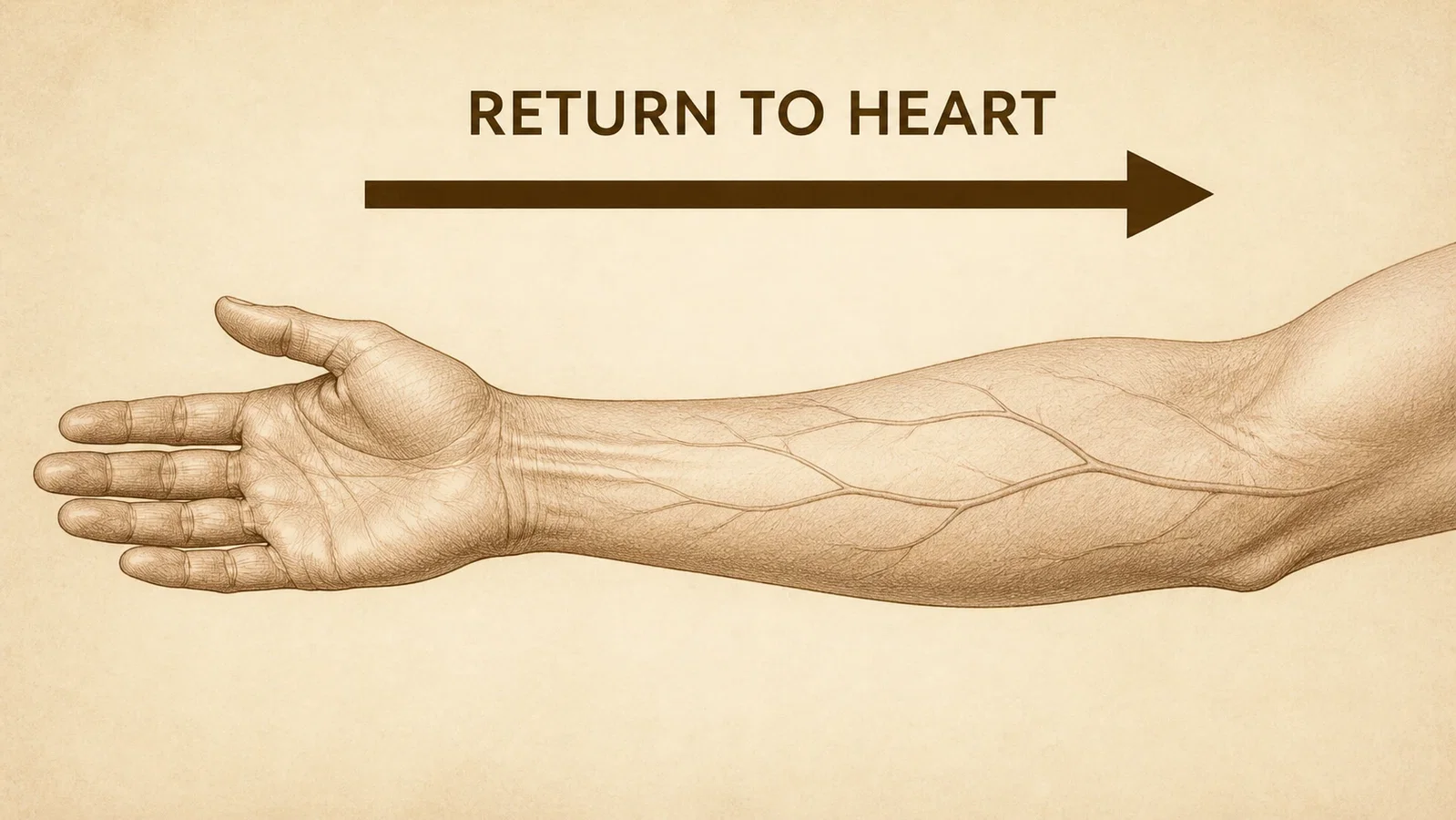
(Figure 2) A returning direction. This modern explanatory drawing is not an original plate. Its arrow points toward the heart; it neither gives an experimental procedure nor implies that every vein contains valves.[1,2, chapter 13]
Quantity makes return a problem that cannot be avoided
In chapter 8, Harvey asks how a continuing outward stream could be supplied. Chapter 9 sets out three propositions concerning passage through the heart, distribution to the body, and return through the veins. None can simply stand in for the others.[1–3]
His arithmetic is striking, but it needs careful description. He offered alternative estimates of ventricular capacity and of the fraction expelled at a beat, then multiplied assumed ejection amounts by numbers of beats over time. He also acknowledged variation between people and circumstances. This was not a report of one precisely measured, modern cardiac output.[1,2, chapter 9]
The force of the calculation lay in repetition. Even a small assumed amount, sent out again and again, creates a substantial throughput. An account in which blood is continually replaced from ingested food and then consumed in the tissues must explain where that supply comes from. Return offers a different possibility: blood can pass the same point repeatedly.[1,2]
For a present-day reader, the relationship can be expressed in words: amount per beat multiplied by number of beats gives cumulative throughput. Throughput is not the same as newly produced blood. That is an editorial explanation of Harvey's reasoning, not a modern equation printed on his original page.[1,2]
But arithmetic alone does not locate the returning path. The direction of movement still requires investigation.
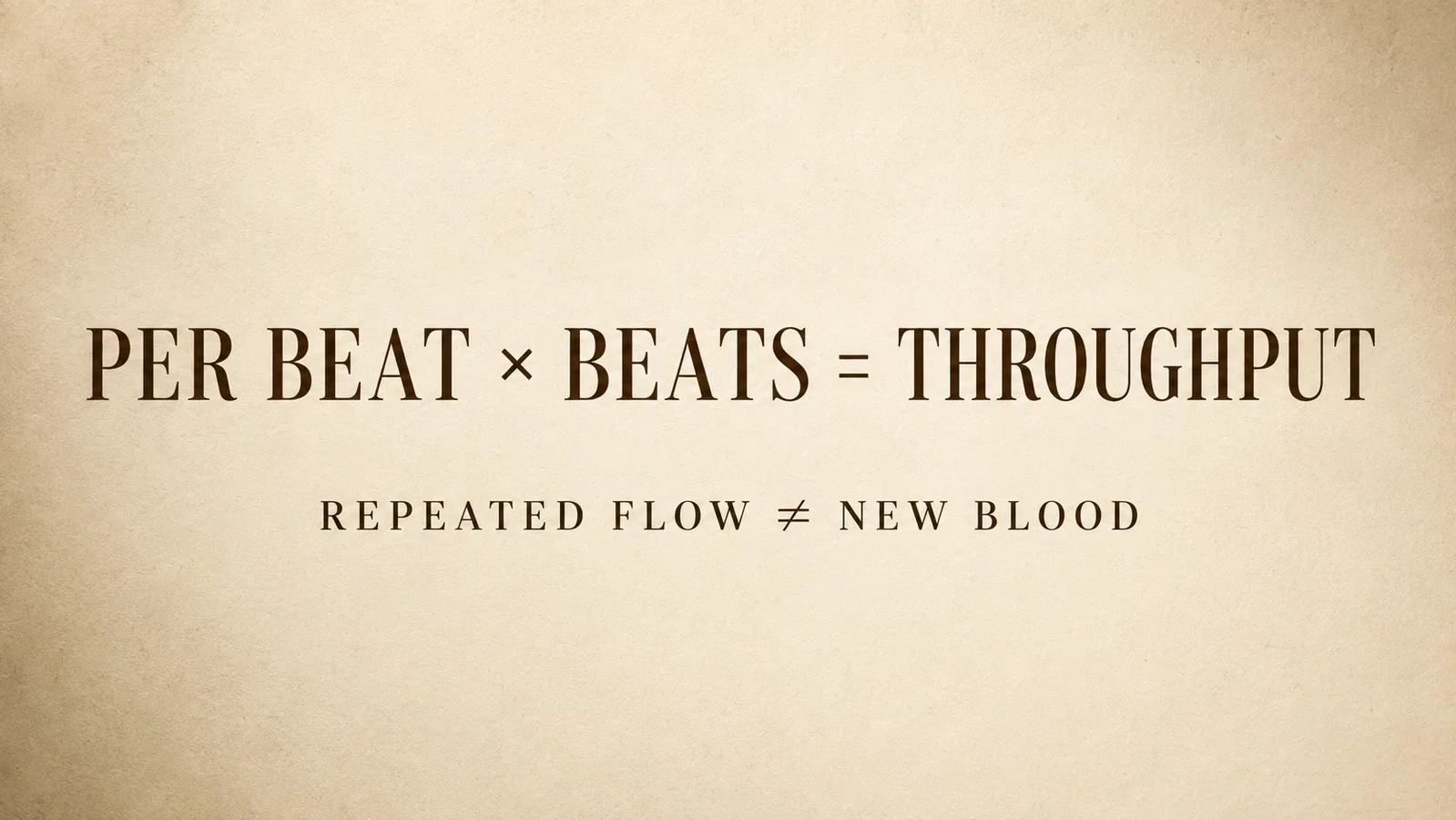
(Figure 3) Repeated passage need not mean repeated production. No modern normal value is supplied here. The quantity argument still needs evidence about direction.[1–3]
The veins provide a direction
In chapter 11, Harvey compared obstruction that hindered venous return while permitting arterial inflow with stronger obstruction that also prevented inflow. The different consequences helped distinguish the two paths. When return was impeded, the veins beyond the obstruction filled; releasing it allowed that distension to subside.[1,2]
Chapter 13 brought venous valves into the argument. Blood displaced along a vein did not readily refill the emptied segment from the reverse direction, but could enter from farther out in the limb. Valve structure and these observations supported return from smaller veins toward larger ones and the heart.[1,2]
The original book's two plate leaves contain four forearm illustrations associated with this demonstration. Their relevant direction is toward the heart, not simply “up” a page. Nor should the illustrations become a modern invitation to bind an arm or manipulate vessels. Harvey even discussed imperfect valve closure; the historical argument does not require us to claim that every valve is flawless.[1,2]
Chapter 14 gathers the strands into the conclusion: blood is propelled outward and returns, moving in a circulation. Checking that location matters. A modern commentary assigns the concluding passage to chapter 13, but the original printed page 58, the translation, and another historical analysis place it in 14.[1–4]
A necessary connection was not yet a directly seen one
The circulation required passage from arteries to veins. Harvey did not directly demonstrate the capillary connections familiar today. In chapter 11 he still considered alternatives involving connections between vessels, pores in the tissues, or both. The necessity of a route and the observation of its minute structure are different kinds of evidence.[2]
Later historical accounts place Malpighi's microscopic observations in 1661. That distinction helps mark the limit of what Harvey had directly shown. It does not put the later view before his eyes, and our reading of those modern accounts is not a claim to have examined Malpighi's original letters.[3,4]
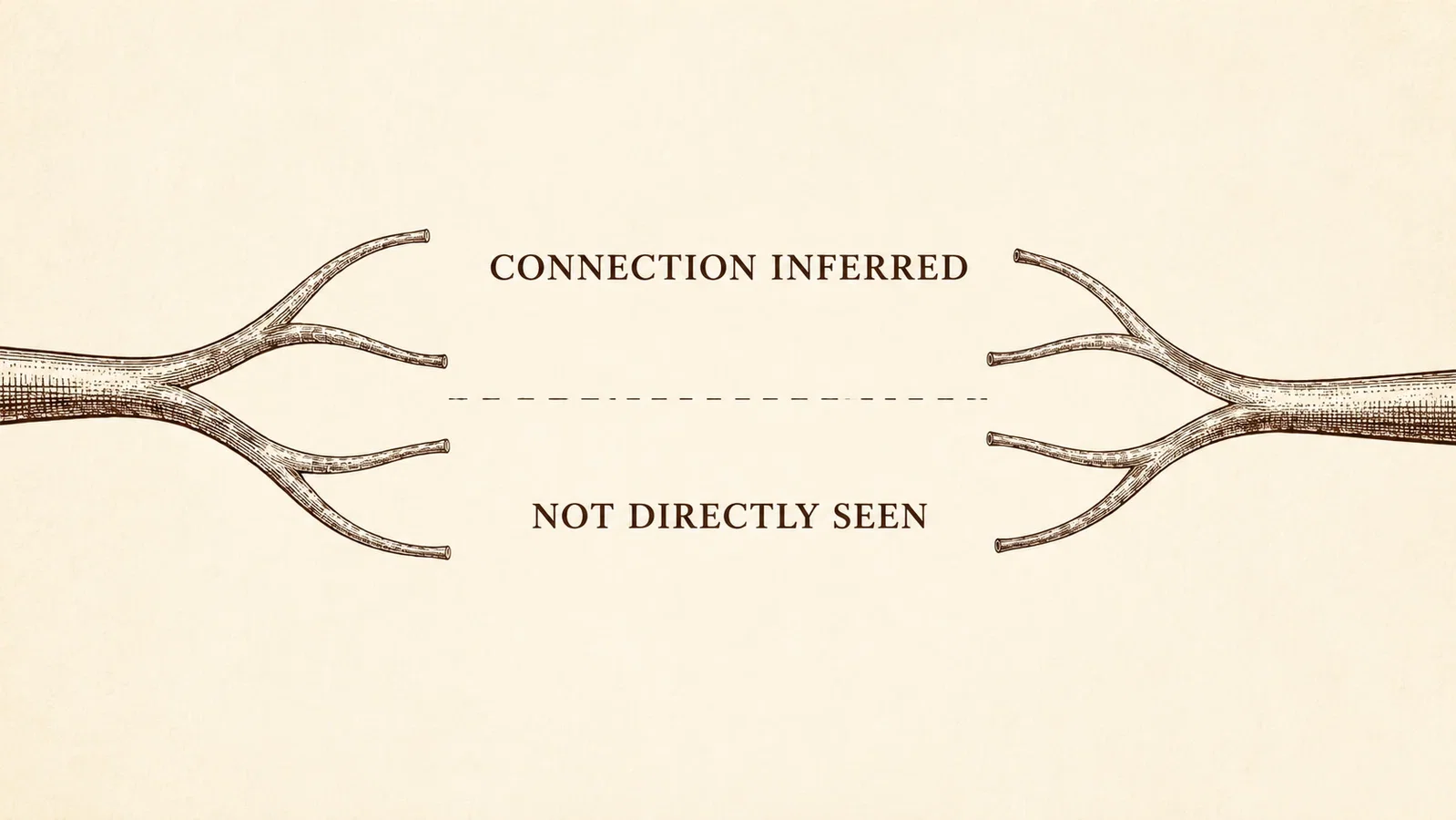
(Figure 4) Requiring a connection is not the same as seeing it. The dashed link is an editorial marker, not capillary anatomy or a complete microscopic map drawn in 1628. Color does not encode oxygenation.[2–4]
Other limits remain inside the book. Accounts of heat, spirits, and nourishment coexist with the circulatory argument. Harvey still discussed bloodletting and proposed explanations for diseases and medicines. A new account of circulation was not, by itself, proof of new treatments or the immediate abolition of an old practice.[2, chapters 11,15–16]
This is why the article belongs in an anesthesia history without an imagined successful anesthetic at its center. It concerns a more basic way of asking how the body works. Quantity constrains the explanation; direction constrains the route; an unseen connection remains a question for further observation. Later stories will take up drugs and circulation without needing their results written into 1628.
The achievement is more interesting than a tidy loop. Outward passage, return, and repeated throughput had become parts of an argument that had to hold together. The unanswered portion could remain visible without making the rest disappear.
Sources and reading limits
- Harvey W. Exercitatio anatomica de motu cordis et sanguinis in animalibus. Frankfurt: William Fitzer; 1628. Complete 88-page Smithsonian-copy PDF; title, printed pp. 41–45, 49–52, 55–58, and both plate leaves with blank versos inspected: 18 scan pages. Selected Latin-page checks, not a complete independent collation.
- Harvey W; Willis R, translator. An Anatomical Disquisition on the Motion of the Heart & Blood in Animals. J. M. Dent & Co.; 1906 edition. Gutenberg 67065. Dedications, author's introduction, and all 17 chapters read; later appended works not read throughout. Parkyn's introduction is not Harvey's voice, and this is not a 1628 English edition.
- Auffray C, Noble D. Origins of Systems Biology in William Harvey's Masterpiece on the Movement of the Heart and the Blood in Animals. Int J Mol Sci. 2009;10(4):1658–1669. Complete 12-page PDF/XML text read. Systems biology is the authors' retrospective framework.
- Ribatti D. William Harvey and the discovery of the circulation of the blood. J Angiogenes Res. 2009;1:3. Both pages read; its chapter 13 attribution of the concluding passage is corrected against the original to 14.
- Birkwood K. Harvey's disciples: the Evan Bedford library of cardiology. RCP Museum; 10 October 2014. Complete librarian-authored page read for lecture, publication, and collection context.
Images are original reconstructions or modern editorial explanations, not historical artifacts. Historical discussion, not instructions for vascular experiments or clinical care. Sources and reading limits are stated above. Illustrations are labelled as original source images or AI-made. Historical accounts are educational; they are not current treatment instructions.
Continue exploring
Related reading connects shared questions and contexts; it does not by itself establish historical influence.
Anesthesia Epochs · The Source Room · About & Editorial Method