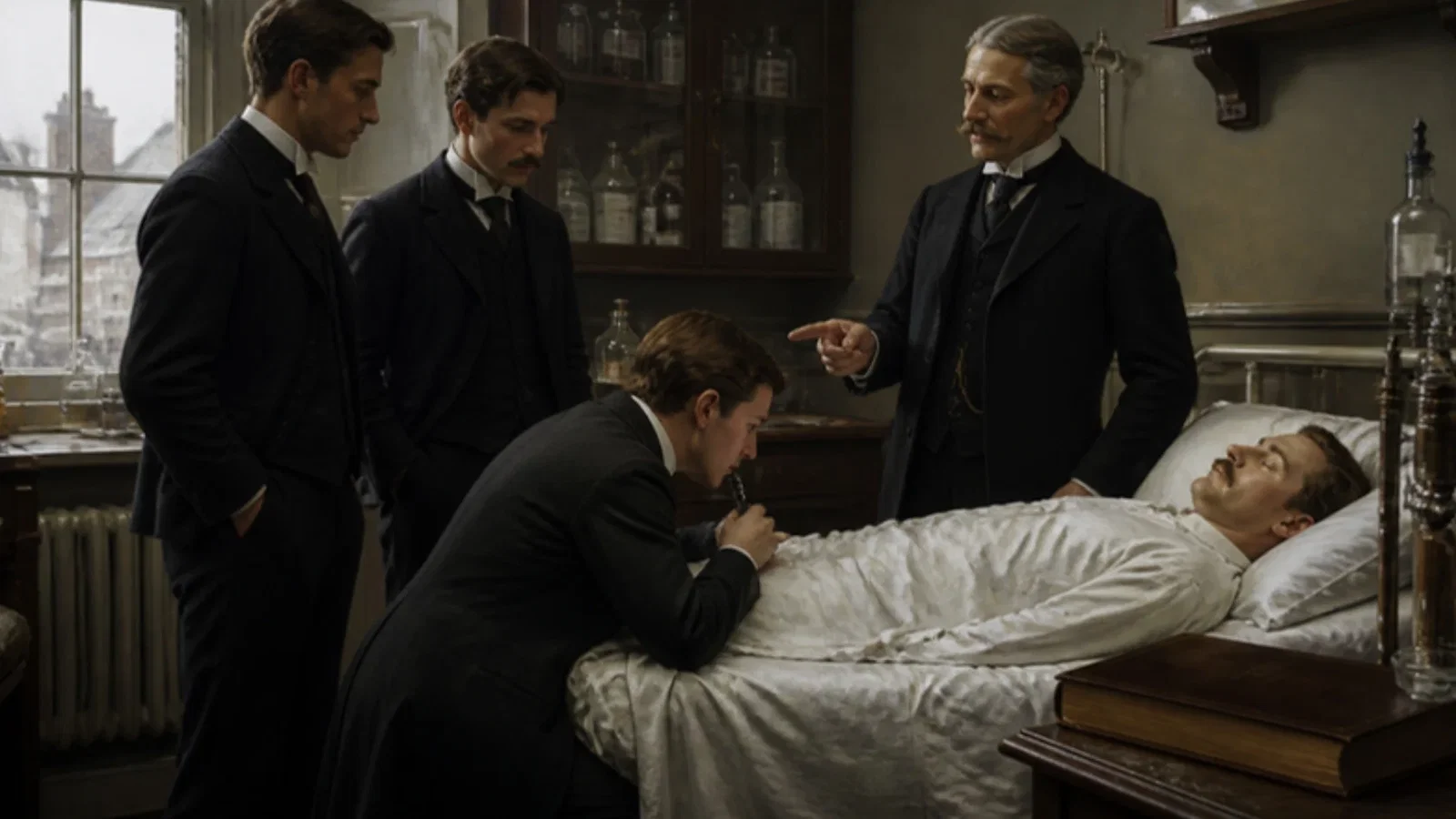
A textbook meant to be read in three sittings: listen to the breathing, and see the patient safely back to bed.
Reading Library · Anesthesia Epochs · 中文版
Watch the education video (for clinicians)
1909: Bellamy Gardner's Surgical Anaesthesia — Watching Into Recovery · Anesthesia Epochs Education Series
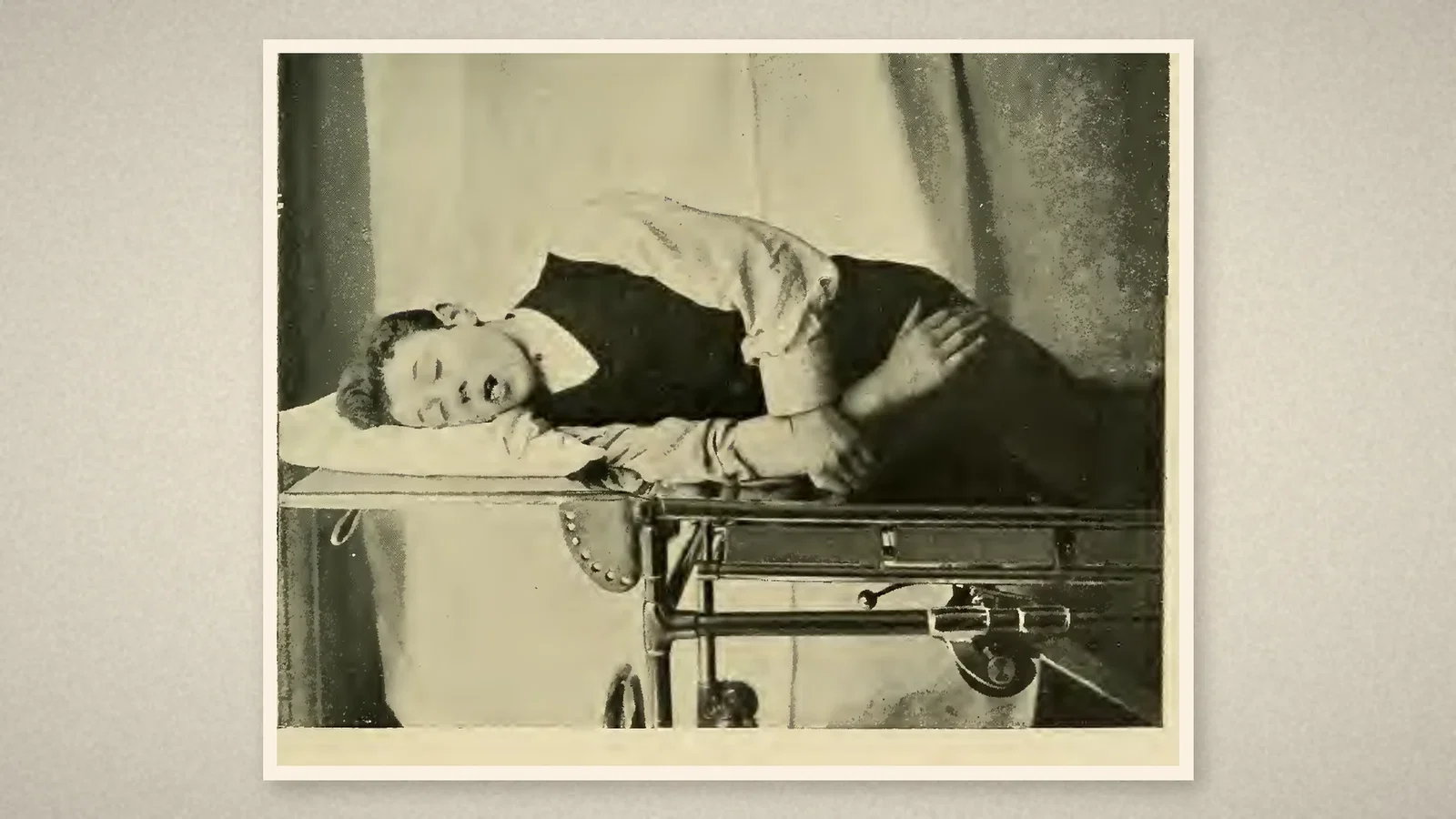
In July 1909 H. Bellamy Gardner, an anaesthetist at 126 Harley Street, London, signed the preface to a book. [1, p. vii] It was called Surgical Anaesthesia; the copy read here is the New York printing by William Wood & Company in the same year. [1] On the title page Gardner listed these posts: formerly anaesthetist and instructor in anaesthetics at Charing Cross Hospital; anaesthetist at St Mark's Hospital for Fistula, the National Orthopaedic Hospital and others; assistant anaesthetist at the Royal Dental Hospital of London. [1]
A book to be read in three sittings
The preface says the book was written for students and practitioners of medicine, to set out the principles on which the art of inducing general surgical anaesthesia is founded and the best ways to develop that art. Gardner hoped it might be read "from beginning to end in three sittings", with the reader's attention on the bearing of medicine and surgery on the subject rather than on the mechanical detail of apparatus, which demonstration would explain better. [1, p. v]
Then comes the book's best-known demand. The student must be practically trained by constantly giving anaesthetics personally under skilled supervision, until able to tell by ear, "as a motorist knows of changes in the working of his engine", the different sounds of breathing through clear or partly obstructed airways; without this faculty, Gardner wrote, anaesthesia can be neither safe nor tranquil. [1, p. v]
Gardner also explained why the word "asphyxia" had not been discarded completely: it called up a familiar picture, though Gardner hoped the more correct word "anoxaemia" would in time replace it. [1, p. v–vi] Gardner thanked Frederic Hewitt for permission to illustrate Hewitt's apparatus and as "my original instructor". [1, p. vi]
The duties of the anaesthetist
Chapter II is "The Duties of the Anaesthetist". Because judgement gained by experience was so valuable, Gardner wrote, the services of a practised administrator were now deemed necessary in important cases, to relieve the operator of all responsibility for the patient's general condition during the operation. [1, p. 23–24] The anaesthetist therefore often carried duties of considerable gravity and needed, besides medical qualifications, perfect sight and hearing, a keen sense of smell and a gentle touch. [1, p. 24]
Gardner listed the anaesthetist's share of the work: providing and handling the best drugs and apparatus; detecting signs of disease that would affect the anaesthetic; choosing the anaesthetic or sequence of anaesthetics for the patient and operation; protecting the body from harm; regulating the room temperature; using stimulants and resuscitation when vitality failed; and, finally, the safe transfer to bed and supervision during recovery from insensibility. [1, p. 24] The chapter concludes that every student and practitioner should master the principles of safe administration and the best apparatus, so that, when called upon to make a patient unconscious, there would be no doubt about the duties and no timidity in carrying them out. [1, p. 25]
In choosing an anaesthetic, the next chapter says, three points of view must be weighed: that of the patient and the patient's friends, that of the surgeon, and that of the administrator. [1, p. 26]
Preparation and premedication
On preparing the patient, Gardner was specific. Except in the most debilitated, no food at all should be given after seven o'clock the night before an operation due before 10.30 a.m.; for operations between 10.30 and 1 p.m., only a cup of tea and a slice of toast at 7.30. [1, p. 89] The whole anaesthetic, Gardner explained, was liable to be disturbed and far less manageable with food in the stomach.
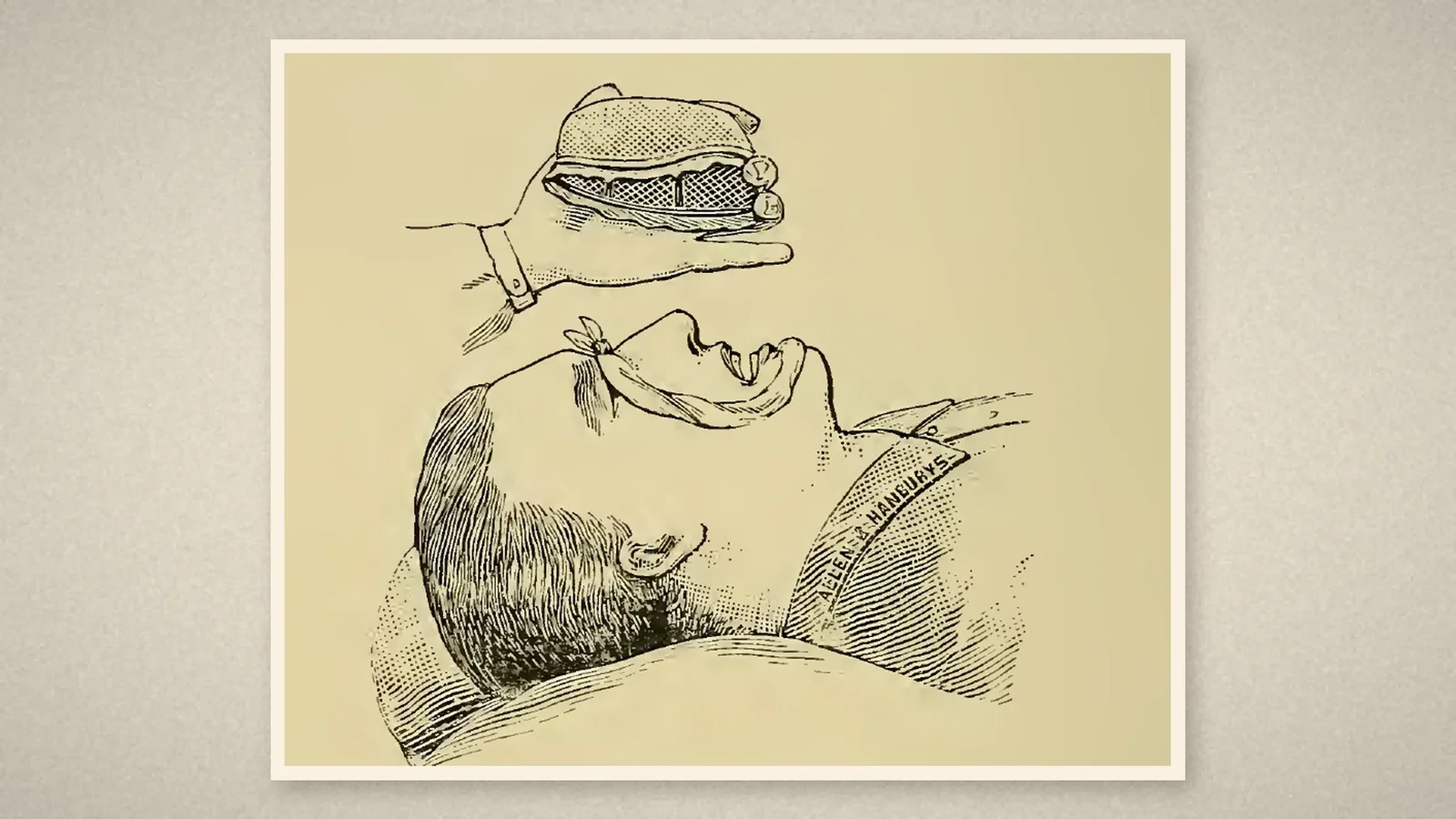
Morphine appears in several places. A hypodermic injection of morphine was "of great use" in persistent spasm; against shock, morphine with atropine injected fifteen minutes before the anaesthetic was "an excellent adjuvant". [1, p. 35; 1, p. 220] In describing open ether Gardner quoted an American account in which morphine and atropine were given thirty minutes before operation to avoid tracheal mucus, citing Surgery, Gynecology and Obstetrics of December 1906. [1, p. 144] The open method of giving ether, Gardner noted, had been used in America for several years; after experiments of Gardner's own, ether was poured onto a wire-frame mask covered with ten layers of white gauze. [1, p. 139]
The photographs
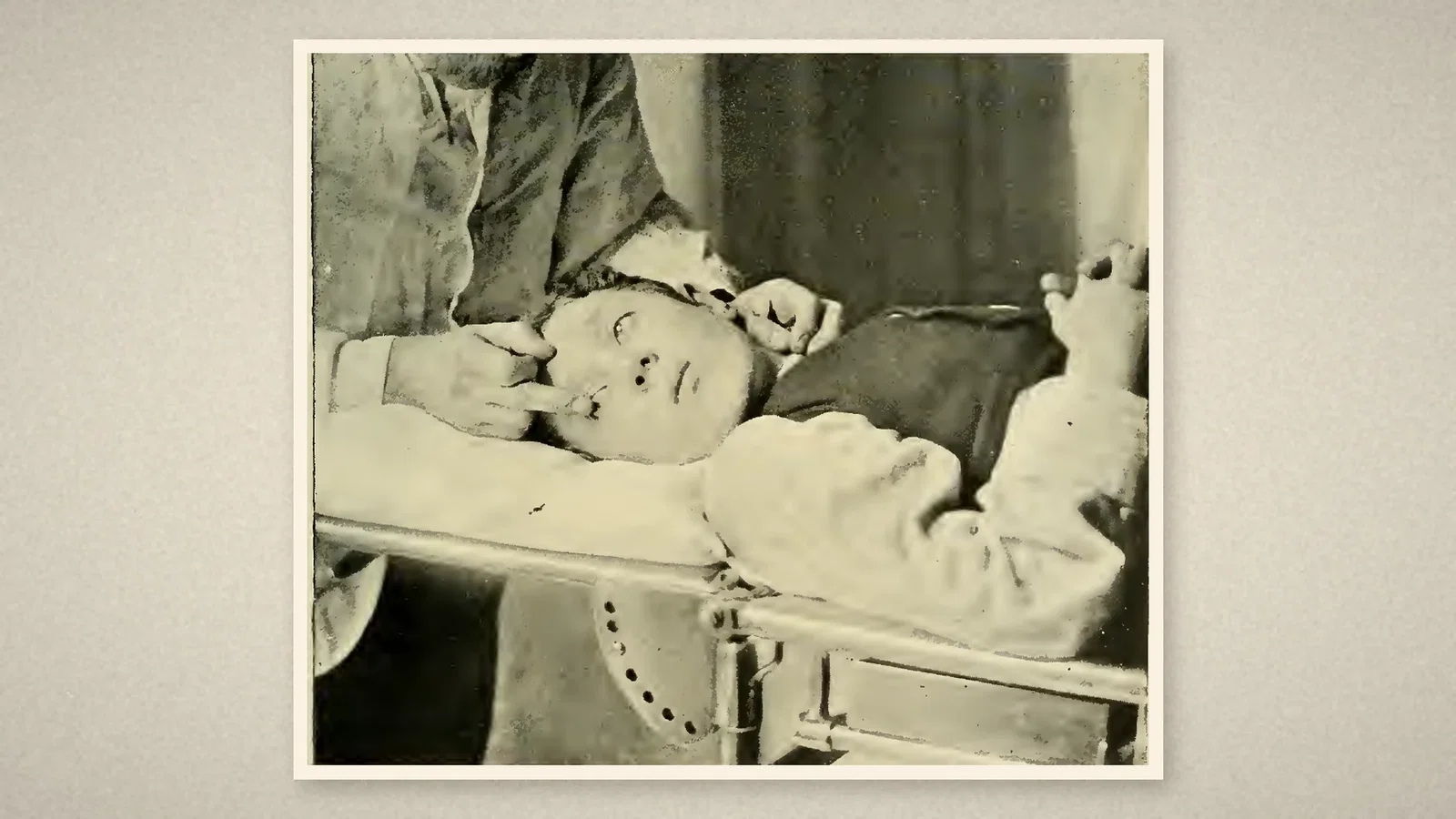
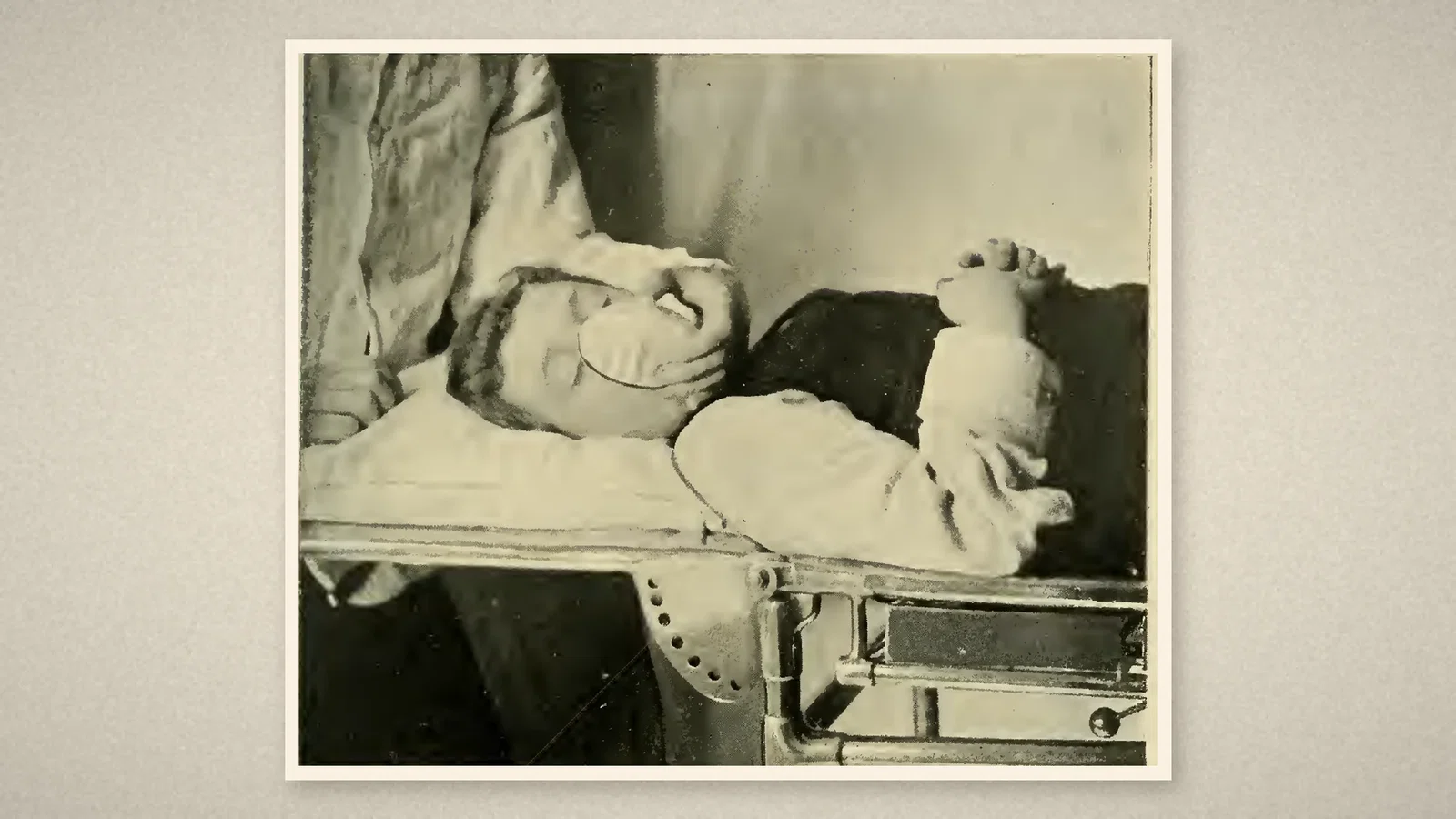
Perhaps the most striking part of the book is its photographs. Plates I and II show the jaw pushed forward to keep the airway clear and the corneal reflex being tested; Plate VII, a mask held over the face with the chin supported; Plate VIII, the "latero-prone posture for recovery from anaesthetics": face towards the floor, mouth held open with a prop, upper leg drawn forward to stop the body rolling back. [1, plates I–VIII] They put on paper as much as possible of what the preface said only demonstration could teach.
What the record shows
Surgical Anaesthesia of 1909 was not a regulation but a textbook. Still, it set out one position clearly: anaesthesia had to be practised by hand, repeatedly, under supervision; the breathing had to be listened to; and the anaesthetist was responsible from the pre-operative fast until the patient was safely back in bed. That is the outline of anaesthesia as a distinct duty.
Sources and reading limits
Read: H. Bellamy Gardner, Surgical Anaesthesia, New York: William Wood & Co., 1909 (Internet Archive, Harvard Medical School copy): title page, preface, contents and list of illustrations, chapter II (pp. 23–25), the opening of chapter III (p. 26), chapter IX (pp. 88–90), the passages on morphine and atropine (pp. 35, 144, 220), the open-ether section (pp. 139–140), and plates I–II and VII–VIII.
Not covered: whether a London edition appeared the same year, and how the book was reviewed, were not checked. The book did not codify undergraduate training and preliminary medication: the book argues that every student should learn the principles and train under supervision, and mentions morphine and atropine in several places, but it is a manual, not a regulation. The American source Gardner quotes on open ether (Surgery, Gynecology and Obstetrics 1906, pp. 795–799) was not checked, and its author is not named here. Doses are not given because the scanned text is hard to read at those points.
All four illustrations are crops of plates and figures from the 1909 book, unaltered.
- Gardner HB. Surgical anaesthesia. New York: William Wood & Co.; 1909. Internet Archive
Continue exploring
Related reading connects shared questions and contexts; it does not by itself establish historical influence.
Anesthesia Epochs · The Source Room · About & Editorial Method
Published November 2, 2026. Sources and reading limits are stated above. Illustrations are labelled as original source images or AI-made. Historical accounts are educational; they are not current treatment instructions.