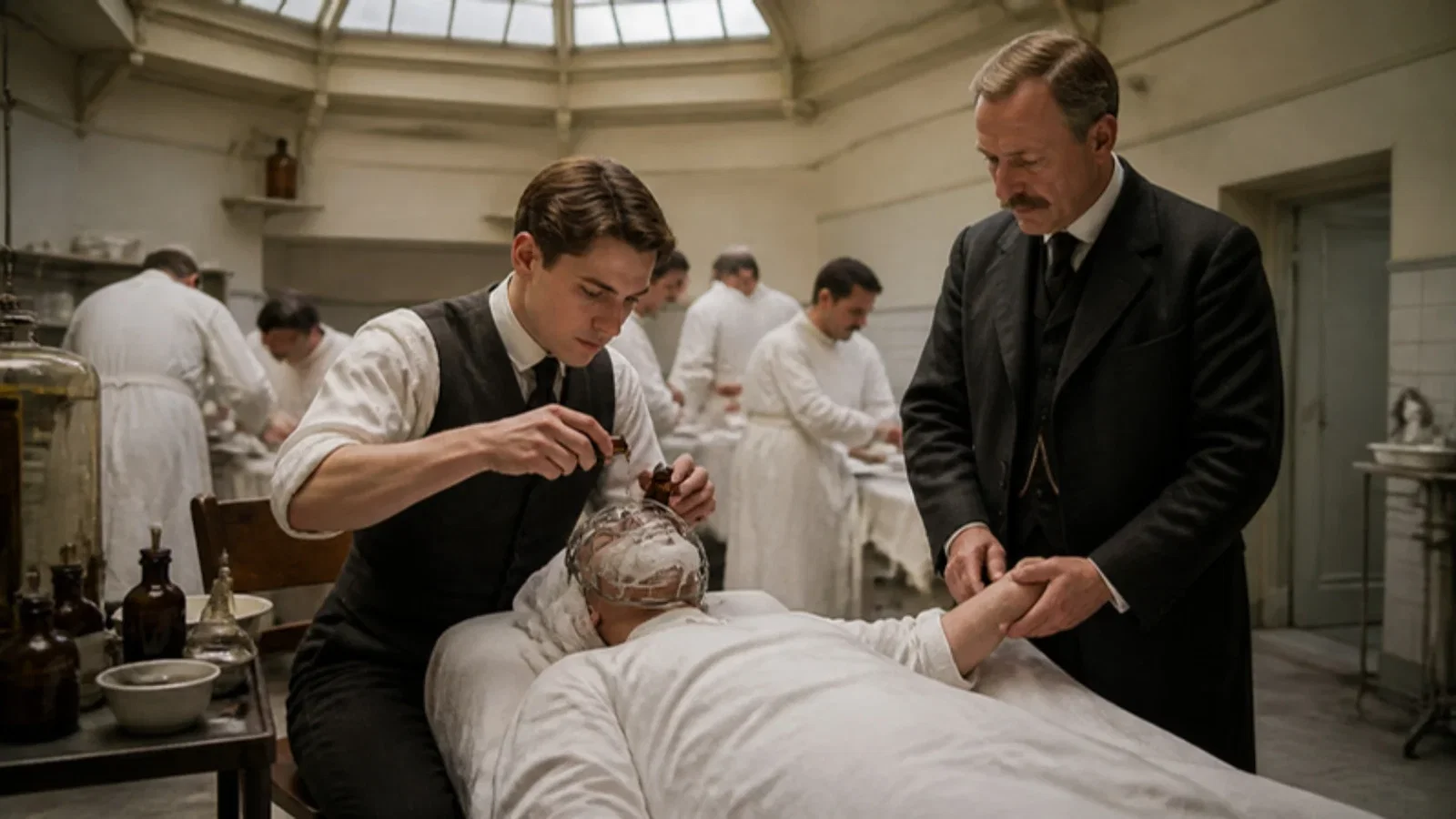
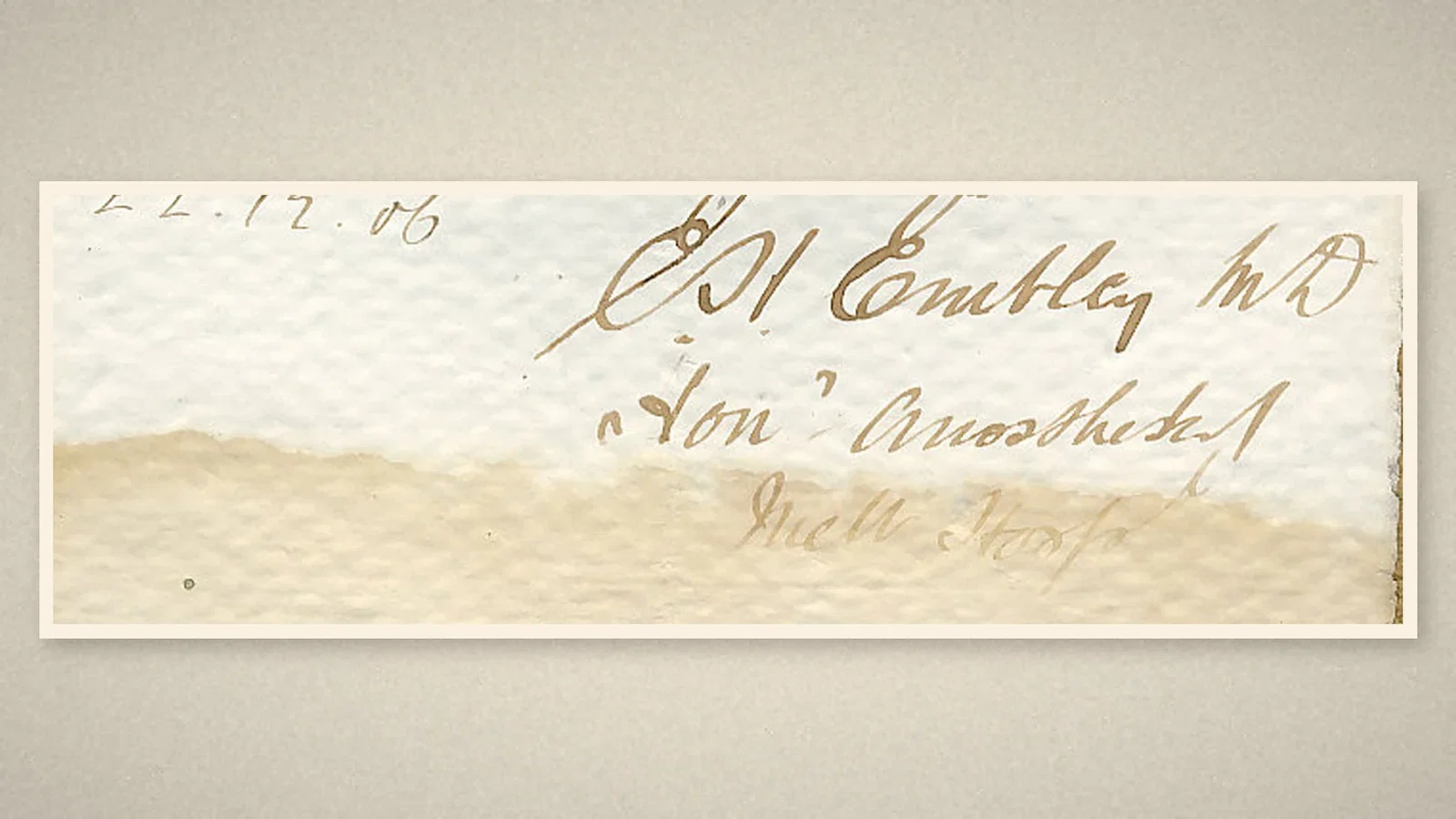
A handwritten note certifies that a medical student personally gave six anaesthetics; the signature is that of Embley, who had studied sudden death under chloroform.
Reading Library · Anesthesia Epochs · 中文版
Watch the education video (for clinicians)
1906: Melbourne's Anaesthetic Certificate — Six Cases Assessed · Anesthesia Epochs Education Series
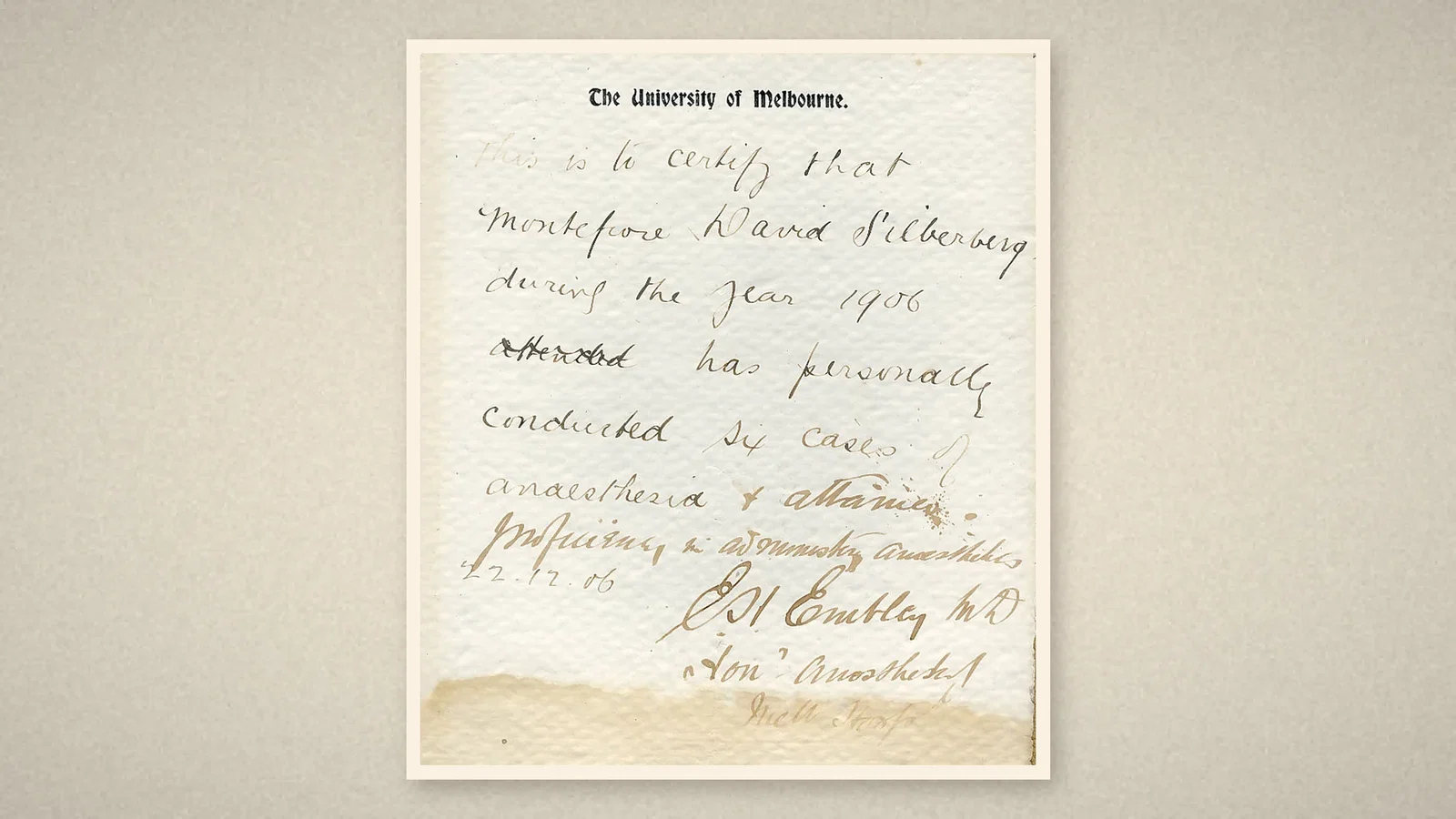
It is a small sheet of paper. At the top is the printed heading "The University of Melbourne"; below it, a few lines in ink: this is to certify that Montefiore David Silberberg, during the year 1906, has personally conducted six cases of anaesthesia and attained proficiency in administering anaesthetics. It is dated "22.12.06" and signed "E. H. Embley MD, Hon. Anaesthetist, Melb. Hosp." [1]
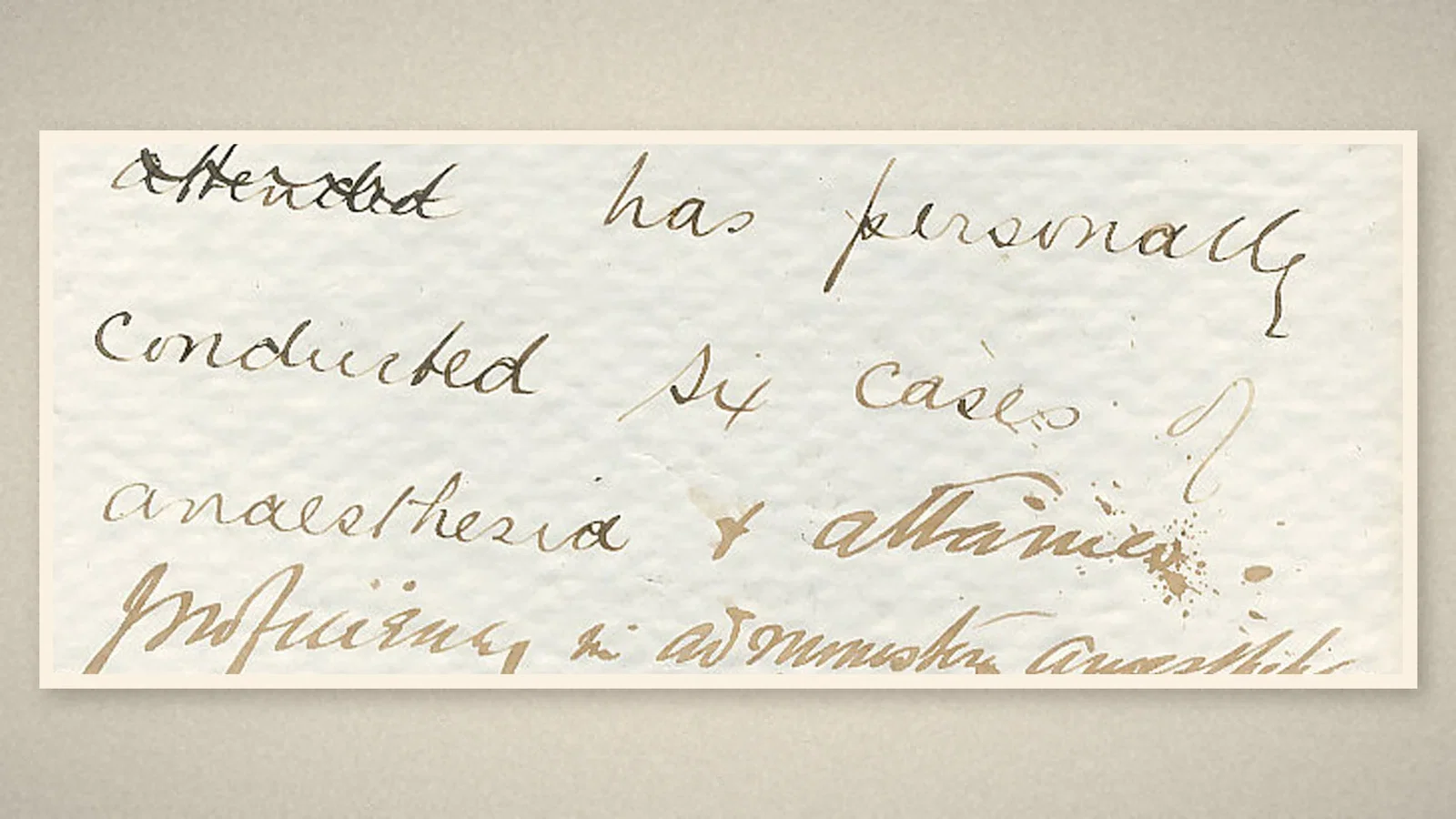
One word in the text has been struck through: "attended", replaced by "has personally conducted". [1] The correction deserves a second look. What is certified is not that the student watched anaesthetics in the theatre but that the student gave them personally.
How the museum reads it
The certificate is held by the Geoffrey Kaye Museum of Anaesthetic History as VGKM5046. [5] The museum's exhibition text says that for its first fifty years modern anaesthesia was largely given by untrained people, such as medical students, nurses and hospital porters, under the surgeon's direction; anaesthesia was eventually taught as part of the medical degree, but each student had only to give six successful general anaesthetics to become proficient. [5] The museum adds that the brevity and simplicity of the document show how little anaesthesia was appreciated then compared with its professional standing now. [5]
Two statements need to be kept apart here. The museum writes "six successful general anaesthetics"; the certificate itself says "six cases of anaesthesia", without "successful" or "general". [1; 5] Nor was the University of Melbourne regulation that set the requirement found for this article. The number six is attested by the original; whether it was a fixed rule for every student, and how it was applied, is a question for the university's archives.
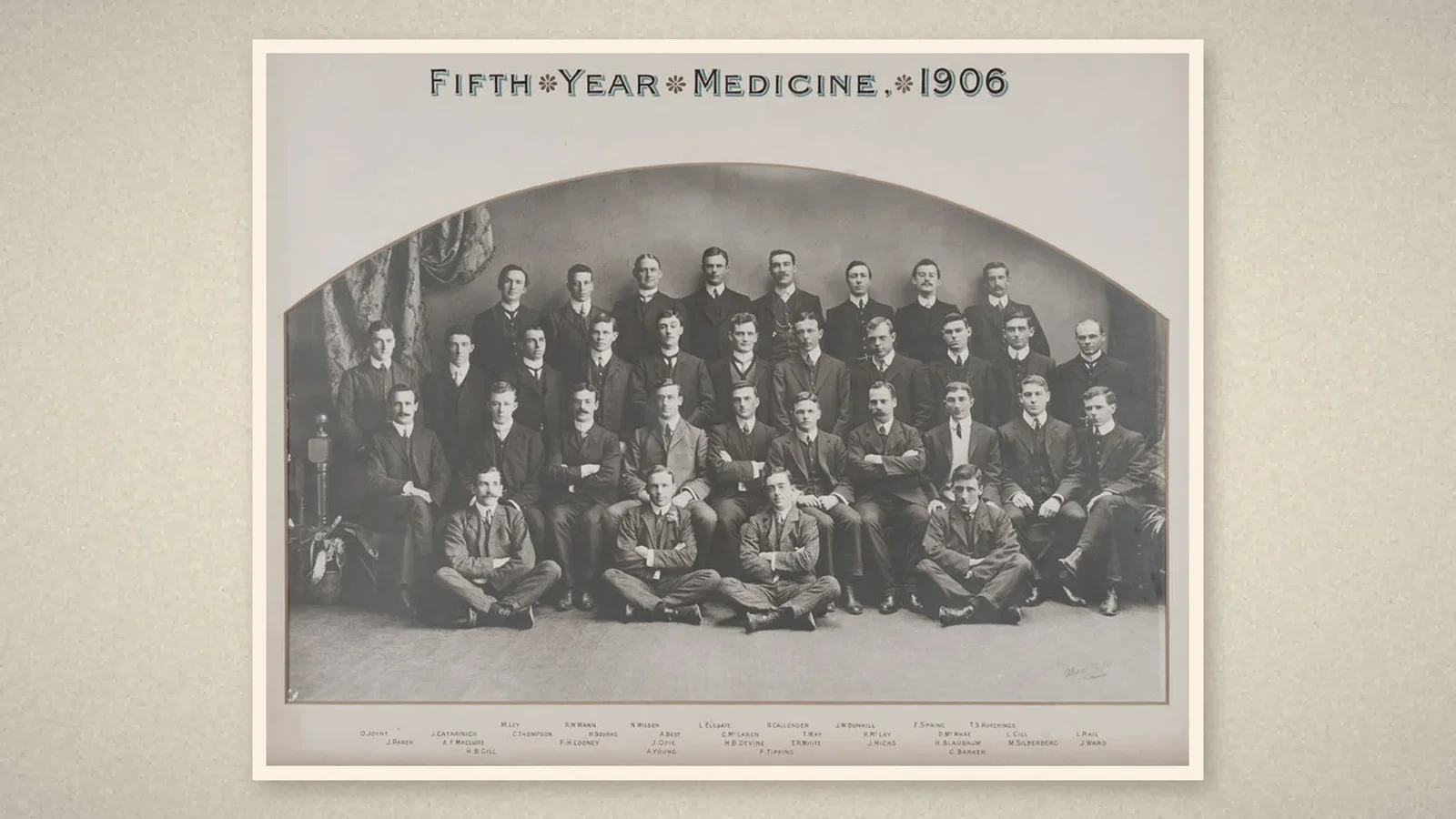
In the same year the photographer Alice Mills photographed the University of Melbourne's fifth-year medical class. The mount reads "Fifth Year Medicine, 1906", and the printed names below include "M. Silberberg"; the museum identifies Silberberg as second from the right in the second row. [5]
The man who signed it
The signatory, Embley, was not someone who merely signed papers. In April 1902 the British Medical Journal published Embley's long paper "The causation of death during the administration of chloroform" over several issues, signed as Honorary Anaesthetist to the Melbourne Hospital, with the work done in the Physiological Laboratory of the University of Melbourne. [2, p. 817] Embley explained the choice to study death in early anaesthesia on the ground that the tendency to die was greater at that stage. [2, p. 817]
On 19 April 1902 the BMJ devoted a leading article to the work. Embley, it said, was the anaesthetist at the Melbourne Hospital, and the impetus for the research had been a number of unfortunate mishaps with chloroform among the hospital's patients; that such accidents had ceased since Embley learned their cause from the experiments was the best testimonial to their value. [3] The leader noted the co-operation and advice of the physiologist Professor C. J. Martin, and that the subject was sudden death in the induction period, "very often before the surgeon has touched the patient". [3] Martin had already presented the experiments on sudden death under chloroform to the Society of Anaesthetists in London on 7 February 1902. [4]
Put side by side, the two documents carry a tension. An anaesthetist who was publishing on the mechanism of chloroform deaths in an international journal signed a student's certificate whose standard was six cases. This does not mean Embley took anaesthesia lightly; Embley's research began from patients' accidents. It suggests that the place university teaching gave to anaesthesia was far smaller than the understanding of it held by the few dedicated anaesthetists.
What the record shows
A certificate, a class photograph, a paper on chloroform deaths. In 1906 a Melbourne medical student proved competence in anaesthesia with a few handwritten lines from a dedicated anaesthetist and the number six. The museum reads this as evidence of how little anaesthesia was valued; the struck-out "attended" on the original is a reminder that, even at six cases, students were already expected to give the anaesthetic themselves rather than watch.
Sources and reading limits
Read: the museum image of the original certificate (VGKM5046); the museum image of the 1906 fifth-year class photograph (MHM00487) and its printed names; the Geoffrey Kaye Museum's "Australia and New Zealand" exhibition text; in the BMJ for 1902, vol. 1, the opening of Embley's paper, the leader of 19 April and the notice of Martin's paper.
Not covered: the University of Melbourne regulation or calendar setting the requirement; Gwen Wilson's monograph and the obituary of Silberberg ("MJA 1960;1(18):717–719"); Embley's later paper in the Journal of Physiology. The page number of the 19 April leader is not given. The sources read do not show that the certificate led to later Australian specialist appointments or training.
All four illustrations are crops of the museum's images of the two original objects, unaltered.
- University of Melbourne. Certificate of proficiency in anaesthesia, M. D. Silberberg. 22 Dec 1906. Signed E. H. Embley. Geoffrey Kaye Museum of Anaesthetic History, VGKM5046. GKM
- Embley EH. The causation of death during the administration of chloroform. Br Med J. 1902;1(2153):817-21. doi:10.1136/bmj.1.2153.817. Internet Archive
- The causation of death during the administration of chloroform [leading article]. Br Med J. 1902 Apr 19;1(2155). Internet Archive
- The cause of sudden death under chloroform [notice]. Br Med J. 1902;1. Internet Archive
- Geoffrey Kaye Museum of Anaesthetic History. Australia and New Zealand [online exhibition]. GKM
Continue exploring
Related reading connects shared questions and contexts; it does not by itself establish historical influence.
- 1900: Janet Greig Becomes an Honorary Anaesthetist in Melbourne
- 1893: London's Society of Anaesthetists Brings Experience Before Peers
Anesthesia Epochs · The Source Room · About & Editorial Method
Published November 2, 2026. Sources and reading limits are stated above. Illustrations are labelled as original source images or AI-made. Historical accounts are educational; they are not current treatment instructions.