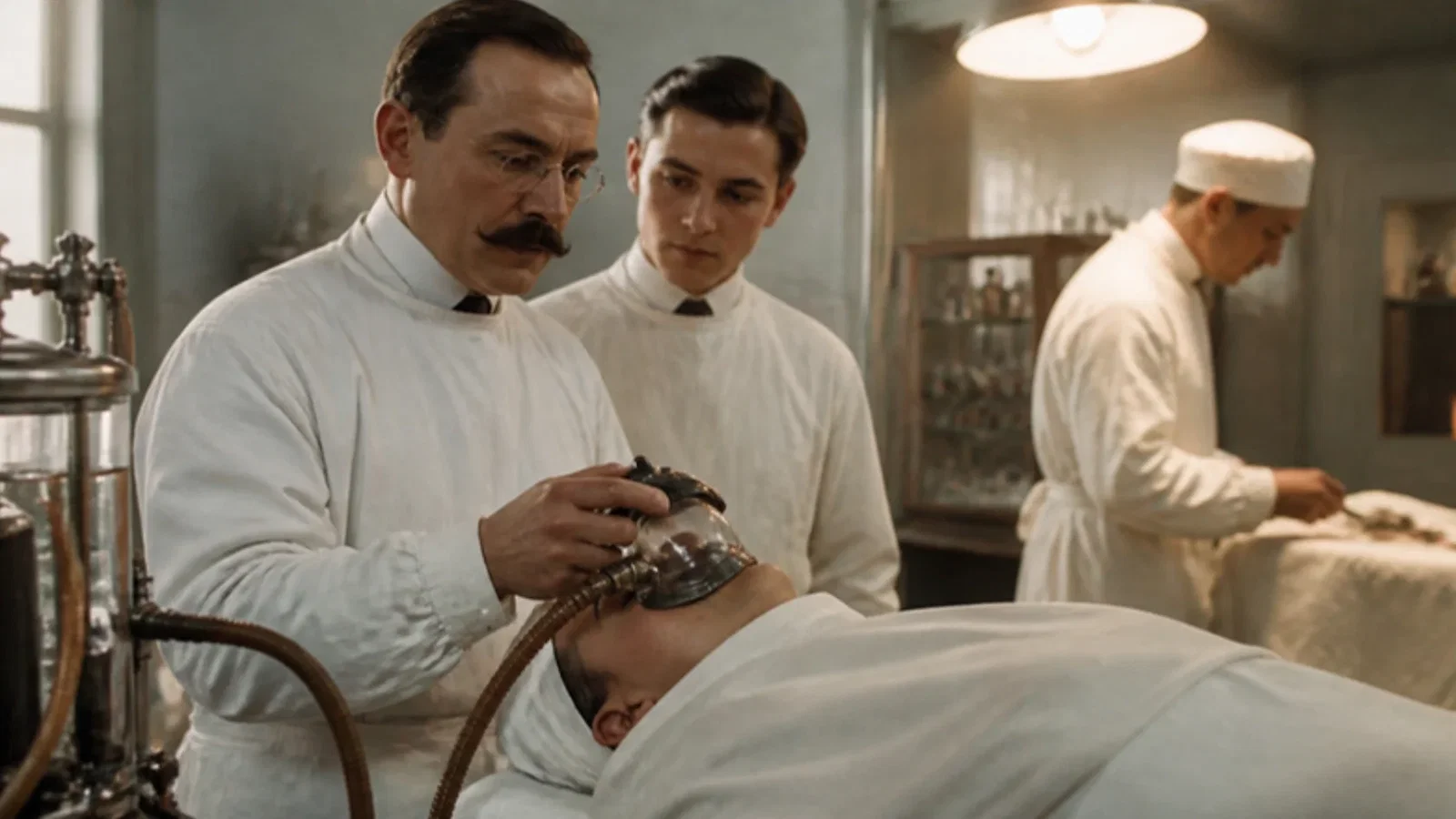
'More than a mere mechanical performance, it is an art': a book for students, internes and general practitioners.
Reading Library · Anesthesia Epochs · 中文版
Watch the education video (for clinicians)
1916: Paluel Flagg's The Art of Anaesthesia — Protecting the Eyes · Anesthesia Epochs Education Series
In 1916 J. B. Lippincott of Philadelphia and London published a book whose title stated its argument: The Art of Anaesthesia. Its author, Paluel J. Flagg, listed these posts on the title page: lecturer in anesthesia at Fordham University Medical School, anaesthetist to Roosevelt Hospital, instructor in anaesthesia to Bellevue and allied hospitals (Fordham division), consulting anesthetist to St Joseph's Hospital in Yonkers, formerly anesthetist to the Woman's Hospital in New York City. The book had 136 illustrations. [1]
Frontispiece and dedication
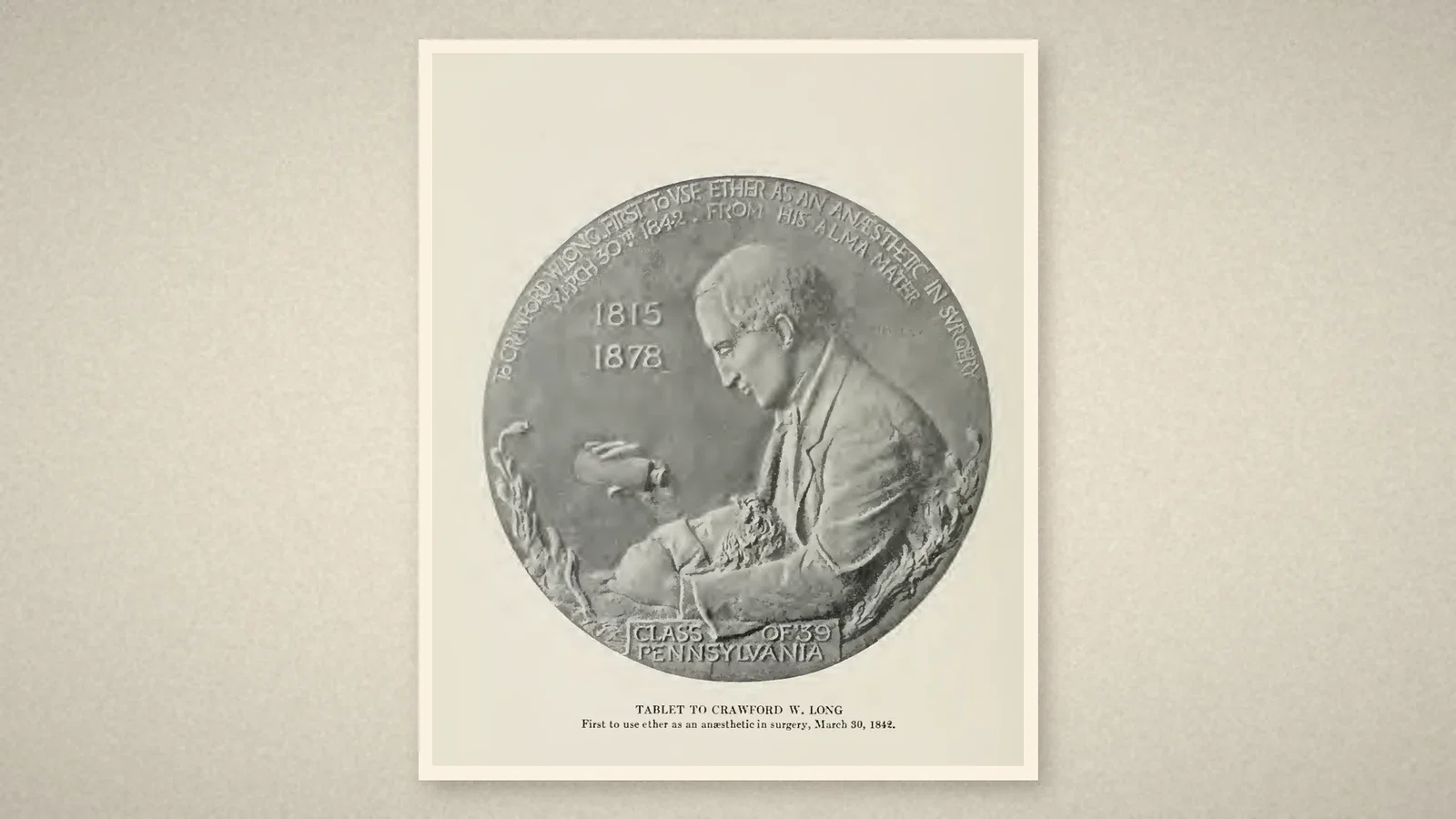
The frontispiece is a photograph of a bronze tablet, captioned "Tablet to Crawford W. Long. First to use ether as an anaesthetic in surgery, March 30, 1842". [1] The dedication page carries a single line: "To I. H. S. My Dearest Master this book Is Humbly Dedicated". [1]
"It is an art"
The preface opens with the book's thesis: "The proper administration of an anaesthetic is more than a mere mechanical performance, it is an art." [1, p. v] The art, Flagg explained, is acquired by becoming familiar with the laws that govern administration and by learning to correlate and apply them; knowledge of the laws is essential, but the ability to apply them is the essence of the art. "Experience begets dexterity, tact and skill", qualities somewhat intangible but indispensable, implying a correct and spontaneous response to the patient's needs. [1, p. v]
So-called empirical, percentage and shock-absorbing methods had their place, Flagg wrote, but should not dominate the art; "they are its tools", to be judged with regard to the surgeon, the patient, the time, the place and much else. [1, p. v] Then a line often quoted since: a thousand anaesthesias, instead of leading to crudeness, "should make one a thousand times more careful"; one should try to formulate laws as one goes and test them on the next case. [1, p. v]
Against lay anaesthetists
The second part of the preface is sharper. The art of anaesthesia, Flagg wrote, implies an intimate knowledge of general medicine, pathology, surgery, therapeutics and psychology; those without it "cannot understand the language of anaesthesia". How could a lay person judge acidosis, toxaemia, carbon dioxide, stimulation and depression? [1, p. vi]
Flagg quoted a question patients often asked: "How does Dr. — know that I can safely take an anesthetic?", which implied that a preliminary examination was needed, and by a physician. [1, p. vi] From the surgeon's side, letting a non-medical person give the anaesthetic suggested to a thoughtful patient a lack of care that might extend to the operation itself. [1, p. vi] Flagg's image: "A layman who administers an anesthetic is like a blind guide who is led by the patient, instead of leading him", and "those who relegate anesthesia to the layman, place the responsibility of the outcome on their own shoulders". [1, p. vi]
For whom, and how
The book, the preface says, was a groundwork on which the student, interne and general practitioner could build, and it proposed "to describe anaesthesia as the student will actually find it". [1, p. vii] It classified the stages of anaesthesia as induction, maintenance and recovery, a scheme that "meets these requirements admirably" in practice and is easily demonstrated and grasped; ether, as the most widely used anaesthetic, served as the basis of the account. [1, p. vii]
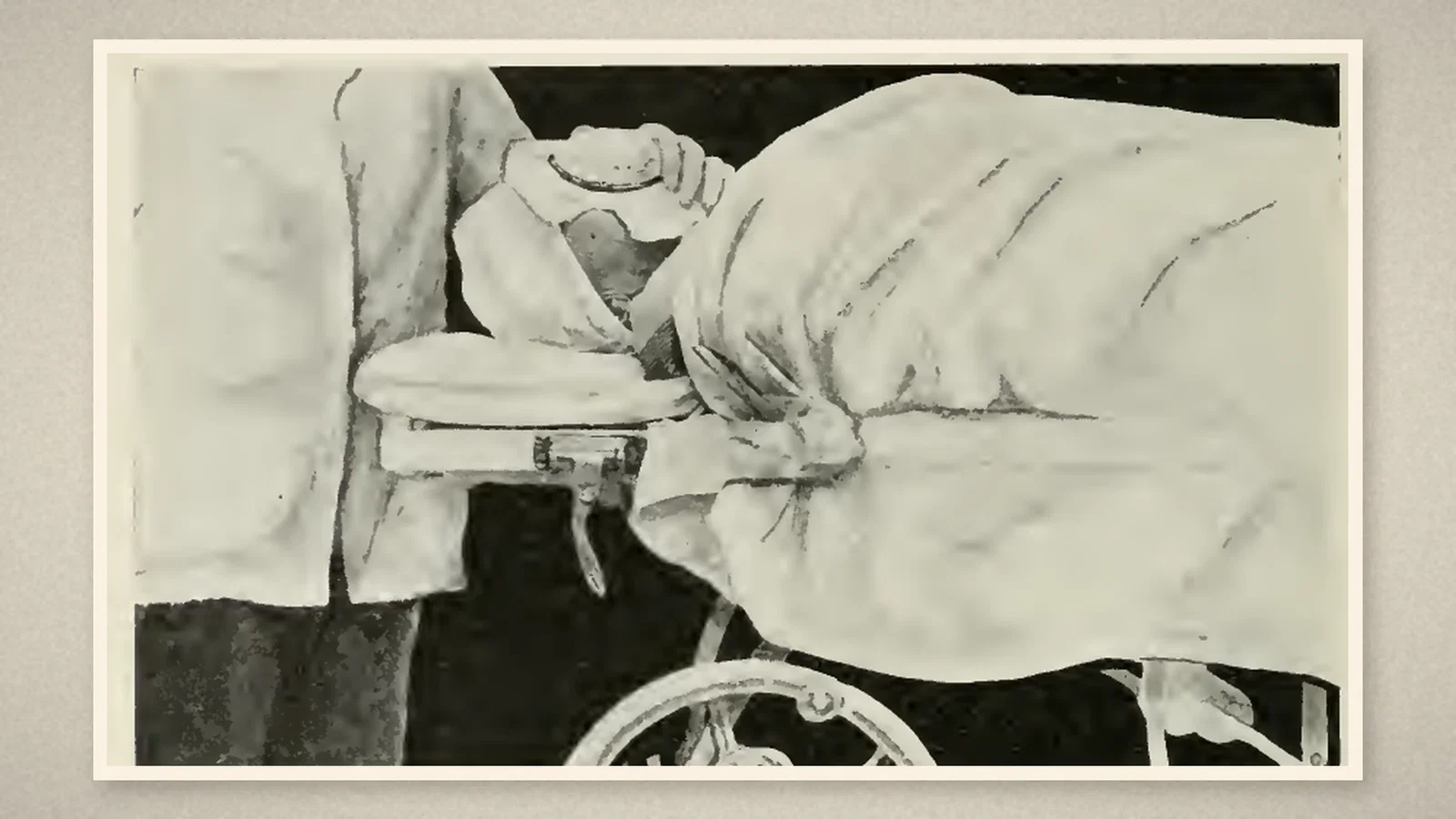
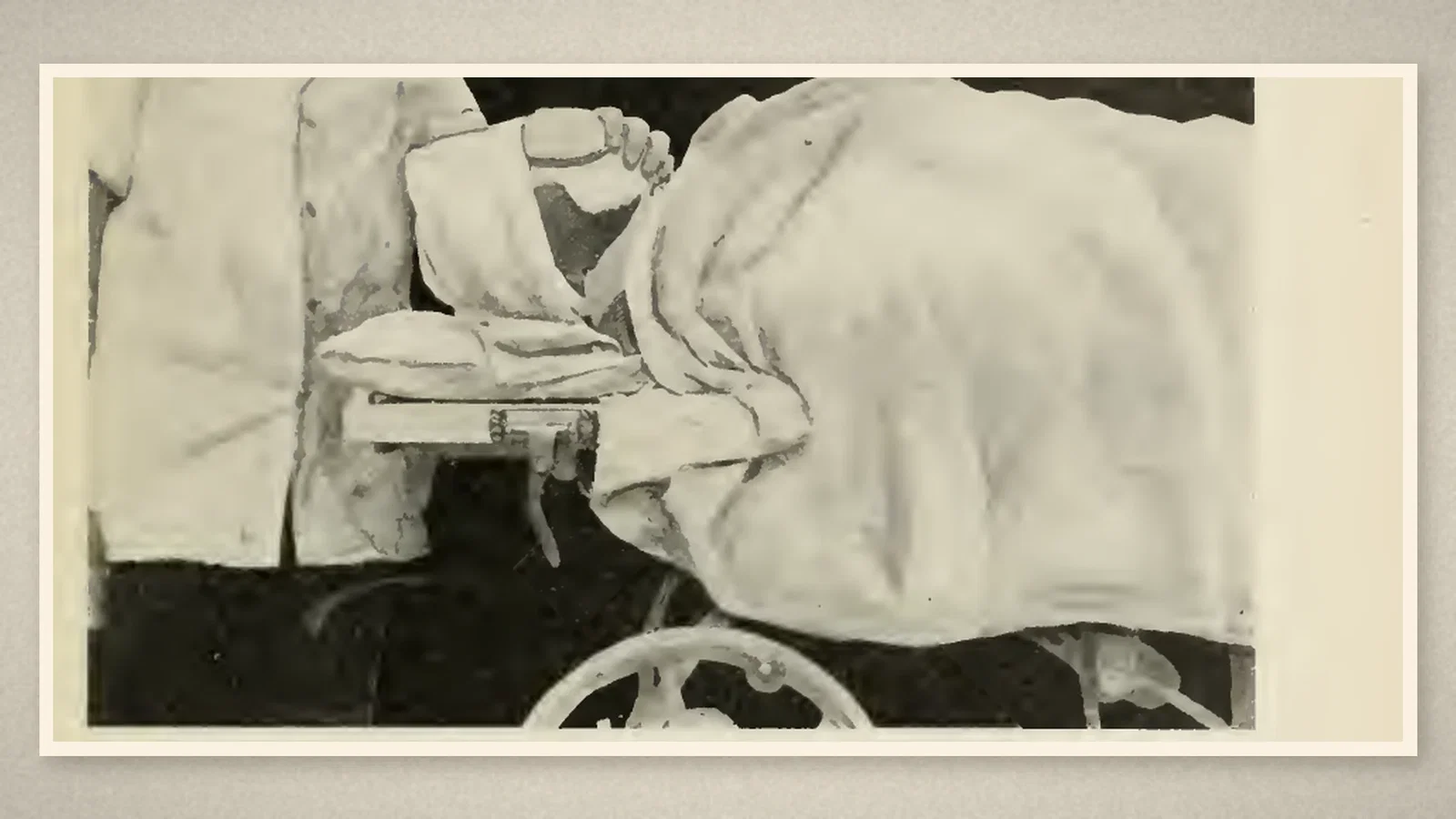
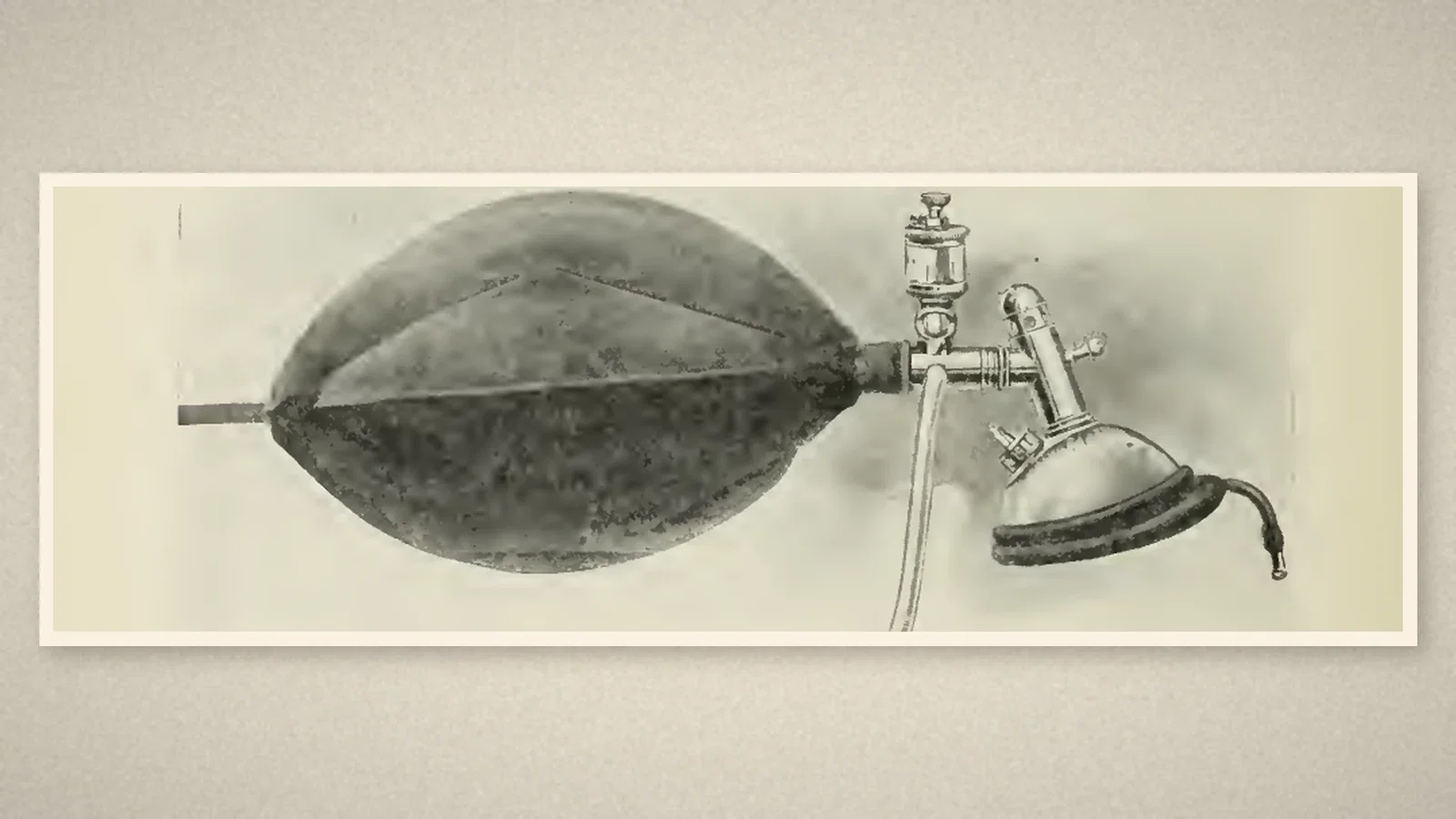
In the ether chapter Flagg showed the semi-open drop method step by step in photographs: an open mask covered with at least twelve layers of gauze, a folded towel over the patient's eyes first, then towels drawn over the upper and lower parts of the mask. [1, p. 128–131] Its listed advantages included less ether in the operating-room air, less loss of body heat and quicker induction. [1, p. 131] The book also shows Flagg's own apparatus for closed drop ether and for gas-oxygen-ether anaesthesia. [1, p. 134]
What the record shows
The Art of Anaesthesia of 1916 made a position plain: anaesthesia is clinical judgement resting on broad medical knowledge, not a craft to hand over to laymen. It taught that judgement through a three-stage scheme and step-by-step photographs, and its preface argued hard that the anaesthetist must be a physician.
Sources and reading limits
Read: Paluel J. Flagg, The Art of Anaesthesia, Philadelphia and London: J. B. Lippincott Company, copyright 1916 (Internet Archive, UCLA copy): title page, frontispiece, dedication, preface, and the ether chapter pp. 128–134 with Figs. 67–72.
Not covered: the rest of the book was not read in full. Flagg's later life and work, including the "Flagg can", do not appear in the parts read. The 1919 and 1922 editions were not compared. The dedication "I. H. S." is given as printed, without interpretation.
All four illustrations are crops of figures and the frontispiece of the 1916 book, unaltered.
- Flagg PJ. The art of anaesthesia. Philadelphia and London: J. B. Lippincott Company; 1916. Internet Archive
Continue exploring
Related reading connects shared questions and contexts; it does not by itself establish historical influence.
- 1914: Gwathmey and Baskerville Publish Anesthesia
- 1915: Pohl's N-Allylnorcodeine Pushes Morphine Back
Anesthesia Epochs · The Source Room · About & Editorial Method
Published November 2, 2026. Sources and reading limits are stated above. Illustrations are labelled as original source images or AI-made. Historical accounts are educational; they are not current treatment instructions.