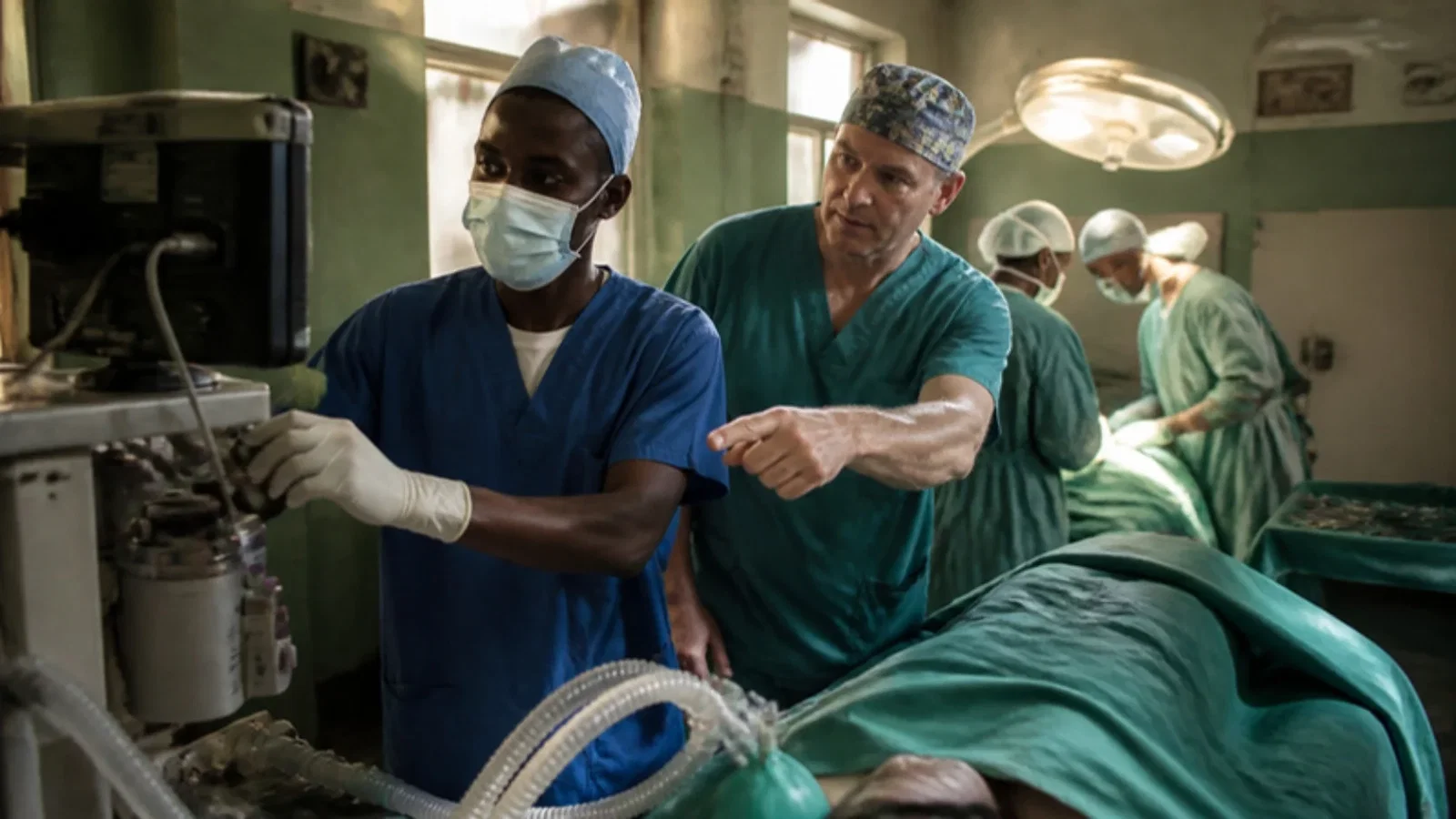
Twelve years after the genocide, when Rwanda had only a few physician anaesthetists, the National University of Rwanda opened a four-year anaesthesia residency taught with month-long volunteers from the Canadian and American societies.
Reading Library · Anesthesia Epochs · 中文版
Watch the education video (for clinicians)
2006: The Rwanda Anaesthesia Residency — Canadian Volunteers · Anesthesia Epochs Education Series
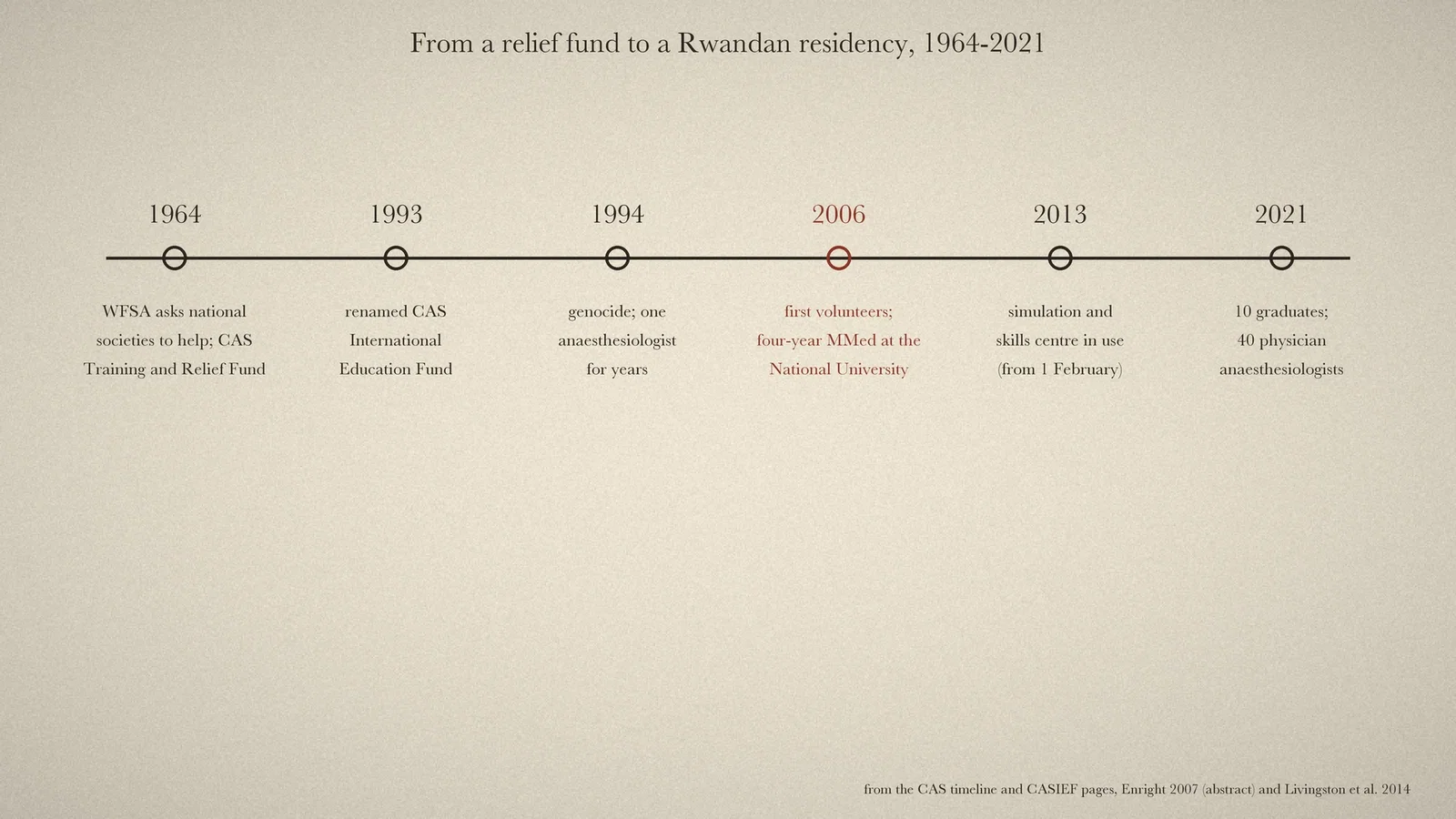
The Canadian Anesthesiologists' Society (CAS) history timeline, under 2004-2006, has one line on Africa: its International Education Foundation's "residency training program in Rwanda had its first volunteers in early 2006". [1] This article follows that programme from the Canadian fund that made it possible to the first account of how it worked, and to what its partners later reported.
A fund looking for a programme
According to the CAS page on the foundation, the story begins in 1964, when the World Federation of Societies of Anaesthesiologists (WFSA) asked national societies to help make modern anaesthesia available in under-resourced regions. The Canadian society set up the CAS Anaesthesia Training and Relief Fund, which supported Canadian anaesthetists in setting up teaching centres abroad. The fund's activity later fell away; between 1988 and 1993, over 60 Canadian anaesthesiologists took part in overseas programmes run by other non-profit organisations, but none run by their own society. At the June 1993 annual meeting the fund's trustees agreed that a national society in a well-resourced country had "an ethical responsibility" to help, and the fund was renamed the CAS International Education Fund, later Foundation (CASIEF). [2]
Rwanda after 1994
The CASIEF Rwanda page says that after the genocide of 1994 there was "only one anesthesiologist in the country for years", and that by 2005 Rwanda still had only a few physician anaesthesiologists. CASIEF was invited to help train anaesthesia residents at what is now the University of Rwanda; "The educational partnership began in 2006." [3] The page also quotes Dr Jeanne d'Arc Uwambazimana of Rwanda: "In June I was alone because most of the people working here- they left." [3]
The programme in 2006
The first published description came from A. Enright of the University of British Columbia in the Canadian Journal of Anesthesia in 2007. In 2006, the abstract says, a programme leading to a Master of Medicine (MMed) in anaesthesia was established in Rwanda as a joint venture of the National University of Rwanda, CASIEF and the American Society of Anesthesiologists Overseas Teaching Program. Most such programmes in Africa took three years; "Rwanda has decided on a four-year program." Canadian and American volunteers went to Rwanda to teach for at least one month, in the operating room and the classroom, and taught the nurse anaesthetists as well as the residents. [4]
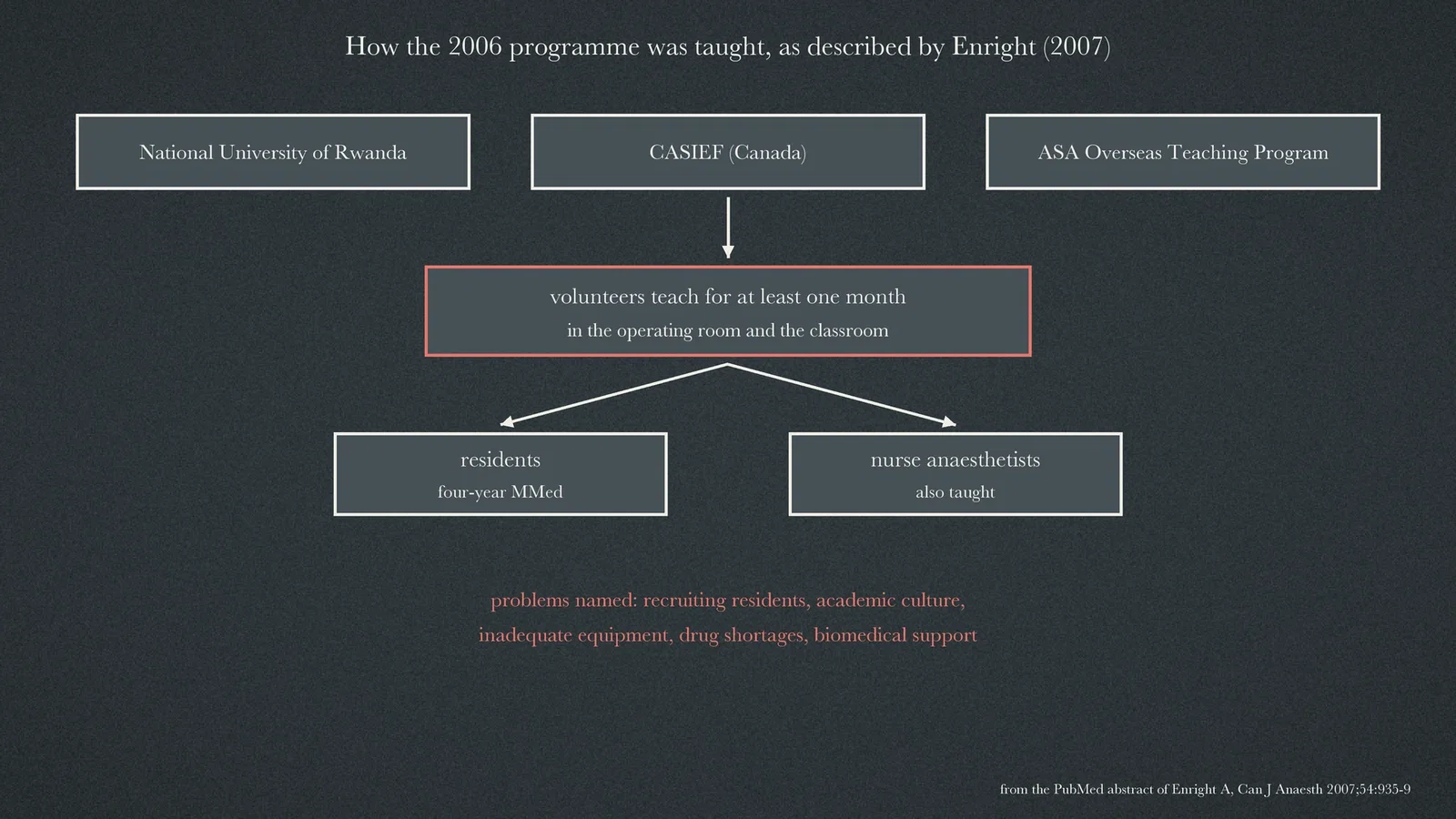
Enright did not describe a smooth start. The abstract lists difficulties in recruiting residents and in building an academic culture and evaluation system; inadequate equipment and drug shortages limited the kinds of anaesthesia that could be given, and biomedical support needed improvement. CASIEF planned special attention to pain management. The stated goal was that Rwanda would become self-sufficient in training its own anaesthesiologists "and in retaining them". [4] In 2010 T. Twagirumugabe of the National University of Rwanda and F. Carli presented the residency as "a model of north-south educational partnership". [5]
Numbers
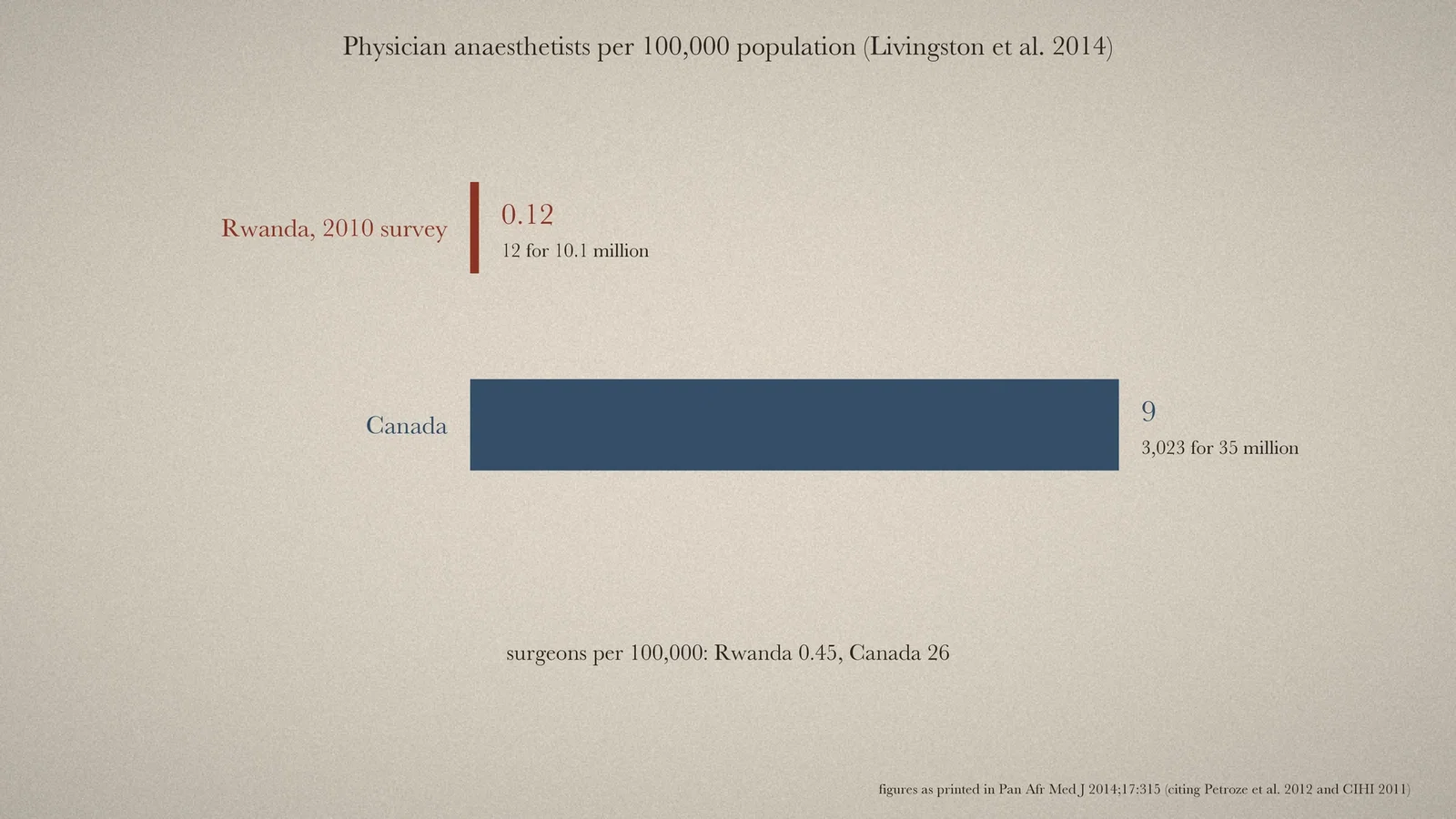
How few were the specialists? A 2014 article by Patricia Livingston and Canadian and Rwandan colleagues cites a 2010 survey: a population of 10.1 million had 12 physician anaesthetists, or 0.12 per 100,000, against 9 per 100,000 in Canada. [6]
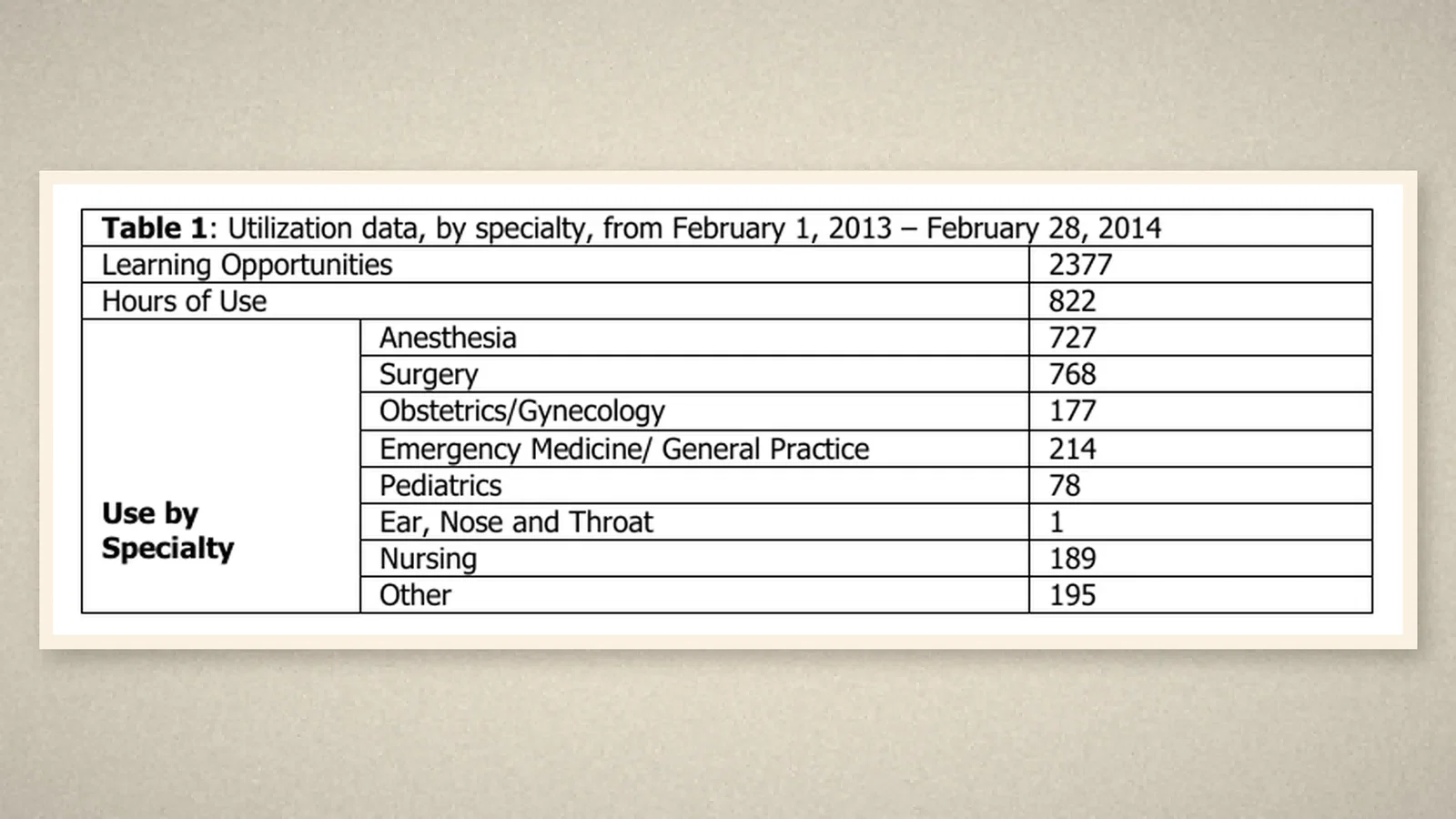
The same article describes a simulation and skills centre built on the "long-standing relationship (since 2006)" between the University of Rwanda and CASIEF. With a $100,000 grant from Grand Challenges Canada, a two-room building at the University Teaching Hospital of Kigali was renovated and equipped with low-cost simulators. In its first 13 months it provided 2,377 learning encounters and 822 hours of training; in the article's table, anaesthesia accounts for 727 uses and surgery for 768. [6] Another 2014 report describes the SAFE (Safer Anaesthesia From Education) obstetric course for Rwandan anaesthesia technicians with three years of post-secondary training. [7]
Keeping the graduates
Enright's word "retaining" proved apt. A 2020 interview study found 24 Rwandan-trained anaesthesiologists eligible for interview, 15 practising in Rwanda and 9 who had left. Lack of equipment and medicines, isolation and demoralisation pushed people away; a rich academic life and optimism for the future kept them. [9] A 2019 article by E. Tuyishime, M. Durieux and P. R. Banguti offered the residency as a model for graduate medical education in low- and middle-income countries. [8] By CASIEF's account, the programme can now train up to 40 residents across four years, and in 2021 it graduated 10 physician anaesthesiologists, bringing the country's total to 40. [3] An audit of CASIEF travel published in 2023 put the carbon cost of the Rwanda partnership's air travel at 268.2 tonnes of carbon dioxide equivalent. [10]
What the record shows
The Rwandan residency was not invented in Canada. It was a university programme built after a national catastrophe, which outside volunteers helped to teach for a month at a time. The CAS fund created in response to a WFSA request in 1964 found a lasting partner here.
Sources and reading limits
Read: the CAS history timeline; the CAS page on CASIEF; the CASIEF Rwanda programme page; the full text of Livingston et al. 2014 in the Pan African Medical Journal (PDF pp. 1-3, including Table 1 as a page image); the PubMed abstracts of Enright 2007, Livingston et al. 2014 (obstetric course), Skelton et al. 2020 and Chibane et al. 2023; the PubMed records, without abstracts, of Twagirumugabe and Carli 2010 and Tuyishime et al. 2019.
Not covered: the full text of Enright 2007 and of Twagirumugabe and Carli 2010; Tuyishime et al. 2019, whose journal site sits behind a browser check that was not bypassed; any University of Rwanda or Ministry of Health document; any evaluation of patient outcomes. The start of the programme is therefore told mainly from Canadian sources; Rwandan voices appear as co-authors, in one quotation on the CASIEF page and in the interview study. The 2021 graduate figures are CASIEF's own and were not checked against a Rwandan source. That the June 1993 meeting and the renaming were the same occasion is how the CAS page presents it.
One illustration is a crop of Table 1 from Livingston et al. 2014; three are drawn from the sources.
- Canadian Anesthesiologists' Society. History timeline. Website
- Canadian Anesthesiologists' Society. CASIEF. Website
- Canadian Anesthesiologists' Society International Education Foundation. Rwanda. Website
- Enright A. Anesthesia training in Rwanda. Can J Anaesth. 2007;54(11):935-9. PubMed
- Twagirumugabe T, Carli F. Rwandan anesthesia residency program: a model of north-south educational partnership. Int Anesthesiol Clin. 2010;48(2):71-8. PubMed
- Livingston P, Bailey J, Ntakiyiruta G, Mukwesi C, Whynot S, Brindley P. Development of a simulation and skills centre in East Africa: a Rwandan-Canadian partnership. Pan Afr Med J. 2014;17:315. Full text
- Livingston P, Evans F, Nsereko E, et al. Safer obstetric anesthesia through education and mentorship: a model for knowledge translation in Rwanda. Can J Anaesth. 2014;61(11):1028-39. PubMed
- Tuyishime E, Durieux M, Banguti PR. The Rwanda Anesthesia Residency Program: a model for GME in low- and middle-income countries. J Grad Med Educ. 2019;11(4 Suppl):20-1. PubMed
- Skelton T, Irakoze A, Bould MD, Przybylak-Brouillard A, Twagirumugabe T, Livingston P. Retention and migration of Rwandan anesthesiologists: a qualitative study. Anesth Analg. 2020;131(2):605-12. PubMed
- Chibane S, Ryan T, Nizeyimana F, et al. An audit of the carbon footprint of travel for the Canadian Anesthesiologists' Society International Education Foundation partnerships. Can J Anaesth. 2023;70(3):327-34. PubMed
Continue exploring
Related reading connects shared questions and contexts; it does not by itself establish historical influence.
- 1990: Nicholas Greene's Overseas Teaching Program in East Africa
- 1997: Africa's Anaesthesiologists Form a WFSA Regional Section
Anesthesia Epochs · The Source Room · About & Editorial Method
Published November 2, 2026. Sources and reading limits are stated above. Illustrations are labelled as original source images or AI-made. Historical accounts are educational; they are not current treatment instructions.