Approval, pricing and supply have separate dates.
Reading Library · Anesthesia Epochs · 中文版
Watch the companion film
1990: Sevoflurane — Approval in Japan · Watch on YouTube
Historical anchor: 1990. Date details and source qualifications are explained below.
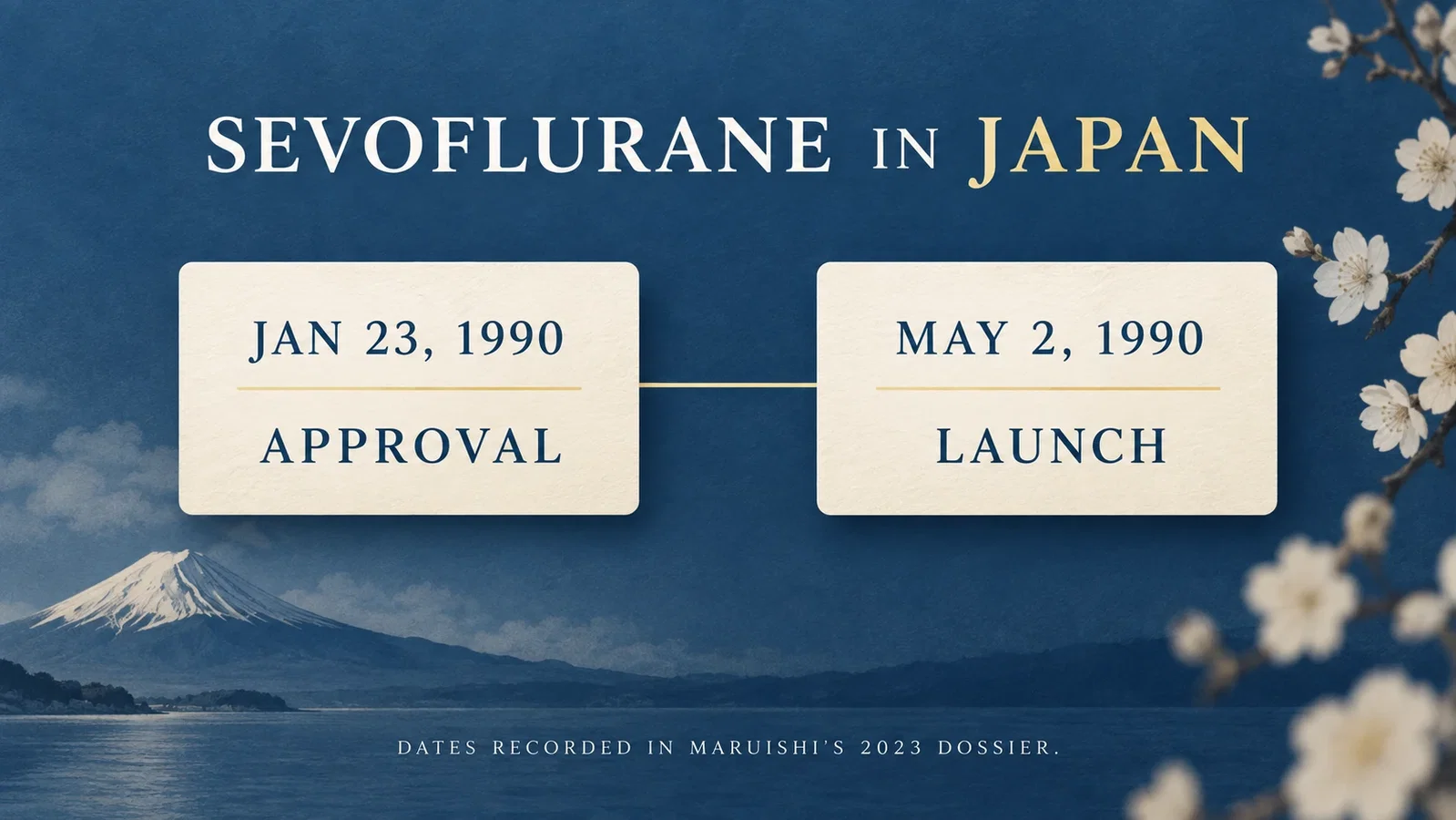
Japan approved Maruishi’s sevoflurane under the trade name Sevofrane on January 23, 1990. The company’s 2023 Interview Form records three separate steps: approval, inclusion in the drug-price standard on April 20, and the start of sales on May 2.[1, pp 1, 20] Approval anchors this article; commercial availability has its own date.
The same document explains why a modern product record can display 2009. Its cover gives an approval date associated with a change of trade name, while the administrative table preserves the original 1990 entry.[1, cover, p 20] A later name and registration number should not erase the earlier history. These dates come from the manufacturer’s formal retrospective record; the original 1990 approval letter is not covered.
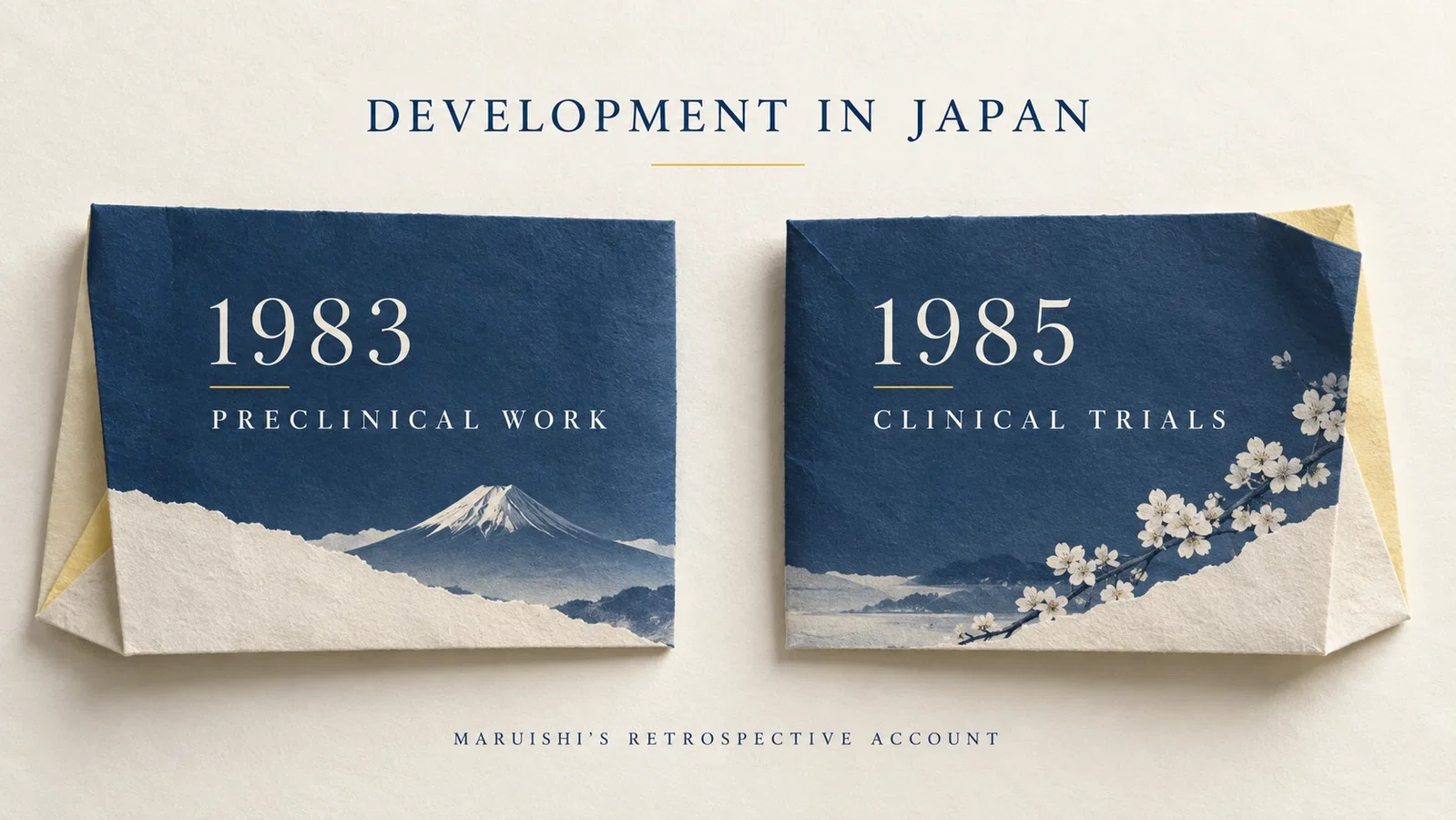
Development in Japan also proceeded in stages. According to the Interview Form, Maruishi acquired development rights from Travenol, began Japanese preclinical work in 1983 and clinical trials in 1985, then submitted its manufacturing-approval application.[1, p 1] Synthesis, licensing, trials and approval were distinct activities.
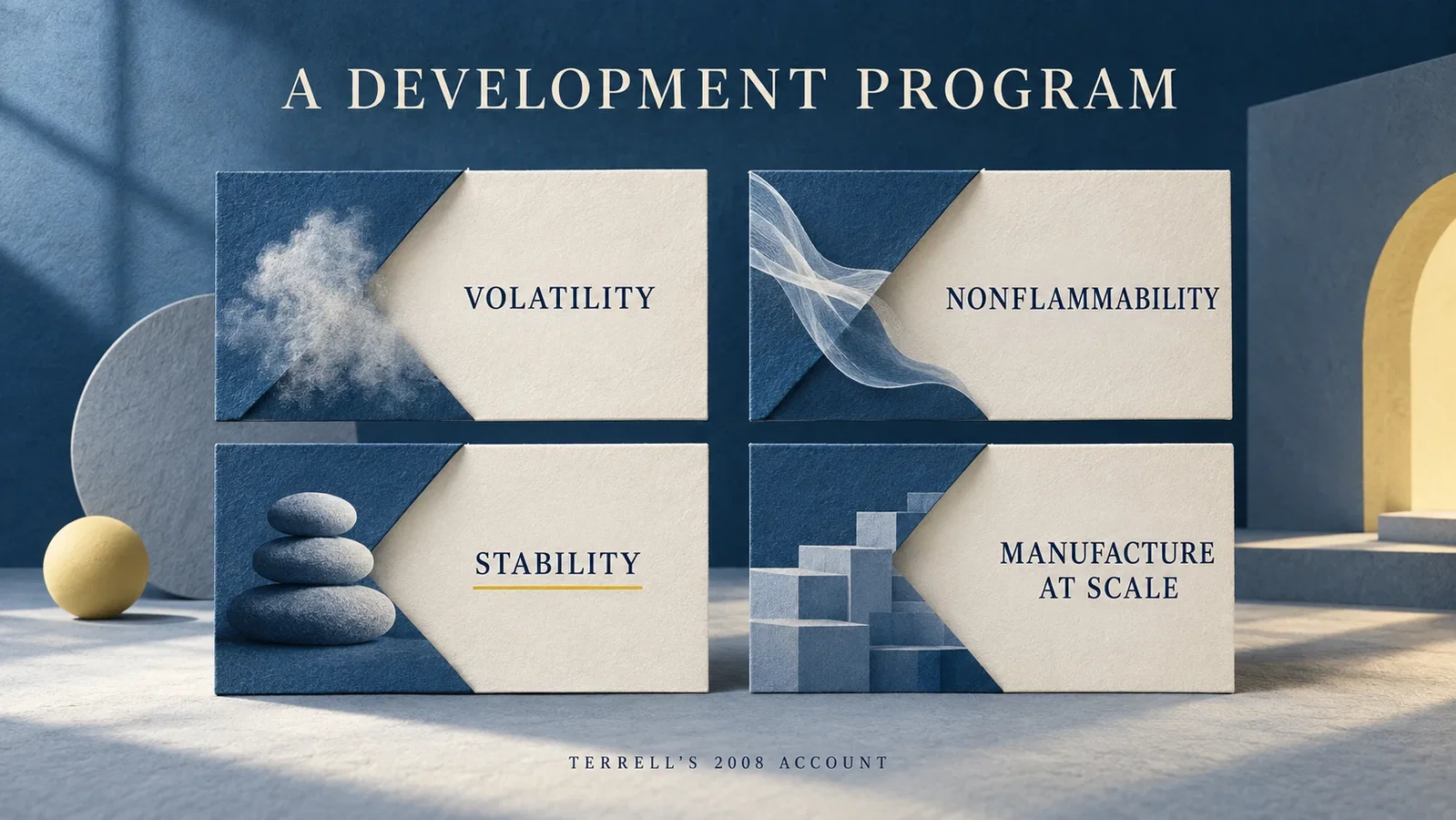
Chemist Ross Terrell’s participant account records an earlier obstacle. His program with Louise Speers Croix, which also produced isoflurane, sought volatility, nonflammability, stability and practical manufacture at scale. Ohio Medical Products did not continue developing sevoflurane as an anesthetic because it failed the program’s soda-lime stability requirement.[3] This describes that team’s decision, not every American development effort.
Maruishi’s subsequent work brought sevoflurane to a different destination. Useful anesthetic properties and chemical stability within equipment remained separate questions. The 2023 Japanese label still describes decomposition on contact with carbon-dioxide absorbents.[2, section 20] Read beside Terrell’s account, it shows that product documentation continued to address operating conditions. Neither source is an original record of the Japanese review in 1990.
That label also describes sevoflurane’s low blood–gas partition coefficient, respiratory elimination after administration stops, and induction and emergence characteristics.[2, sections 16, 18, 19] It retains serious adverse reactions including malignant hyperthermia, together with requirements for experienced anesthesia personnel and respiratory and circulatory observation.[2, sections 8, 11] These statements belong to the 2023 label. They do not establish that universal safety superiority had been demonstrated in 1990.
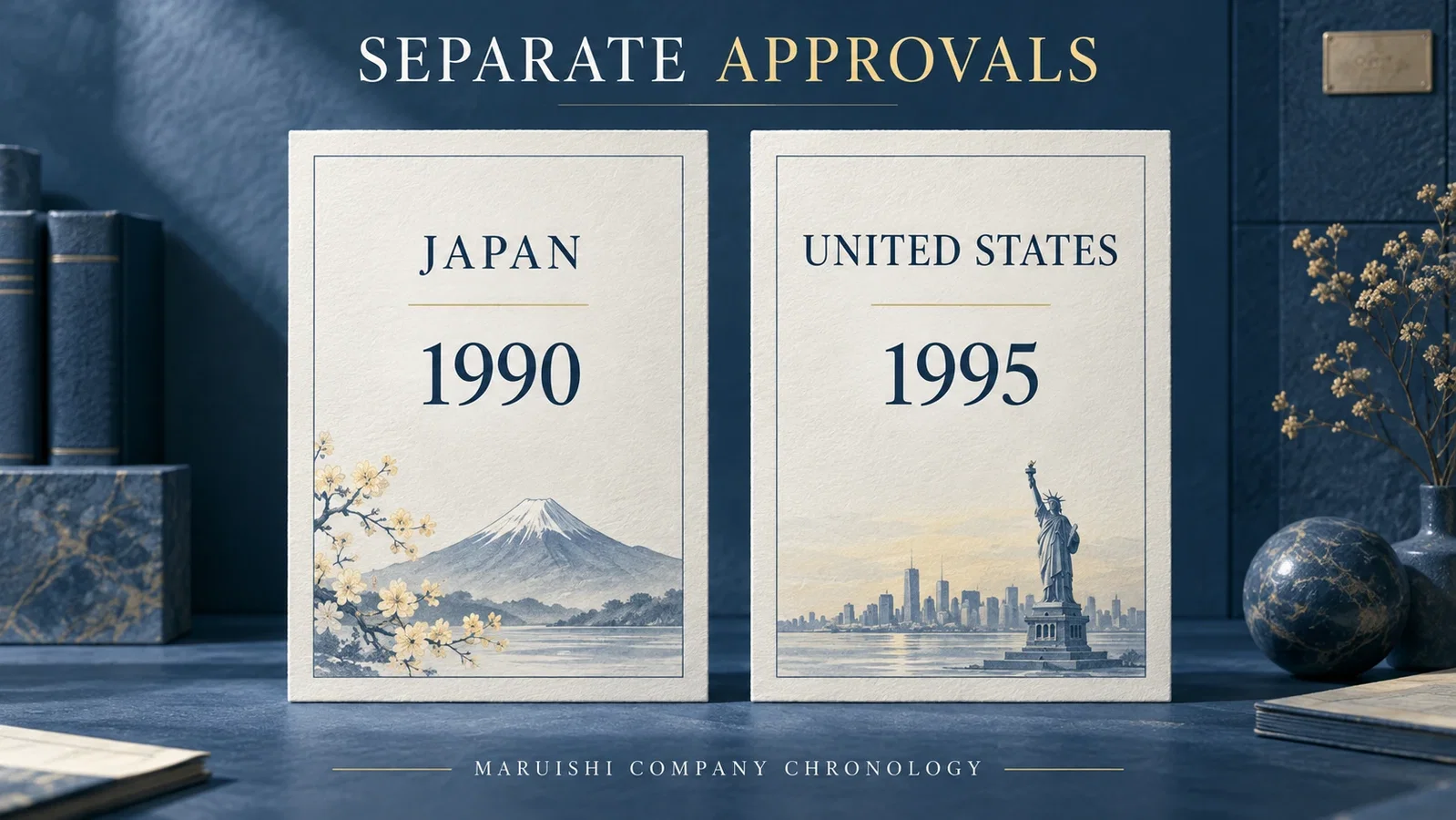
International development followed separate national processes. The Interview Form records Abbott’s acquisition of development rights in 1992 outside Japan and certain other countries; Maruishi’s company chronology lists FDA approval in 1995.[1, p 1; 4] The Japanese approval, the licensing arrangement and the later American authorization should remain distinct events.
Institutional names need their dates too. The relevant historical name in 1990 was Japan’s Ministry of Health and Welfare. The ministry’s archived website dates the institutional change to January 6, 2001.[5] A current PMDA product page helps locate documents; it does not establish the name of the agency acting in 1990.
The site connects this article with isoflurane because Terrell explicitly places both compounds within the same development program.[3] That is a historical relationship, not evidence that isoflurane caused Japan to approve sevoflurane. The significance of 1990 lies in the documented progression through testing, authorization and supply.
Images are modern editorial concepts, not original approval certificates, historical photographs or clinical diagrams.
Sources and reading limits
- Maruishi Pharmaceutical. SEVOFRANE Interview Form. June 2023, revision 9. Cover and printed pp 1, 3, 6, 11, 20, 22 read. Official manufacturer dossier; administrative dates are retrospective, not an original 1990 approval letter. Other pages and underlying trials are not claimed read.
- Maruishi Pharmaceutical. SEVOFRANE Japanese package insert. June 2023, revision 1. All three original pages read. Sections 8, 11, 16, 18–20 support the explicitly dated label discussion. Same manufacturer as source 1, not independent outcome evidence.
- Terrell RC. The invention and development of enflurane, isoflurane, sevoflurane, and desflurane. Anesthesiology. 2008;108(3):531–533. Full archived browser-extracted article text and 14 references reread. Participant retrospective, with the author’s own development-program perspective.
- Maruishi Pharmaceutical. History of Maruishi. Full substantive chronology read, especially the 1990 and 1995 entries. Manufacturer history; shares institutional provenance with sources 1 and 2.
- Ministry of Health and Welfare, Japan. Archived official English home page. Full page read; January 6, 2001 institutional-change notice. Supports the naming boundary, not sevoflurane’s approval date.
Continue exploring
Related reading connects shared questions and contexts; it does not by itself establish historical influence.
The Source Room · About & Editorial Method
Sources and reading limits are stated above. Illustrations are labelled as original source images or AI-made. Historical accounts are educational; they are not current treatment instructions.