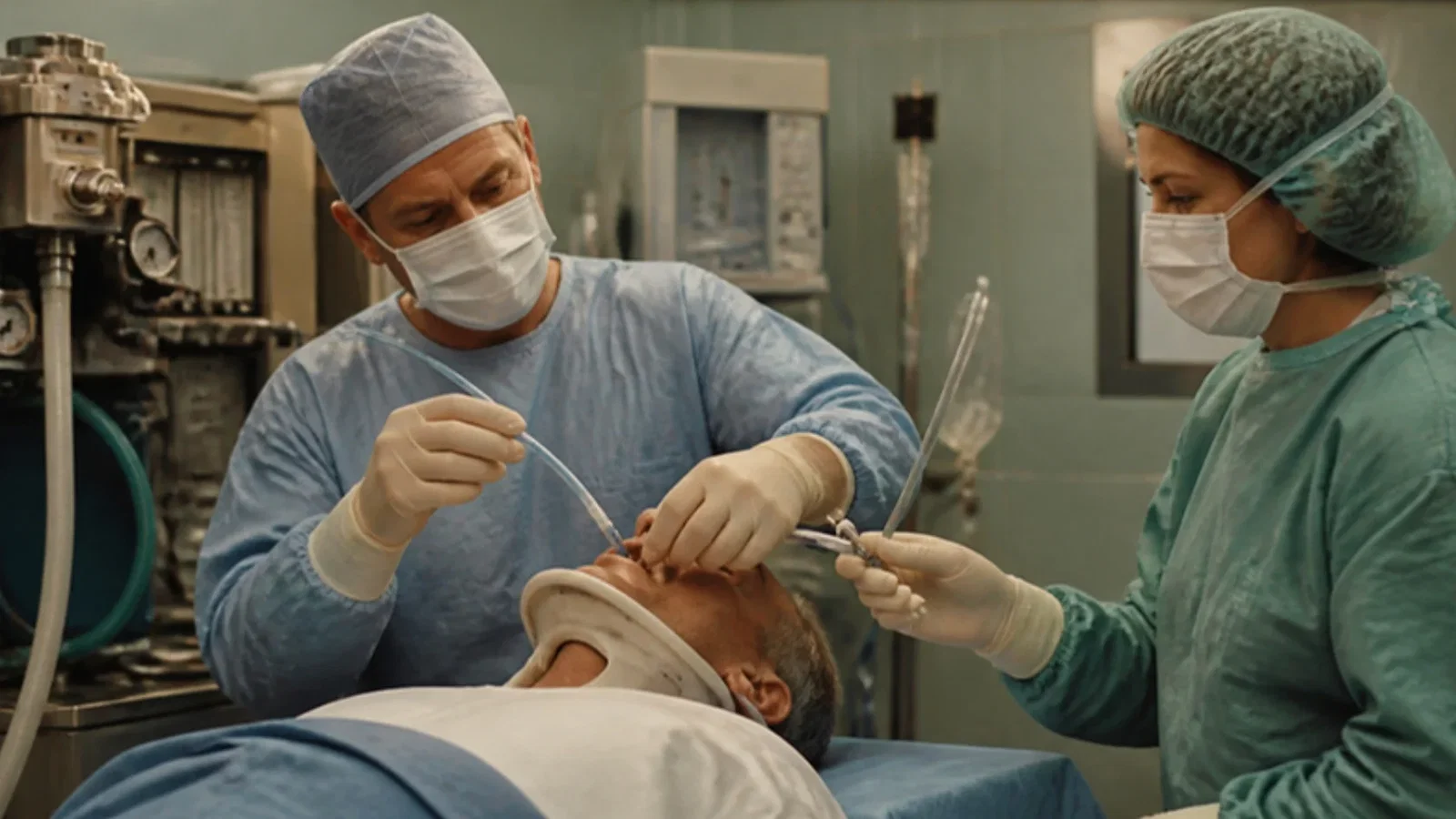
In March 1978 the Canadian Anaesthetists' Society Journal (vol. 25, no. 2, pp. 153-4) printed 'A flexible stilette for replacing damaged tracheal tubes' by Brendan T. Finucane of Emory University School of Medicine and Hilton L. Kupshik of Grady Memorial Hospital, Atlanta. Replacing a damaged or obstructed tracheal tube, they wrote, was an area of relative neglect. Their case was a patient with an unstable cervical fracture for posterior cervical fusion: the tube was placed blindly through the nose while the patient was awake, neurological function was checked, and only then was general anaesthesia induced; brisk nasal bleeding and a marked leak around the tube followed. Repeat laryngoscopy was judged hazardous and would defeat the object of the awake intubation. The authors took the protective sheath of a Sorenson central venous catheter already in place, a flexible hollow tube sealed and smooth at one end that is usually discarded, passed it through the damaged tube beyond its tip, withdrew the old tube over it and passed a new nasotracheal tube along it, with breath sounds heard on both sides afterwards. They had used the method in theatre and in awake ICU patients, and to guide a tube into the left main bronchus.
Reading Library · Anesthesia Epochs · 中文版
Watch the education video (for clinicians)
1978: The Airway Exchange Catheter — Never Lose the Airway · Anesthesia Epochs Education Series
The tube is in, the patient is asleep, and now the tube is damaged and has to be changed. If the patient's neck is broken, and the tube went in only through a careful awake intubation, then taking it out and starting again means inviting back the very risk that was just avoided. In 1978 two anaesthetists in Atlanta described, in a two-page case report, how a piece of plastic tubing that is normally thrown away let them swap the old tube for a new one without another laryngoscopy. [1, p. 153]
A neglected problem
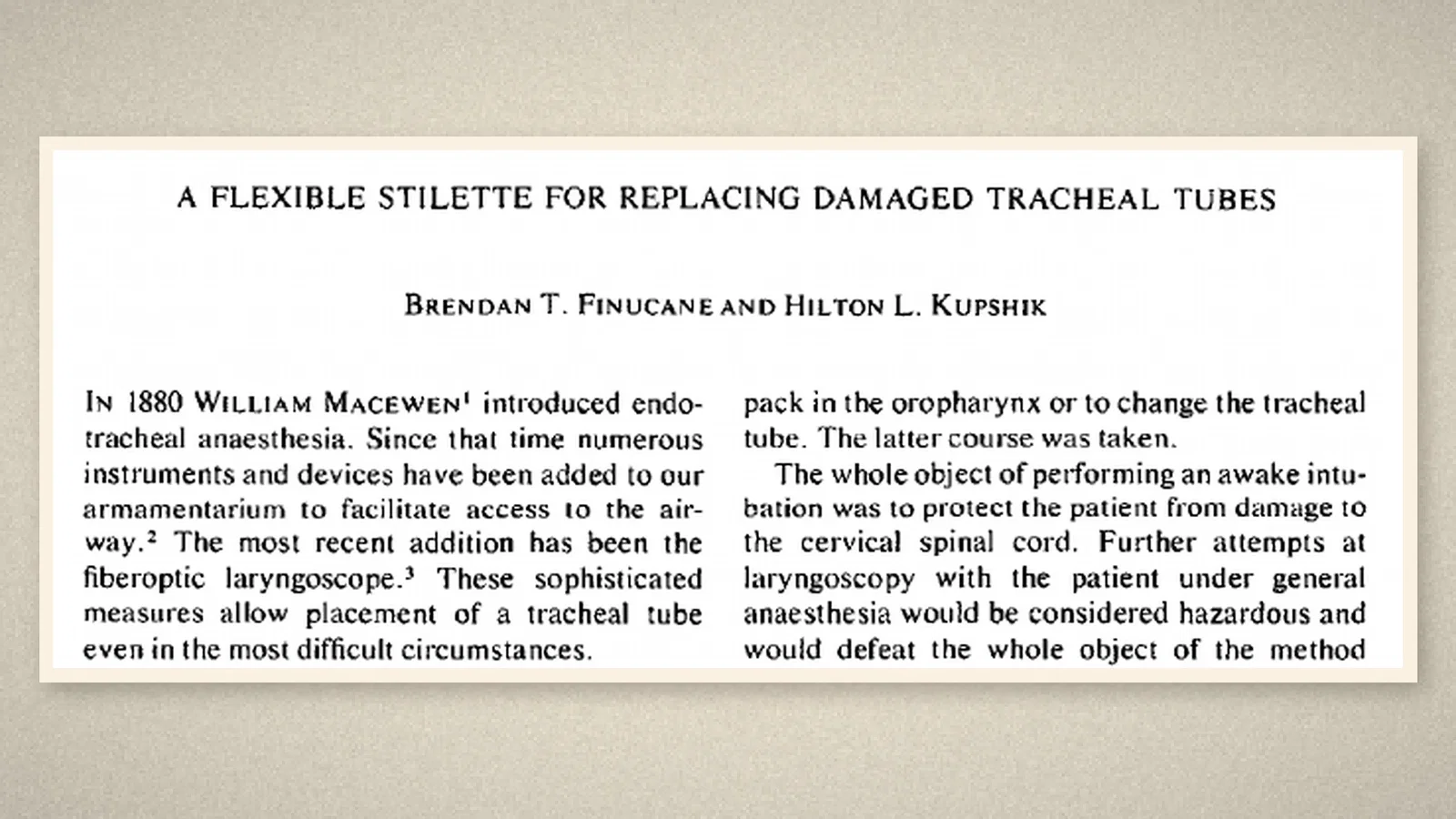
In March 1978 the Canadian Anaesthetists' Society Journal (vol. 25, no. 2) printed "A flexible stilette for replacing damaged tracheal tubes" by Brendan T. Finucane and Hilton L. Kupshik. Finucane was chief of the Department of Anesthesiology and assistant professor at Emory School of Medicine; Kupshik was at Grady Memorial Hospital, on Butler Street, Atlanta. [1, p. 153]
The authors opened with a short history. Since MacEwen introduced endotracheal anaesthesia in 1880, they wrote, numerous instruments and devices had been added to ease access to the airway, the most recent being the fiberoptic laryngoscope, and these allowed a tube to be placed even in the most difficult circumstances. Yet "an area of relative neglect" commanded attention: the problem of replacing a damaged or obstructed tracheal tube. Their case report was meant to show the value of a flexible stilette for that job. [1, p. 153]
A neck that must not be moved
The patient had an unstable cervical fracture from a car accident, was otherwise in good health, and came for posterior cervical spinal fusion. The plan was awake blind nasal intubation or placement of the tube with fiberoptic laryngoscopy. After sedation, the nose and oropharynx were given topical anaesthesia, a transtracheal injection of local anaesthetic was given, and superior laryngeal nerve blocks were performed on both sides. With some difficulty a nasotracheal tube was passed blindly. The patient was then asked to move the feet, which showed that neurological function was intact, and general anaesthesia was induced at once. [1, p. 153]
Then the trouble began. There was considerable bleeding from the nose, and a marked, unacceptable leak of gases around the tube. There were two choices: pack the oropharynx or change the tracheal tube. The authors changed the tube. [1, p. 153]
Changing it carried its own danger. The whole object of the awake intubation, they wrote, had been to protect the cervical spinal cord; further laryngoscopy under general anaesthesia would be considered hazardous and would defeat the whole object of the method. To avoid further manipulation of the airway they used the following technique. [1, p. 153]
A sheath that is usually thrown away
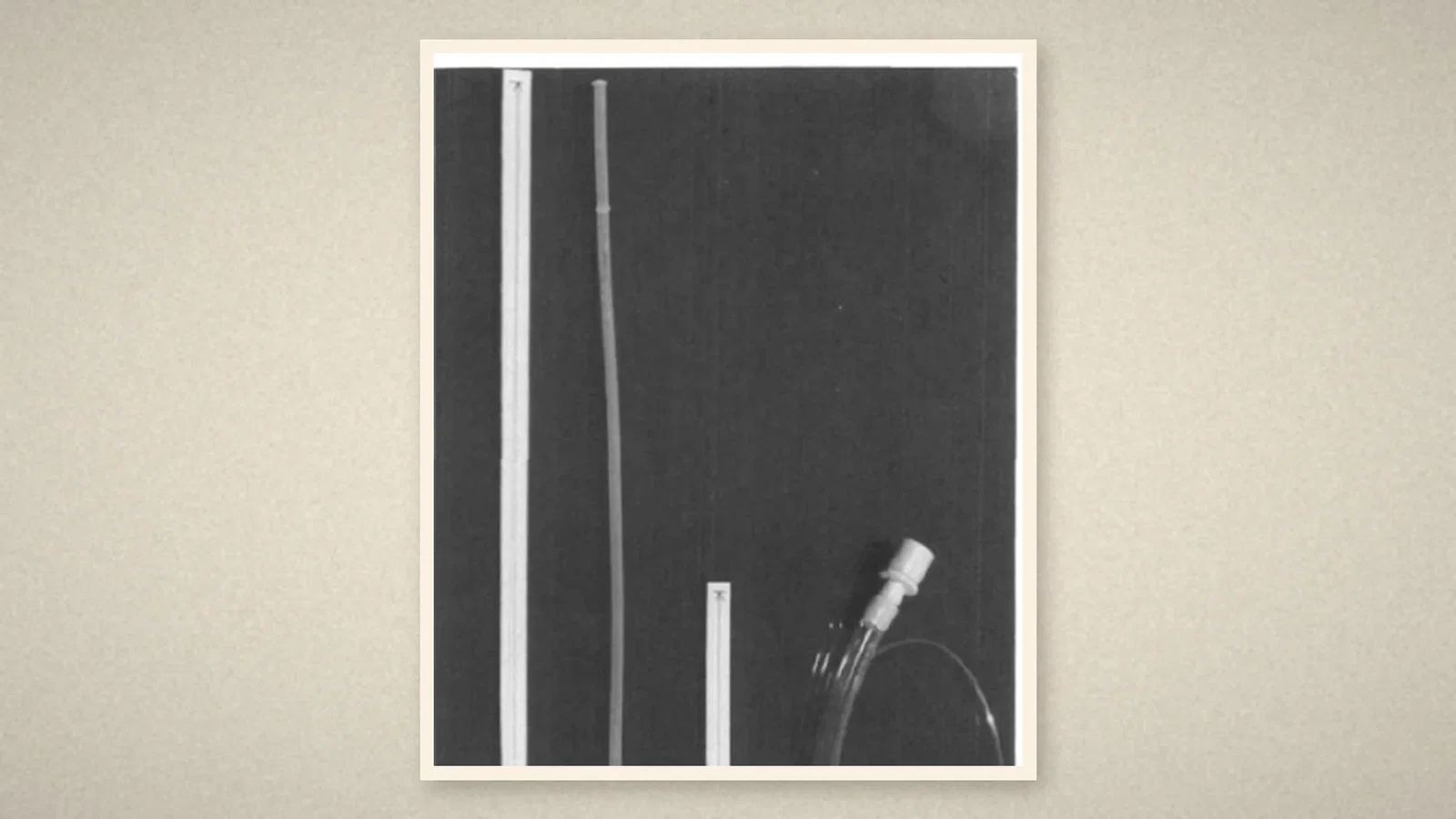
A Sorenson central venous pressure line had been placed earlier. The catheter comes enveloped in a protective conduit that is usually discarded. This conduit, the authors noted, is a hollow piece of tubing, quite flexible, with one end sealed and smooth. [1, p. 153]
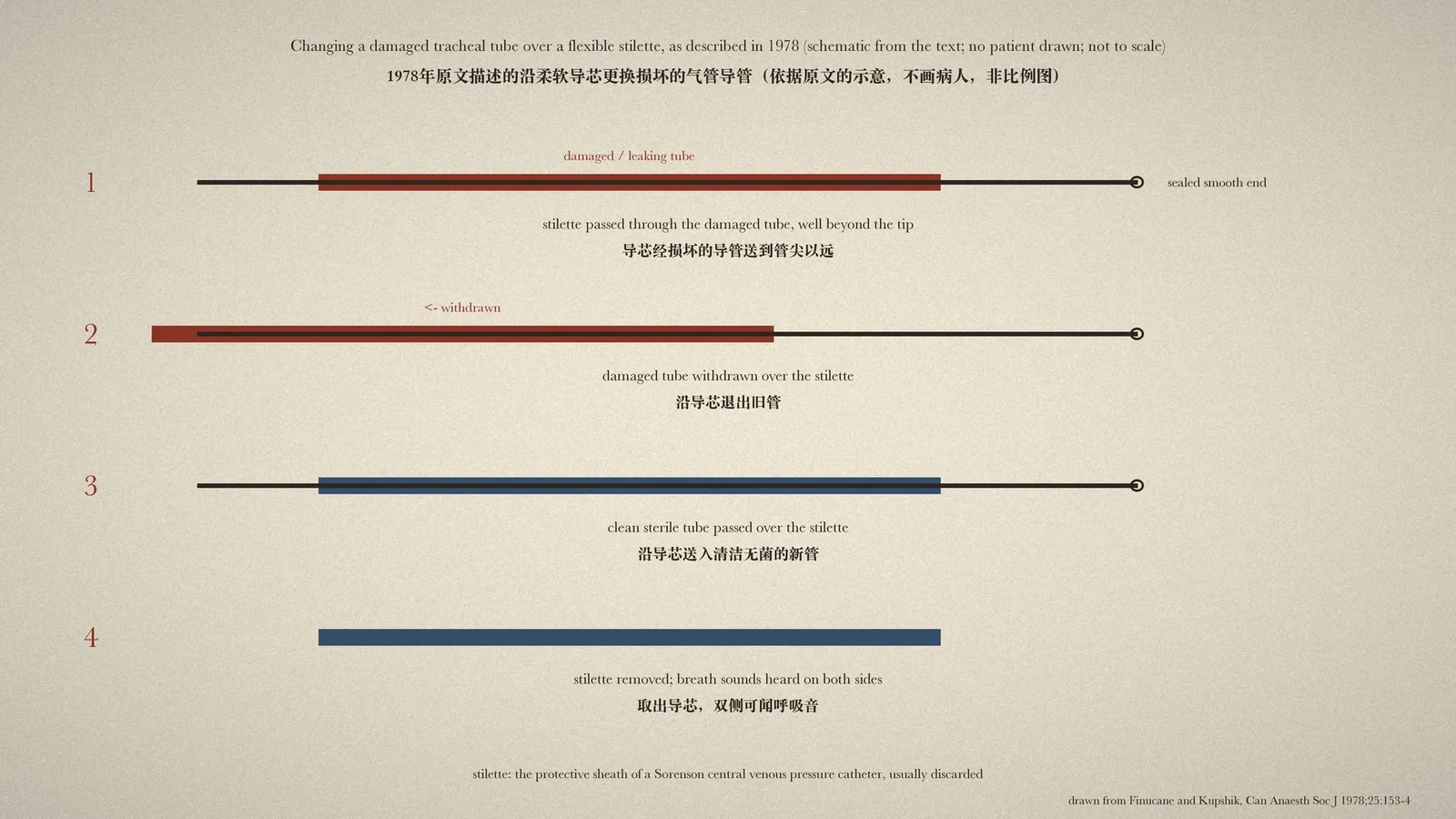
The method was simple. The smooth blind end of this flexible stilette was advanced through the lumen of the damaged tube until it lay well beyond the tip. The damaged tube was then withdrawn backwards over the stilette, and a clean sterile nasotracheal tube was passed over it without difficulty. When the stilette was removed, breath sounds were heard on both sides, and the rest of the operation was uneventful. [1, p. 153]
Other uses
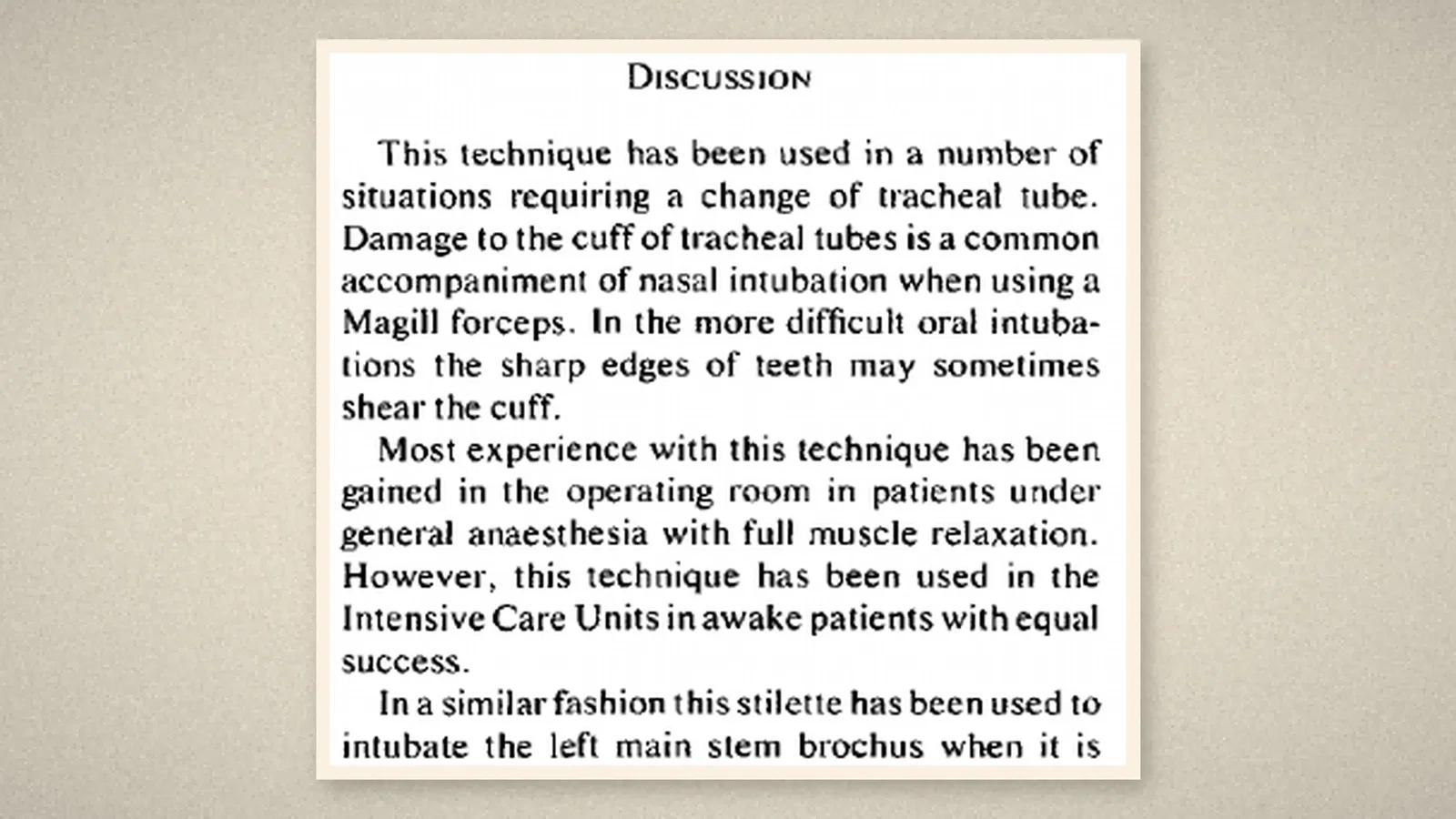
In the discussion the authors said the technique had been used in a number of situations that required a change of tube. Damage to the cuff is a common accompaniment of nasal intubation with Magill forceps, and in more difficult oral intubations the sharp edges of teeth may shear the cuff. Most of their experience had been gained in the operating room, in patients under general anaesthesia with full muscle relaxation, but the technique had also been used in intensive care units in awake patients "with equal success". [1, p. 153]
The same stilette had been used to intubate the left main bronchus when the left lung needed to be isolated. The bronchus was first entered with a rigid bronchoscope, the stilette was passed into it, the bronchoscope was withdrawn, and a tracheal tube was then easily inserted over the stilette. A fiberoptic laryngoscope could be used if necessary, the authors allowed, but they felt their technique was "a simple and more economical alternative". [1, p. 153][1, p. 154]
The English summary and the French résumé put it in one sentence: a flexible stilette is passed through the damaged tube, the tube is removed and a new sterile one is passed over the stilette, in conscious or unconscious patients. [1, p. 154]
What the record shows
The point of the report lies less in the object than in the idea: during a tube change, keep a guide in the trachea the whole time, so that the old tube comes out and the new one goes in along the same path and the airway is never lost. With no purpose-made product at hand, the authors used a piece of packaging that is normally discarded. This article records only what they described in 1978 and makes no judgement about its place in the history of tube-exchange methods.
Sources and reading limits
Read: Finucane and Kupshik, "A flexible stilette for replacing damaged tracheal tubes", Can Anaesth Soc J 1978;25:153-4 (introduction, case report, technique, discussion, English and French summaries and Figure 1). Obtained through institutional access.
Not covered: the works the authors cite (Gillespie, 1950, on MacEwen; Salem and colleagues, 1976, on difficult intubation; Murphy, 1967, on a fiberoptic endoscope for nasal intubation); the maker's literature on the Sorenson catheter; the later purpose-made airway exchange catheters and studies. The ASA timeline entries were not used as evidence.
Limits: this is a two-page case report with one case described in detail; the wider experience is not counted and no complications are reported. The stilette's length given in the text and the ruler in Figure 1 differ slightly; neither is repeated. Drug doses and volumes, tube size and stilette dimensions are not repeated, and page crops stop before them. The patient is not identified. MacEwen's 1880 date is the authors' framing and is not checked here.
Three illustrations are crops of Can Anaesth Soc J 1978 pp. 153 and 154 (p. 154 shows only the upper part of Figure 1, without the ruler lengths). One is a four-step schematic of the tube exchange drawn from the text, not to scale, with no patient drawn.
- Finucane BT, Kupshik HL. A flexible stilette for replacing damaged tracheal tubes. Can Anaesth Soc J. 1978;25:153-4. DOI
Continue exploring
Related reading connects shared questions and contexts; it does not by itself establish historical influence.
- 1975: Ring, Adair and Elwyn Report the Preformed Paediatric RAE Tube
- 1969: Vale Blocks a Child's Lobar Bronchus with a Fogarty Catheter
Anesthesia Epochs · The Source Room · About & Editorial Method
Published November 3, 2026. Sources and reading limits are stated above. Illustrations are labelled as original source images or AI-made. Historical accounts are educational; they are not current treatment instructions.