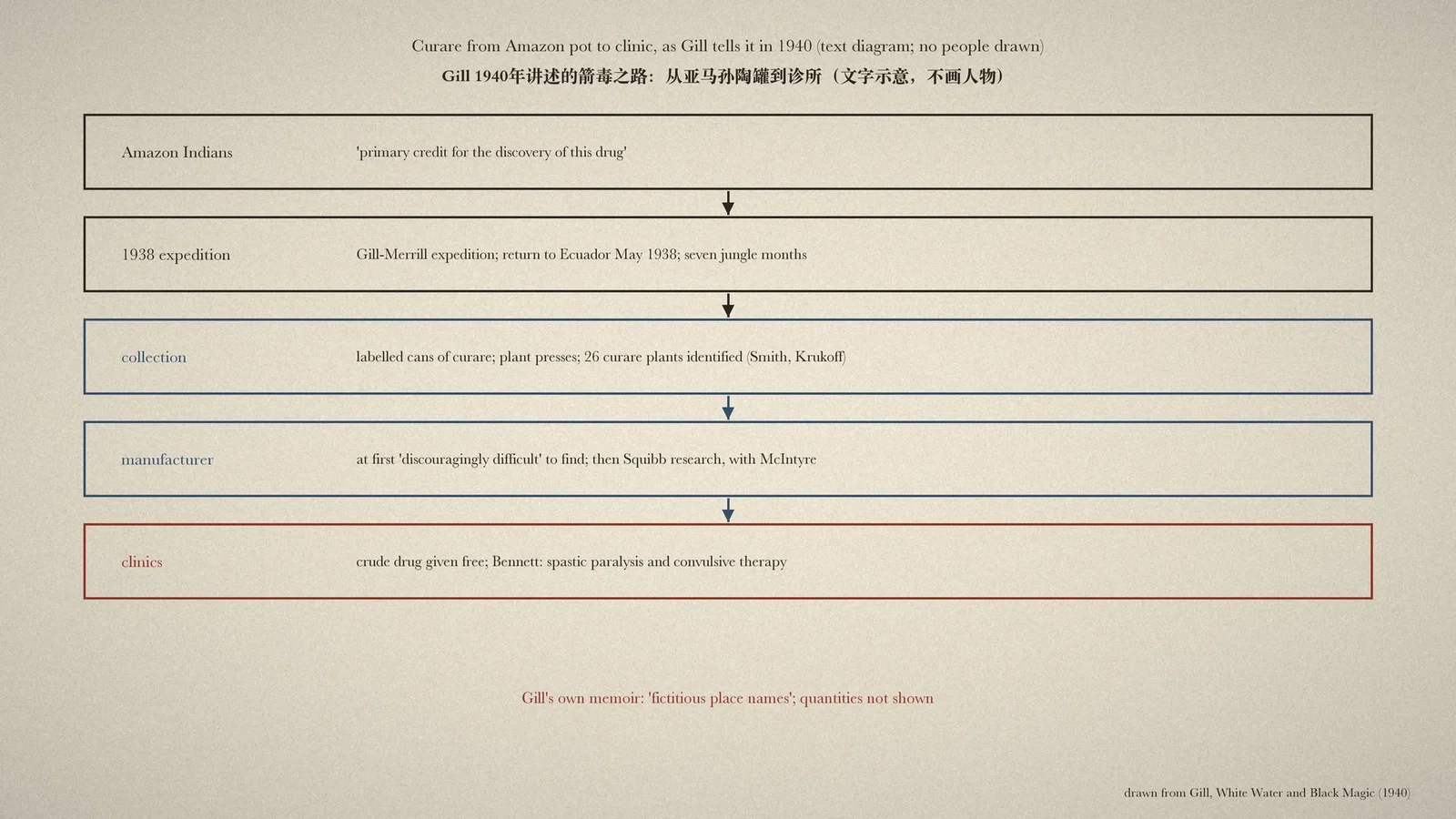
In White Water and Black Magic (Henry Holt, 1940), Richard C. Gill told how curare crossed from the clay pots of Amazon tribes to American laboratories and hospitals. The preface gives 'primary credit for the discovery of this drug' to the Indians of the Amazon basin, says Gill is 'not a doctor', and admits to fictitious place names and minor departures 'from a strictly factual account'. Gill met Sayre Merrill early in 1938, who funded the Gill-Merrill Ecuadorian Expedition; Gill returned to Ecuador in May 1938 and spent seven months in the jungle, bringing back labelled cans of curare and plant specimens, with 26 curare plants identified by A. C. Smith and B. A. Krukoff. In the epilogue, a willing manufacturer was at first hard to find; then E. R. Squibb's research department, with A. R. McIntyre, made the crude drug into a standardized product, while crude curare had already gone free to physicians such as A. E. Bennett.
Reading Library · Anesthesia Epochs · 中文版
Watch the education video (for clinicians)
1938: Richard Gill's Curare — White Water and Black Magic · Anesthesia Epochs Education Series
Before curare could become a drug of the operating room, someone had to bring enough of the right kind out of the forest. This article follows the collector who did, in Gill's own book and with Gill's own caveats. The book opens by giving the credit to the people who had always known the poison. [1, p. ix][1, p. 355]
The credit
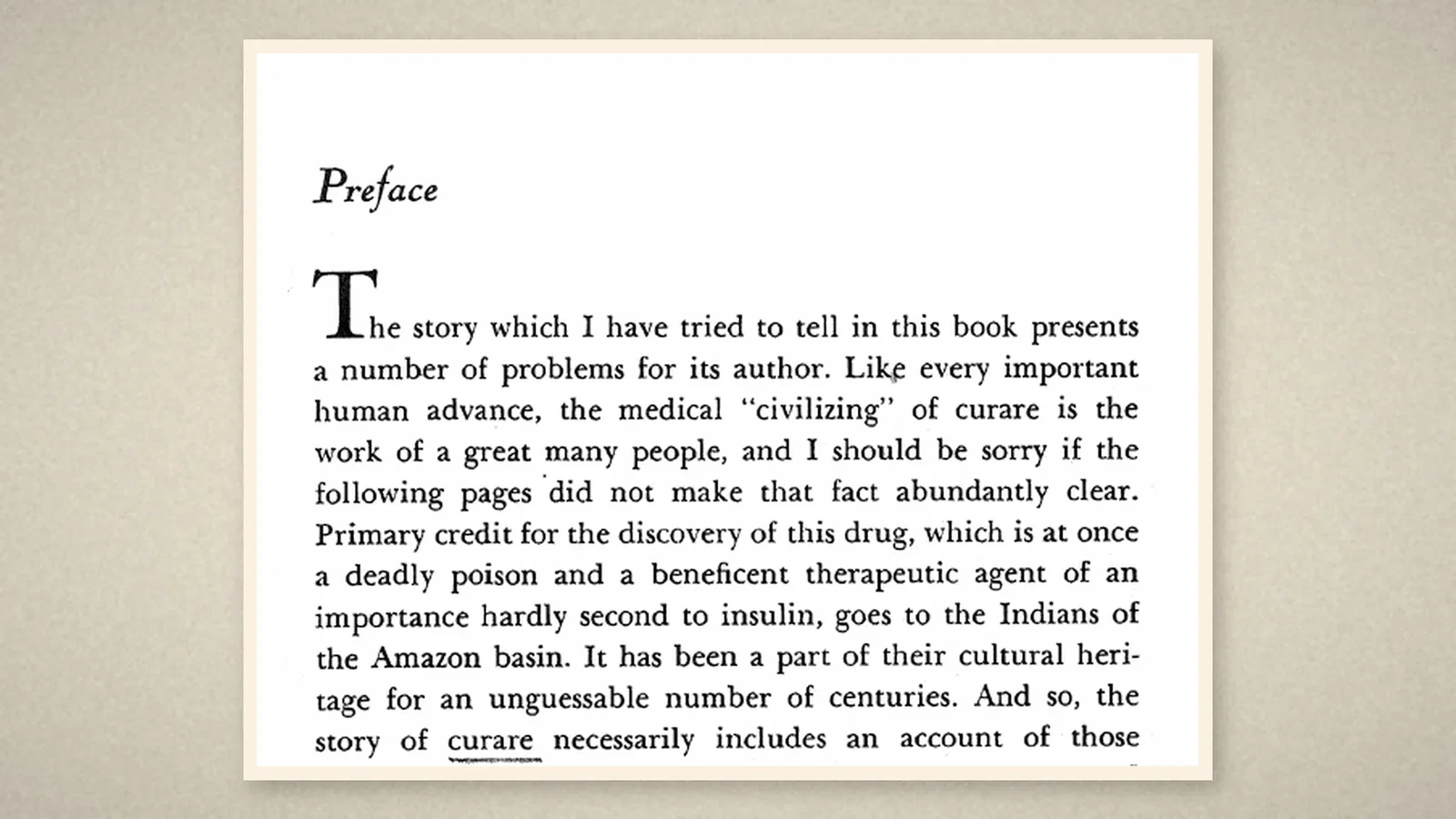
Richard C. Gill's White Water and Black Magic was copyrighted in 1940 by Henry Holt and Company. The preface begins by saying that the medical "civilizing" of curare was the work of many people, and that "primary credit for the discovery of this drug, which is at once a deadly poison and a beneficent therapeutic agent", goes to the Indians of the Amazon basin, for whom it had been part of their heritage for centuries. [1, p. ix]
Most of the book, Gill writes, is about how curare "bridged the gap between the smoke-blackened clay pots" of the Amazon tribes and the modern laboratory, which was the part Gill saw at first hand. Without years on a ranch on the Pastaza in Ecuador, "it would not have been possible to bring a botanically standardized drug back to the scientists". The doctors' part, Gill says, is only sketched, "because I am not a doctor". [1, p. ix][1, p. x]
Gill thanks the Ecuadorian government and Ecuadorian friends, above all a jungle companion, Don Manuel, without whom "the discovery of authenticated curare would have been infinitely more difficult". [1, p. x][1, p. xi]
A warning to the reader
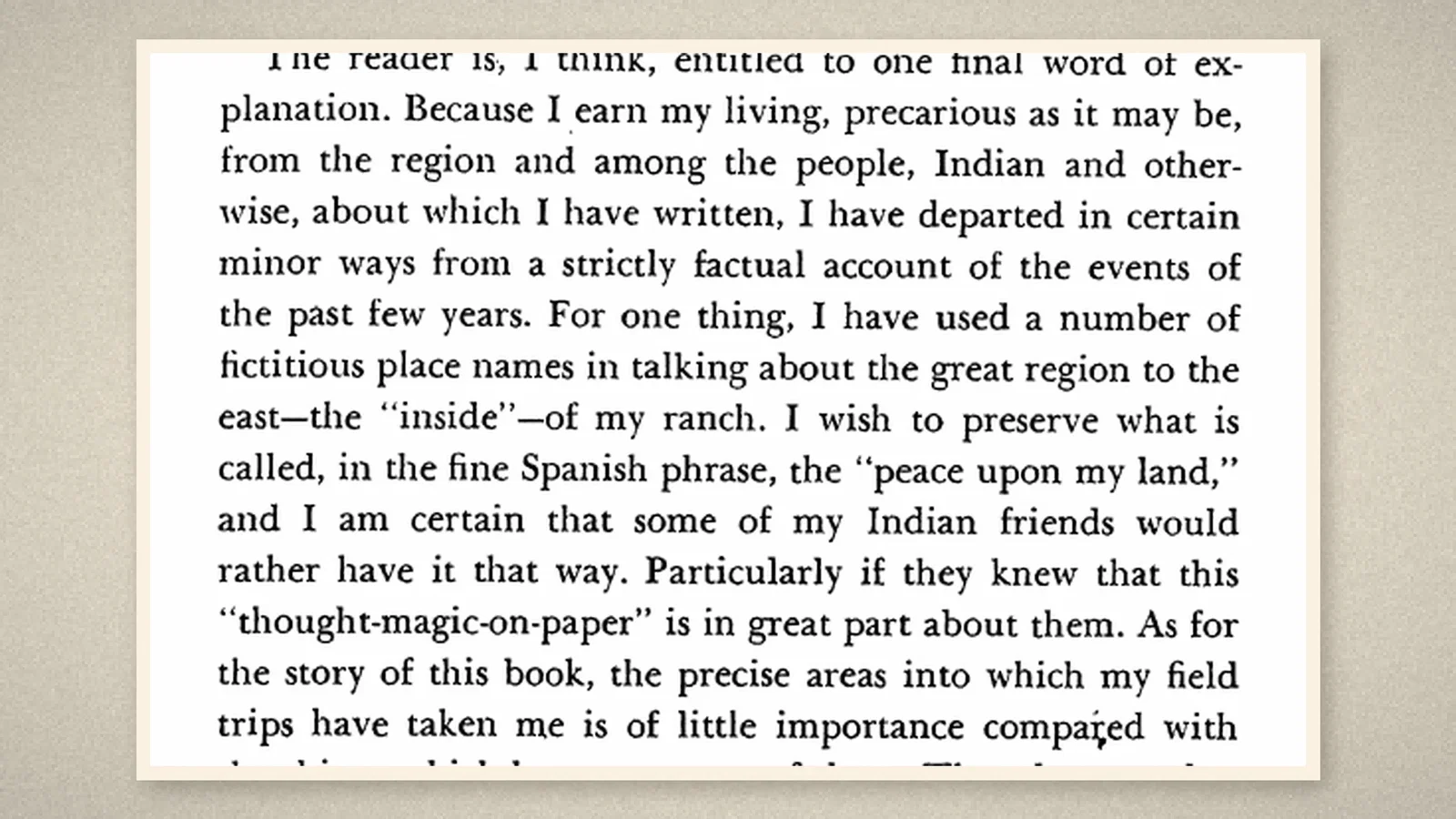
Gill is frank about the book's limits. Because Gill earned a living in the region and among its people, the book departs "in certain minor ways from a strictly factual account", and uses "a number of fictitious place names" for the country east of the ranch, to keep "peace upon my land". [1, p. xiii]
The expedition
Gill met Sayre Merrill "early in 1938", and Merrill made possible a fairly large expedition, called the Gill-Merrill Ecuadorian Expedition. "I returned to Ecuador in May, 1938," Gill writes, and the party came back by ship "after seven jungle months". [1, p. 205][1, p. 237]
At the end of the field work, what mattered were the plant presses, "the rows of carefully labeled cans which held the curare batches", and cases of sample bottles. In the preface Gill adds that A. C. Smith and B. A. Krukoff of the New York Botanical Gardens made the official identifications of the "twenty-six varieties of curare plants" brought back. [1, p. xii][1, p. 352]
From cans to ampoules
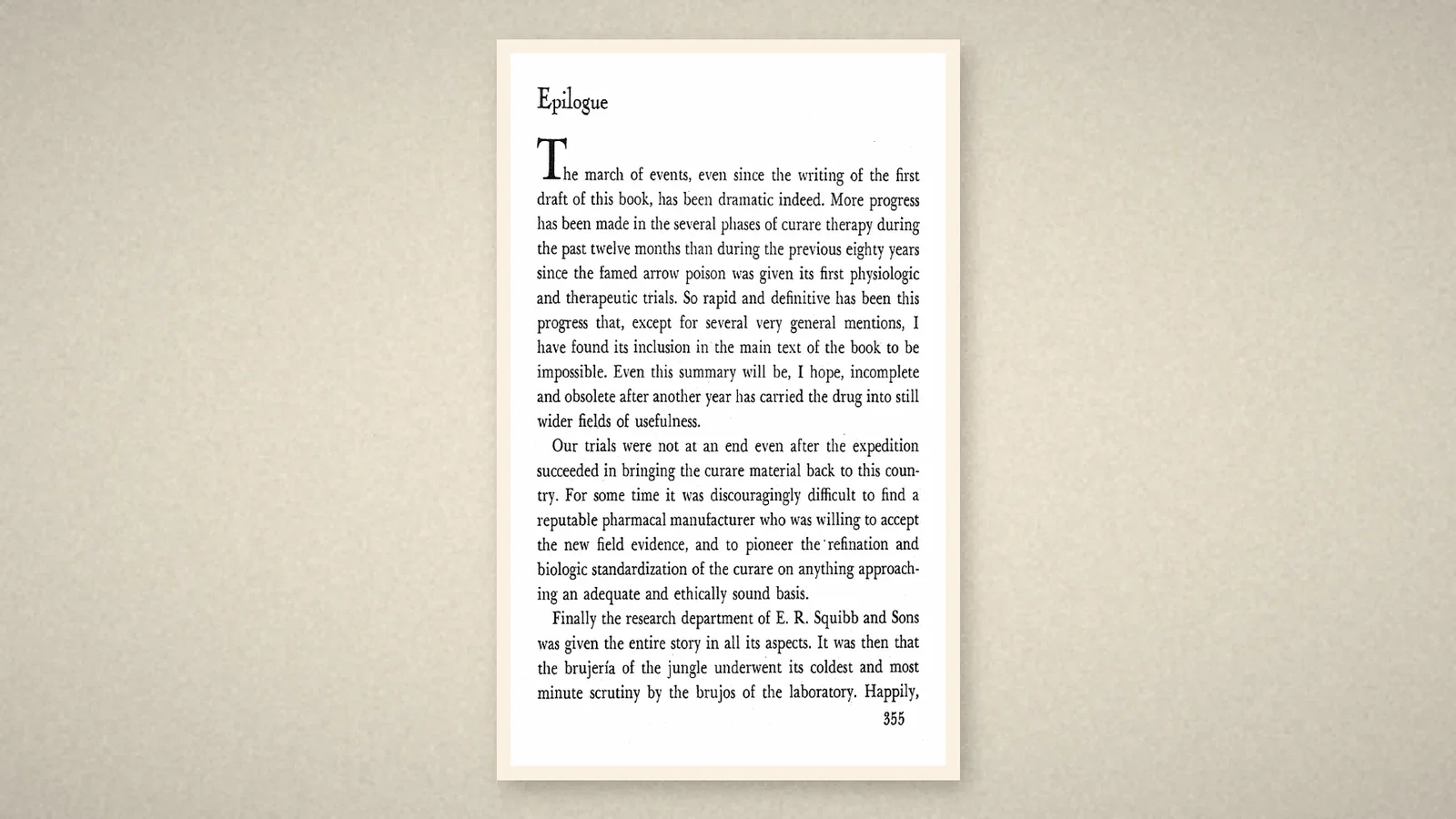
Bringing the curare home was not the end of the problem. "For some time it was discouragingly difficult to find a reputable pharmacal manufacturer" willing to accept the field evidence and to refine and standardize the drug on a sound basis. Finally the research department of E. R. Squibb and Sons took it up and, with the pharmacological help of A. R. McIntyre of the University of Nebraska, "made it into a product ready for primary presentation to the medical profession". [1, p. 355][1, p. 356]
Even before that, a large amount of the crude drug had been given free to physicians and clinics willing to study it. Of these, Gill singles out A. E. Bennett, who used it first in spastic paralysis and then to soften the convulsions of shock therapy for mental illness, the subject of an earlier article. [1, p. xi][1, p. 356]
What the record shows
The supply chain behind a drug. Curare reached the clinic through Indigenous knowledge, a collector's expedition, botanical identification, a manufacturer willing to take the risk, and physicians willing to try it. Gill's book tells that chain from one end, with its author's admitted fictions and enthusiasms. The Indigenous people who made the poison speak in it only through Gill.
Sources and reading limits
Read: Richard C. Gill, White Water and Black Magic (New York: Henry Holt, 1940): the copyright page, contents and preface (pp. ix-xiii), the passages at pp. 205 and 237, the closing chapter (pp. 347-353) and the epilogue (pp. 355-360); the curare chapters skimmed.
Not covered: Squibb's and McIntyre's own reports on the standardized product; Smith and Krukoff's botanical identifications; CSA history articles, which could not be accessed; any Indigenous account of the exchange.
Limits: this is Gill's own memoir, and Gill says it departs in minor ways from strict fact and uses fictitious place names, so no place is given here beyond Ecuador and the Pastaza. The chapters on Gill's illness are, in Gill's words, a subjective record, and no diagnosis is given here. The claims about curare's benefits are a layman's, as Gill says. Some timelines date the topic to 1939, which is not stated in the pages read; this article is dated by Gill's return to Ecuador in May 1938. Quantities of curare are not repeated. A photograph of people on the title page is not reproduced.
Three illustrations are crops of Gill's book (preface pp. ix and xiii, epilogue p. 355); one is a text diagram drawn from it, with no people drawn and no quantities shown.
- Gill RC. White Water and Black Magic. New York: Henry Holt; 1940. Internet Archive
Continue exploring
Related reading connects shared questions and contexts; it does not by itself establish historical influence.
- 1940: Bennett Uses Curare to Prevent Fractures in Shock Therapy
- 1946: Prescott, Organe and Rowbotham Report Pure Tubocurarine in 180 Cases
- 1850: Pelouze and Bernard Show Curare Kills Injected, Not Swallowed
Anesthesia Epochs · The Source Room · About & Editorial Method
Published November 3, 2026. Sources and reading limits are stated above. Illustrations are labelled as original source images or AI-made. Historical accounts are educational; they are not current treatment instructions.