In 1838 Piria, working in Dumas's laboratory, kept an oily hydrure de salicyle apart from the crystalline salicylic acid he made from it, and said plainly what he could not yet settle.
Reading Library · Anesthesia Epochs · 中文版
Watch the education video (for clinicians)
1838: Piria's Salicin Research — An Oil and an Acid · Anesthesia Epochs Education Series
Preparing the material took too long and cost too much. Near the beginning of his 1838 paper, Piria explained that difficulty obtaining enough of a key product had prevented him from studying each substance as fully as he wished. He hoped to return to the work and fill the gaps.[3, p. 282]
The paper concerned salicin, written as salicine in the French original, and products derived from it. Looking back through the history of medicines, it is easy to retain only a year and a name: 1838, salicylic acid. The originals preserve a more specific investigation—how an investigator distinguished products, used existing ideas to explain them and described the limits of his evidence.
Research reaches readers in short reports
A brief notice on page 338 of volume 6 of the Comptes rendus listed Piria’s analyses of salicin, its combination with lead oxide and several products of its transformation. It also mentioned resinous and sugary materials, for which atomic formulas had not yet been supplied.[1, p. 338] This article retains those descriptions without assigning a modern structure or a particular sugar from that page alone.
A longer report appeared on pages 620–624 of the same volume. Its opening records Dumas presenting products Piria had obtained in his laboratory and introducing the work on Piria’s behalf. Dumas regretted that the Academy’s practices prevented Piria from presenting it himself, and a fuller memoir was anticipated.[2, p. 620] The text supplies neither a scene of Piria addressing the Academy nor a precise reason for the practice.
In the longer Annales de chimie et de physique paper, Piria thanked Dumas for allowing him to work in his laboratory and for his advice.[3, p. 283] The two accounts preserve distinct roles in conducting and presenting the research.

An oil and an acid, discussed separately
The shorter account called an oily product hydrure de salicyle and used a hypothetical salicyle to explain its relationship to other products.[2, pp. 620–621] The longer paper explained the analogy with Liebig and Wöhler’s work on bitter-almond oil. Piria’s salicyle was still unknown in a free state.[3, pp. 285–286] This was the author’s framework for composition; radical in this historical usage should not simply be read as a modern free radical.
On page 298 the longer paper begins a separate section, “Acide salicylique ou oxide de salicyle.” Piria reports preparing this substance from the hydrure, then describes white crystals, solubility and acidic behavior. Analyses of the acid and its silver salt follow.[3, pp. 298–301]
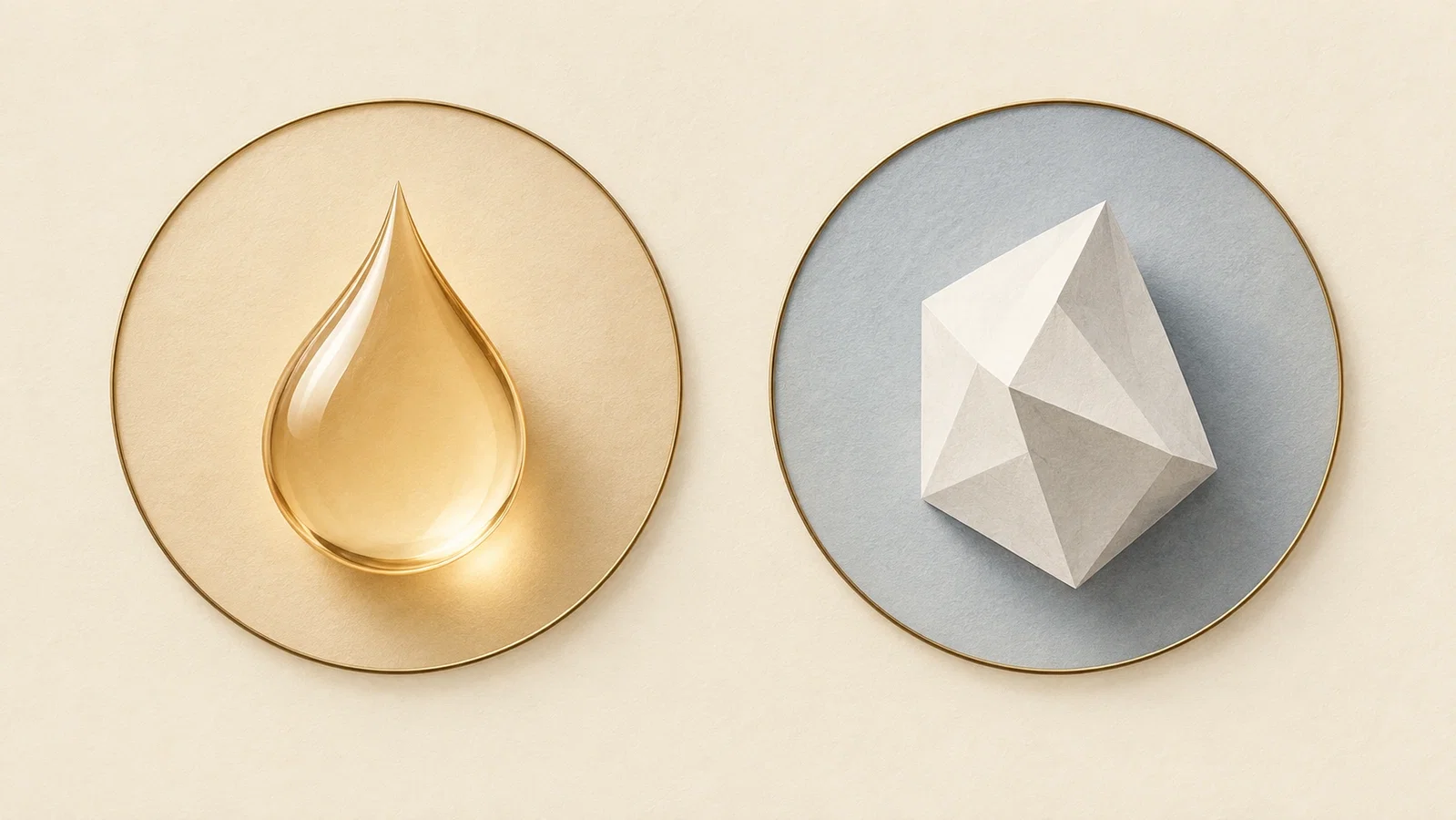
At this point the distinction becomes explicit. The oily hydrure and the acid in this section have their own descriptions and analyses. Translating the oil’s old name directly as salicylic acid would erase a distinction made in the paper itself. This article follows the original’s separation without converting its nineteenth-century formulas into a claim that a modern structure had already been established.
Uncertainty has a specific scope
The longer Comptes rendus report did not treat every number as final. It noted that measured carbon was lower than the calculated value and allowed that the hydrogen proportion might need correction as experiments continued.[2, pp. 623–624] These qualifications concern the composition discussed in that report. They do not establish that every analysis in the later, longer paper failed.
The Annales paper preserves another, narrower question. Was the derivative obtained by treating the acid with nitric acid the same as the product obtained by similarly treating the hydrure? Piria said that the small amount available prevented him from deciding.[3, pp. 299–300] The uncertainty concerned a comparison between derivatives. Recasting it as uncertainty over whether he had prepared the acid at all would misread the passage.
Reading alongside the willow letter of 1763
Stone’s 1763 letter described giving bark to people and adding another bark in some stubborn cases.[4, p. 197] Piria’s 1838 reports concern composition, transformation, properties and analysis.[1–3] Placing the two articles together shows the different questions their authors addressed. This comparison establishes no direct influence from Stone to Piria and transfers no patient outcomes from a bark preparation to a newly prepared chemical product.
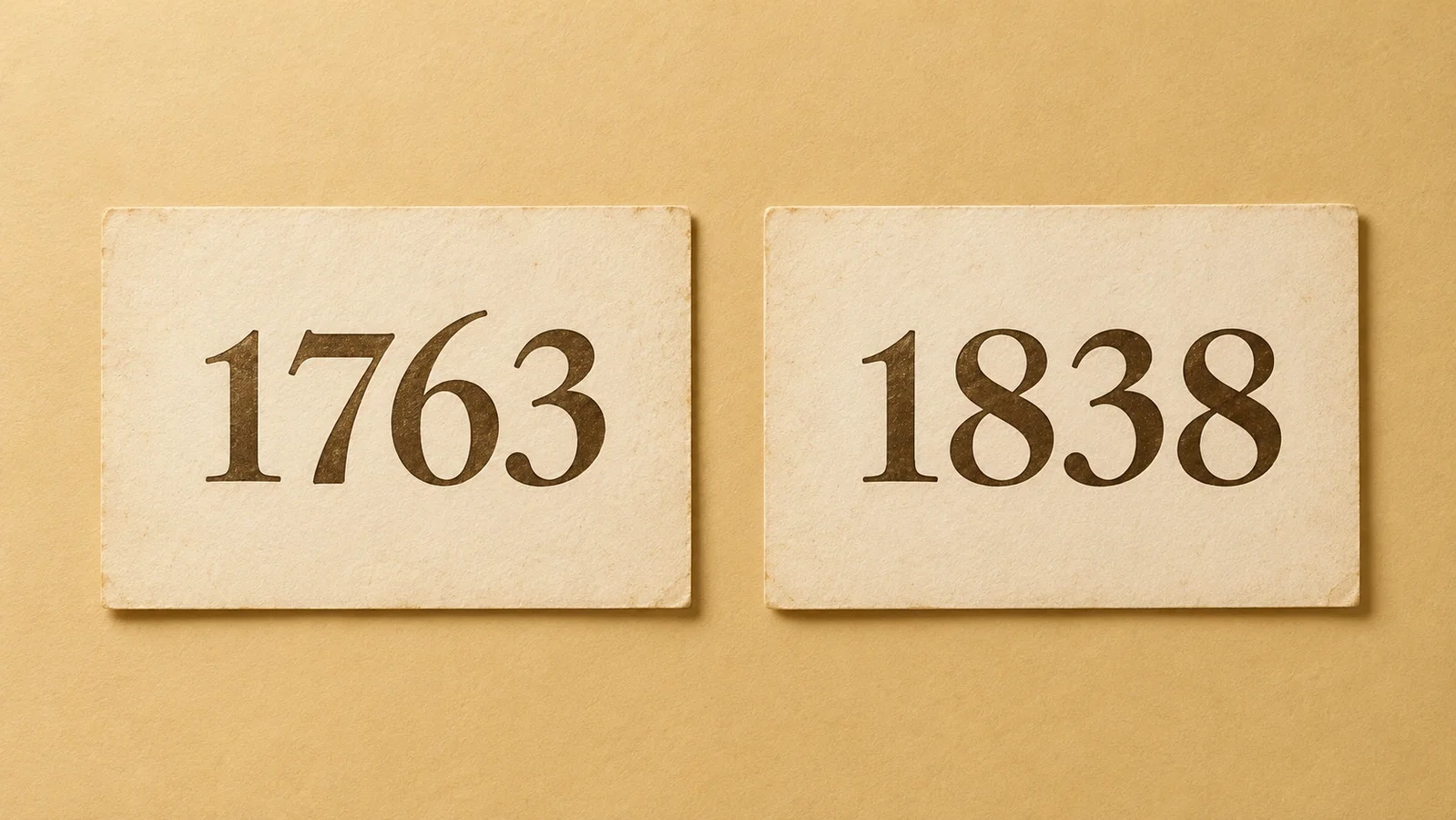
The 1838 sources preserve a chemical investigation with its own substance: products received separate descriptions, measurements constrained explanations of composition, and unfinished questions remained on the page. The later preparation, naming and clinical use of aspirin still require evidence from their own periods.
Sources and reading limits
- Rafael Piria. Sur la composition de la Salicine et sur quelques-unes de ses réactions. Comptes rendus. 1838;6:338. Original scan. Read in full.
- Research by Piria, presented by Dumas. Sur de nouveaux produits extraits de la salicine. Same volume, pp. 620–624, in the PDF above. Read in full. The account records Dumas introducing the work, not a transcript of Piria speaking.
- R. Piria. Recherches sur la Salicine et les Produits qui en dérivent. Annales de chimie et de physique. 1838;69:281–325. Read: pp. 281–283, 285–286, 298–301 and the last page, p. 325; the rest of the paper is not covered. The volume title pages give 1838 as the year of publication, not the dates of individual experiments.
- Edward Stone. An Account of the Success of the Bark of the Willow in the Cure of Agues…. Philosophical Transactions. 1763;53:195–200. Page 197 is cited.
This article covers the 1838 reports. It adjudicates no worldwide discovery or isolation priority and establishes no clinical efficacy or safety. Ancient attribution and the milestones dated 1828, 1853 and 1897 are not verified here. All four illustrations are original historical imaginings or modern conceptual images.
Continue exploring
Related reading connects shared questions and contexts; it does not by itself establish historical influence.
- 1763: Stone Reports a Local Bark in a Public Letter
- 1853: Gerhardt's Report, After the Mixture Hardened
- 1897: Aspirin's Patent, Trademark and Disputed Credit
Anesthesia Epochs · The Source Room · About & Editorial Method
Updated October 30, 2026. Sources and reading limits are stated above. Illustrations are labelled as original source images or AI-made. Historical accounts are educational; they are not current treatment instructions.