A sixteenth-century BCE medical compilation records therapeutic intentions, not proof of poppy anesthesia.
Reading Library · Anesthesia Epochs · 中文版
Watch the companion film
16th Century BCE: Ebers Papyrus · Watch on YouTube
Historical anchor: 1550 BCE. Approximate placement; see the essay for the date range and evidence.
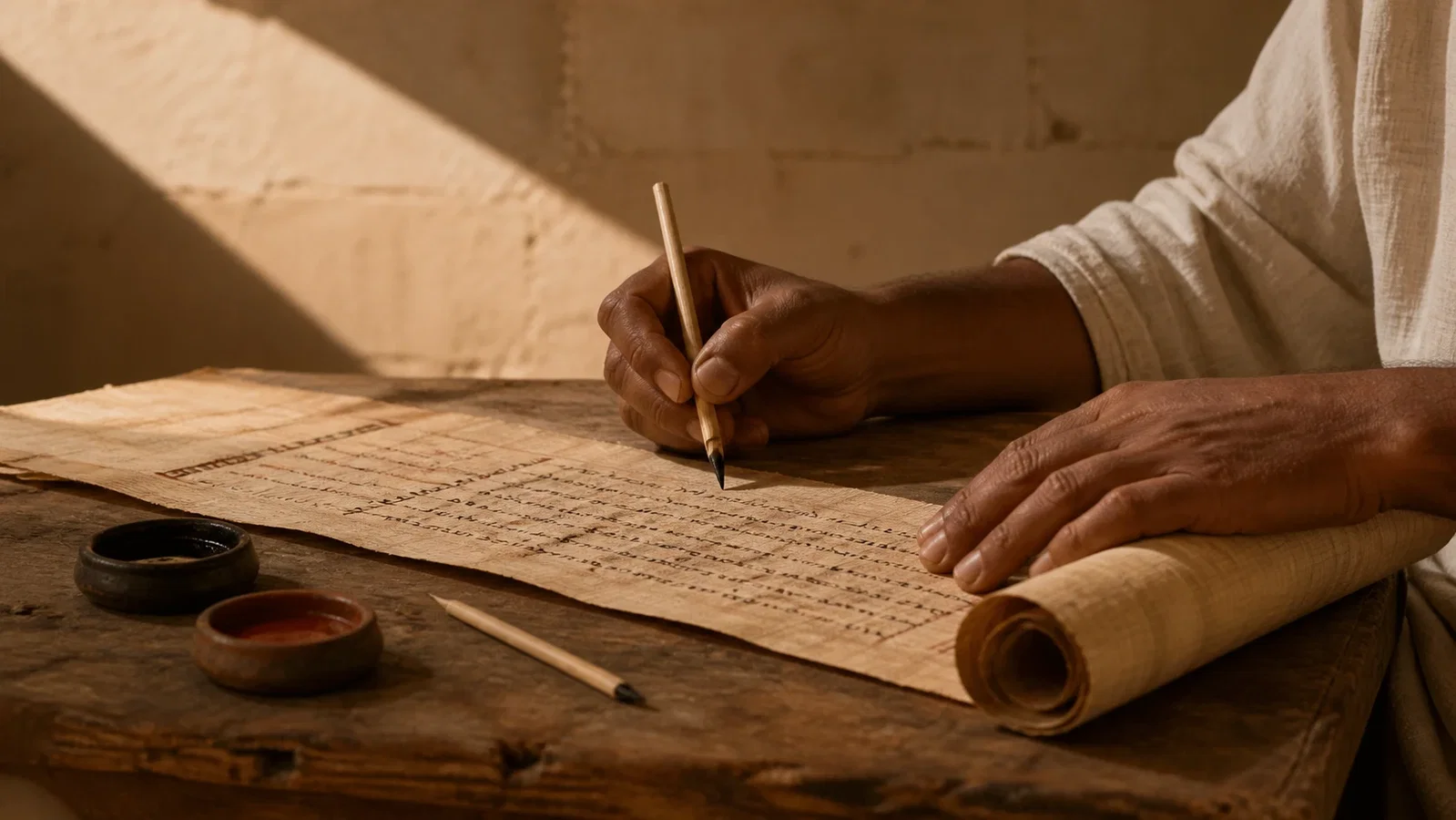
(Figure 1) Writing down an attempt. Original historical reconstruction, not a photograph of a documented scene or a portrait of a known author. The abstract ink texture is not a transcription of an ancient prescription.[1–3]*
The troublesome word is not a drug name we can confidently translate. It is špn.
In entry Eb 782 of the Ebers Papyrus, a remedy for a child's plaintive cries includes a plant bearing that name. A modern English scholarly translation leaves it transliterated. The familiar claim that the passage describes poppy treatment depends on an identification that the accompanying German commentary does not accept as secure.[1,2]
That uncertainty is not an obstacle to beginning a history of anesthesia here. It is a useful beginning. A text can preserve the wish to relieve suffering without proving the identity of a medicine, its effect, or its use during an operation. Those are separate questions, and the distance between them is part of this history.
What survives is a compilation
The manuscript belongs to the sixteenth century BCE. Its present custodian, Leipzig University Library, places it toward the end of that century. Some of its contents may draw on older textual traditions; dating this manuscript therefore does not date the invention of every remedy it contains.[1,3]
The original roll measured 18.63 meters by about 30 centimeters. Its nearly 880 individual texts cover much more than pain, and they are not all anesthetic prescriptions. Even its column count needs interpretation: 108 actual columns end at number 110 because the numbering skips 28 and 29.[1,3]
The writing is hieratic, running from right to left, chiefly black with red used for headings and certain other marks, including quantities. It should not be visualized as a procession of temple-wall pictographs. Nor is the ancient author identifiable from a signature. Ebers is the modern namesake associated with acquisition and publication, not the name of a documented ancient anesthetist.[1,3]
These distinctions identify the object before we ask it a clinical question. It is a transmitted medical compilation, not a set of patient records with verified ingredients and measured outcomes.
A painful head is a firmer starting point
Several entries offer a more direct anchor for the history of suffering than an uncertain plant does. Eb 253, 254, 257, and 259 explicitly concern a painful head. Eb 250 refers to an illness affecting half of the head. That wording does not establish a retrospective diagnosis of migraine.[1,2]
The evidentiary gain is modest but real: attempts to address head pain were considered worth writing down. The passages do not, by themselves, measure how well those attempts worked. This article does not reproduce preparation, dosage, or administration instructions. An ancient prescription is not made suitable for present-day use by being old enough to attract interest.
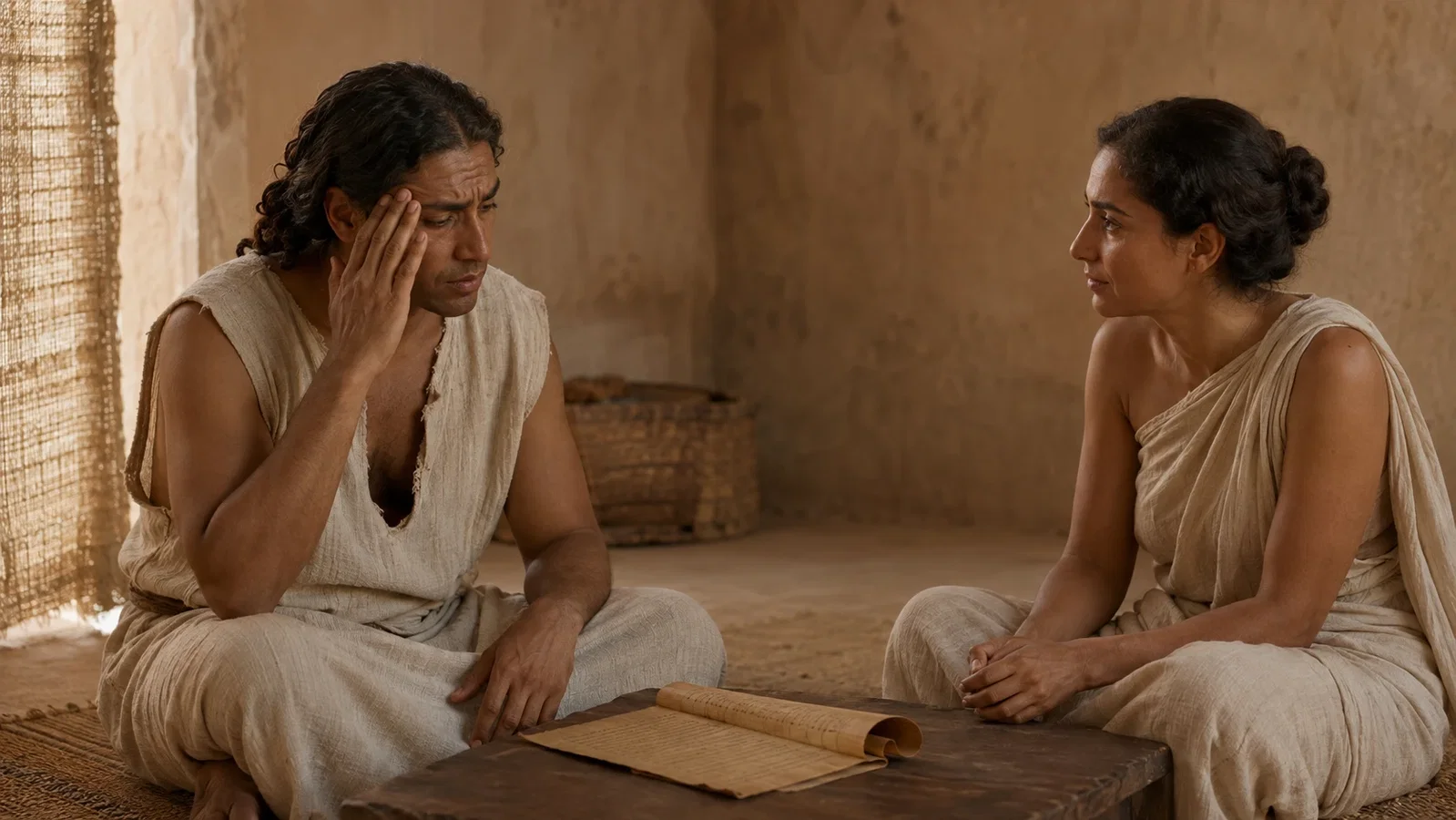
(Figure 2) A complaint receives attention. This imagined encounter is not a reconstruction of a documented individual consultation. No drug administration, operation, or successful cure is shown.[1,2]*
The opening entries, Eb 1–3, also resist an easy division between medicine and words. Spoken formulas accompany the application or drinking of remedies. Removing those formulas to reveal a supposedly modern pharmacology underneath would change the historical material before explaining it.[1,2]
When the text claims repeated testing on a grand scale, that claim belongs to its own language of assurance. It is not a clinical sample size. How a compilation asks to be trusted and whether a treatment has been shown to work are different levels of analysis.
How an uncertain word became a familiar plant
Eb 782 appears in column 93, lines 3–5. Its plant and plant-part terms, špn and špnn, remain unresolved in the current translation. The complaint is not transparent either: Popko discusses the unusual term for the child's cries and the ancient explanatory gloss attached to it. Neither licenses a modern diagnosis.[1,2]
Popko's commentary traces the poppy interpretation to a nineteenth-century conjecture, associated with Lüring in 1888 and taken into an Ebers translation by Joachim in 1890. It describes reasoning from the intended quieting of distress and an unreliable etymological connection, while reporting later objections to the identification.[1]
That history is cited here through the commentary read here. The nineteenth-century books themselves were not separately obtained and read for this article. Naming them without that qualification would repeat the very problem under discussion: treating a received interpretation as though it had just been directly verified.
The inference is tempting. A remedy aims to quiet a child; a familiar substance can quiet people; therefore that substance must be the ingredient. But the conclusion is already hidden in the premise. Intention does not identify a plant. Even a secure plant identity would still leave questions about preparation, effect, consciousness, and surgical use.
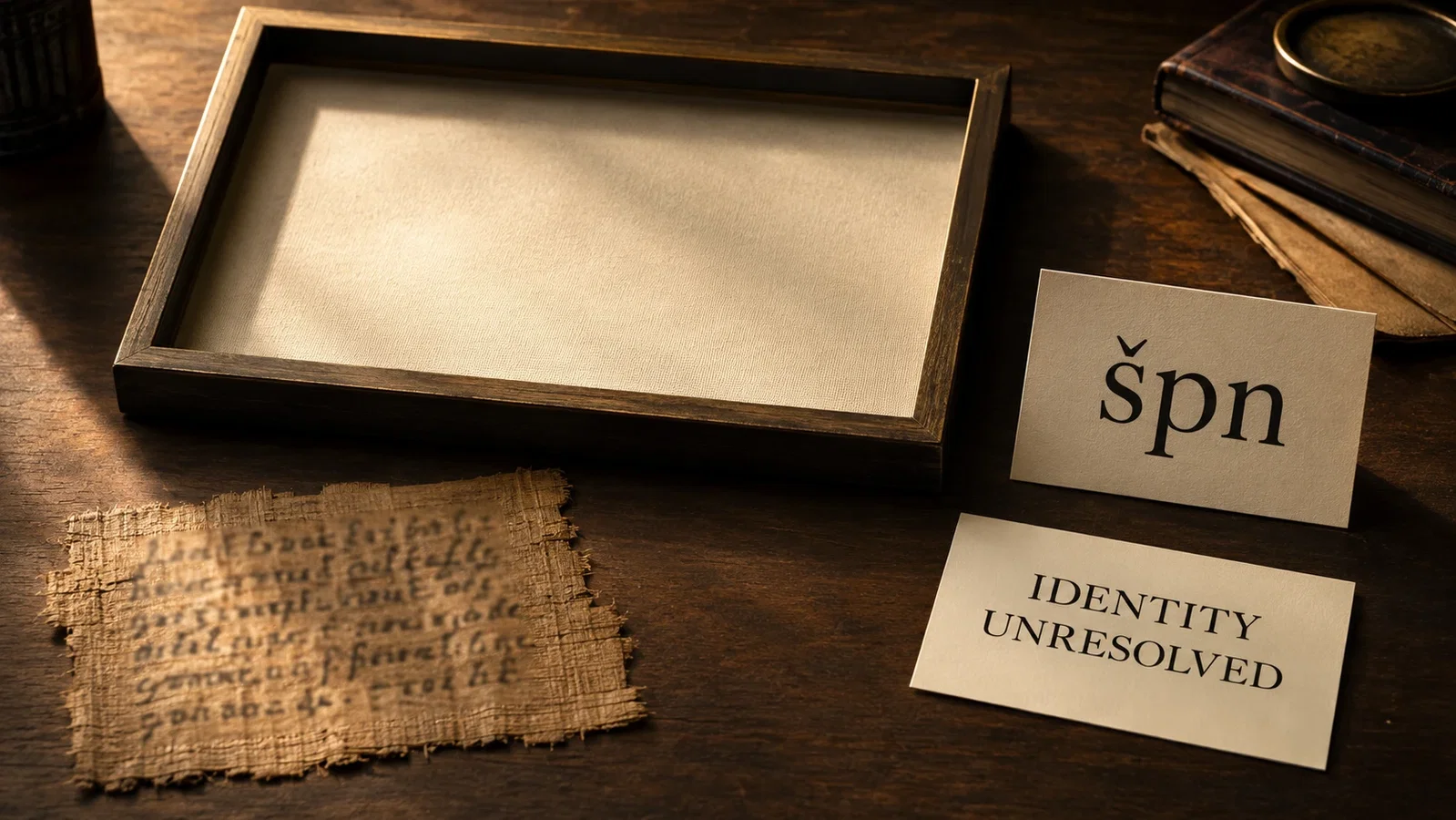
(Figure 3) A name without a verified specimen. Modern editorial cards and an empty frame make the uncertainty visible. This retrospective still life is not an ancient artifact, and no poppy or mandrake is supplied as the answer.[1,2]*
The library's own digital materials preserve a revealing disagreement. An older Leipzig digital-scroll annotation still contains Mohns(?), a question-marked poppy rendering. The current scholarly commentary explains why the identification is insecure. Those are related layers of interpretation, not independent botanical witnesses; their repetition cannot remove the question mark.[1,6]
Older summaries often pair poppy and mandrake with pain relief. This passage does not establish poppy, and no passage reviewed here adequately supports the mandrake assertion. This does not prove that nobody in ancient Egypt knew either plant. It limits what this particular text can responsibly be said to show.
The picture has a transmission history too
Georg Ebers purchased the roll at Luxor in the winter of 1872–73, and it entered the Leipzig collection in 1873. Its reported association with a Theban tomb is not equivalent to a fully documented archaeological excavation.[1,3]
The library's exhibition booklet reproduces a letter sent from Cairo on 26 March 1873. Ebers distinguished the prospect of promptly publishing the text from the slower work of understanding its words. The facsimile appeared in 1875. It later acquired another role when parts of the ancient material were lost: the printed record could preserve images of columns no longer available as originals.[4,5]
Columns 48 and 93 are among the wartime losses. That matters here because they contain several of the head-pain entries and Eb 782. Their light-background replacements in the digital roll derive from the nineteenth-century facsimile, not photographs of surviving ancient material. The commentary on Eb 253 explicitly notes the resulting inability to check against an original photograph.[1,4,6]
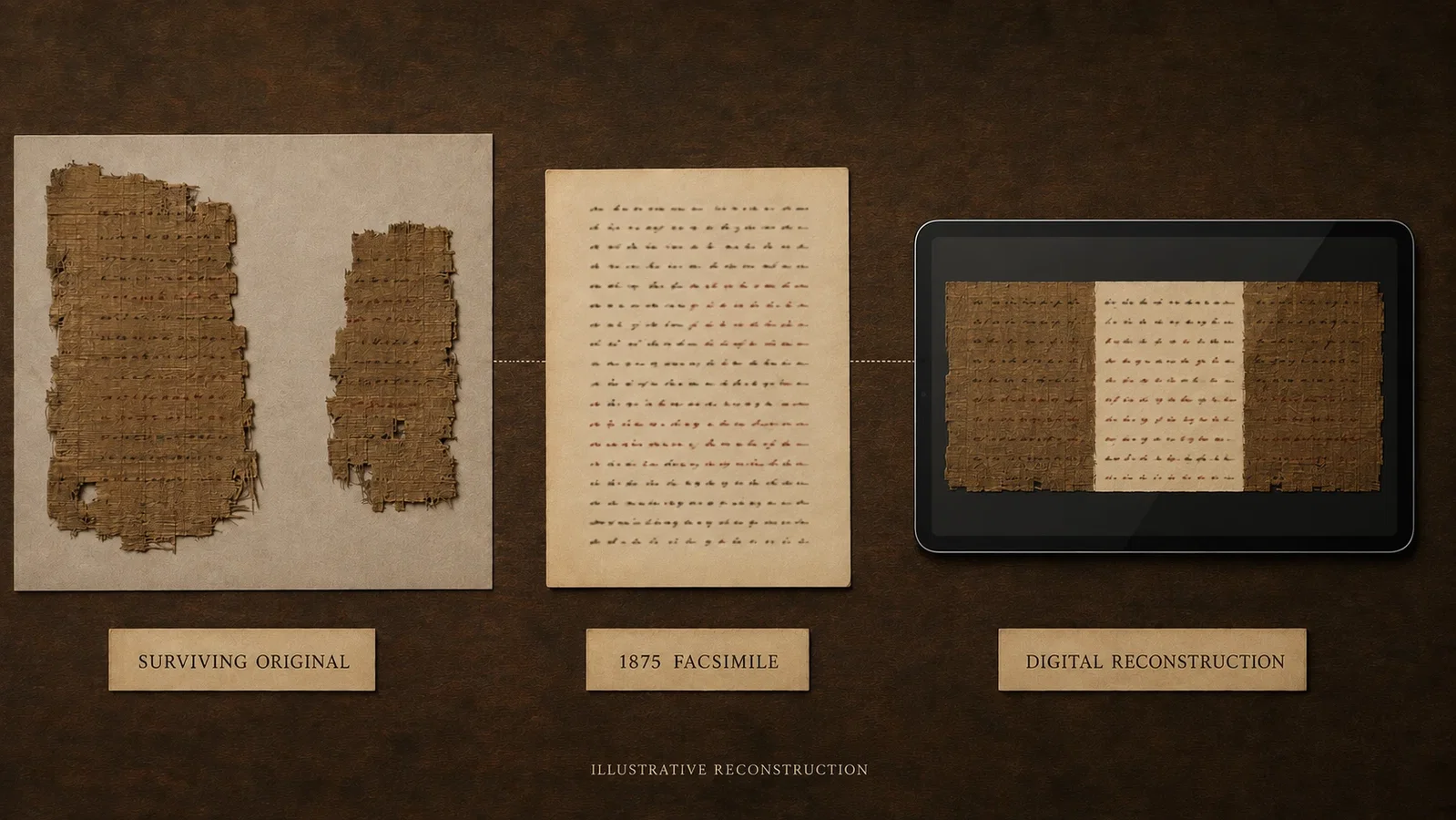
(Figure 4) Three forms of survival. Ancient material, a printed substitute, and a digital composite have different identities. Original retrospective illustration, not an actual exhibition view or proof that the entire original roll remains intact.[1,4–6]*
The replica on display, the original kept in storage, and the digital assembly should consequently not be called the same artifact. Images help us inspect evidence only if the identity of the substitute remains visible.
An opening without an invented success
There is a choice in how to begin this history. We can force an uncertain prescription into the role of an early anesthetic triumph, or attend to the questions it actually preserves.
The latter gives the manuscript a substantial place without inventing a success. Bodily suffering has become an object of writing. Proposed responses have been collected. Later readers have struggled to connect unfamiliar words with familiar substances. Even the material carrying those words has been preserved through a mixture of originals and copies.
What this article establishes is a recorded search for relief. Botanical identity, therapeutic effectiveness, and surgical anesthesia require their own evidence. Leaving a question mark in place is not an unfinished history; sometimes it is the most accurate part of the account.
Sources and reading limits
- Lutz Popko. Papyrus Ebers, German scholarly edition and commentary, version 475, 5 March 2026 (Alternative capture of Eb 782). Complete HTML archived; metadata, opening entries, head-remedy group, and Eb 782 with complete relevant notes read. Not a claim to have read the whole corpus. Eb 782 in the earlier German edition (v113, 2021).
- Andrea Sinclair, based on Popko's work. Papyrus Ebers, English translation, version 453, 5 March 2026 (archived copy). Relevant complete entries read. Related translation, not independent corroboration of [1].
- Leipzig University Library. The Scroll (archived English collection description). Complete catalogue article archived and read. See also Reinhold Scholl’s illustrated account of the Leipzig collection (German, pp. 40–41).
- Leipzig University Library. Showroom Ebers Papyrus (archived copy). Complete main conservation and exhibition article read.
- Leipzig University Library. Ebers Papyrus exhibition booklet, April 2021 (archived copy). The 1873 letter is a reproduction within the booklet.
- Leipzig University Library. Image manifest (archived copy) and legacy German annotations (archived copy). Column 93 and columns 48/47 images inspected, six annotation entries read; the SAE image of columns 1–3 also inspected. Image review is not independent translation of hieratic.
Historical source review dated 5 September 2026. Ancient recipes are not medical advice. The timeline year 1550 BCE is a century-midpoint sorting value, not an exact composition date. Sources and reading limits are stated above. Illustrations are labelled as original source images or AI-made. Historical accounts are educational; they are not current treatment instructions.
Continue exploring
Related reading connects shared questions and contexts; it does not by itself establish historical influence.