The 2018 ASA/AARP summit connected communication, screening, care, and research into an agenda; its 2019 report still called for multicenter studies to test whether best practices reduce perioperative neurocognitive disorders.
Reading Library · Anesthesia Epochs · 中文版
Watch the companion film
2018–2019: ASA Brain Health Summit — Seven Actions for Older Patients · Watch on YouTube
Historical anchor: 2019. Date details and source qualifications are explained below.
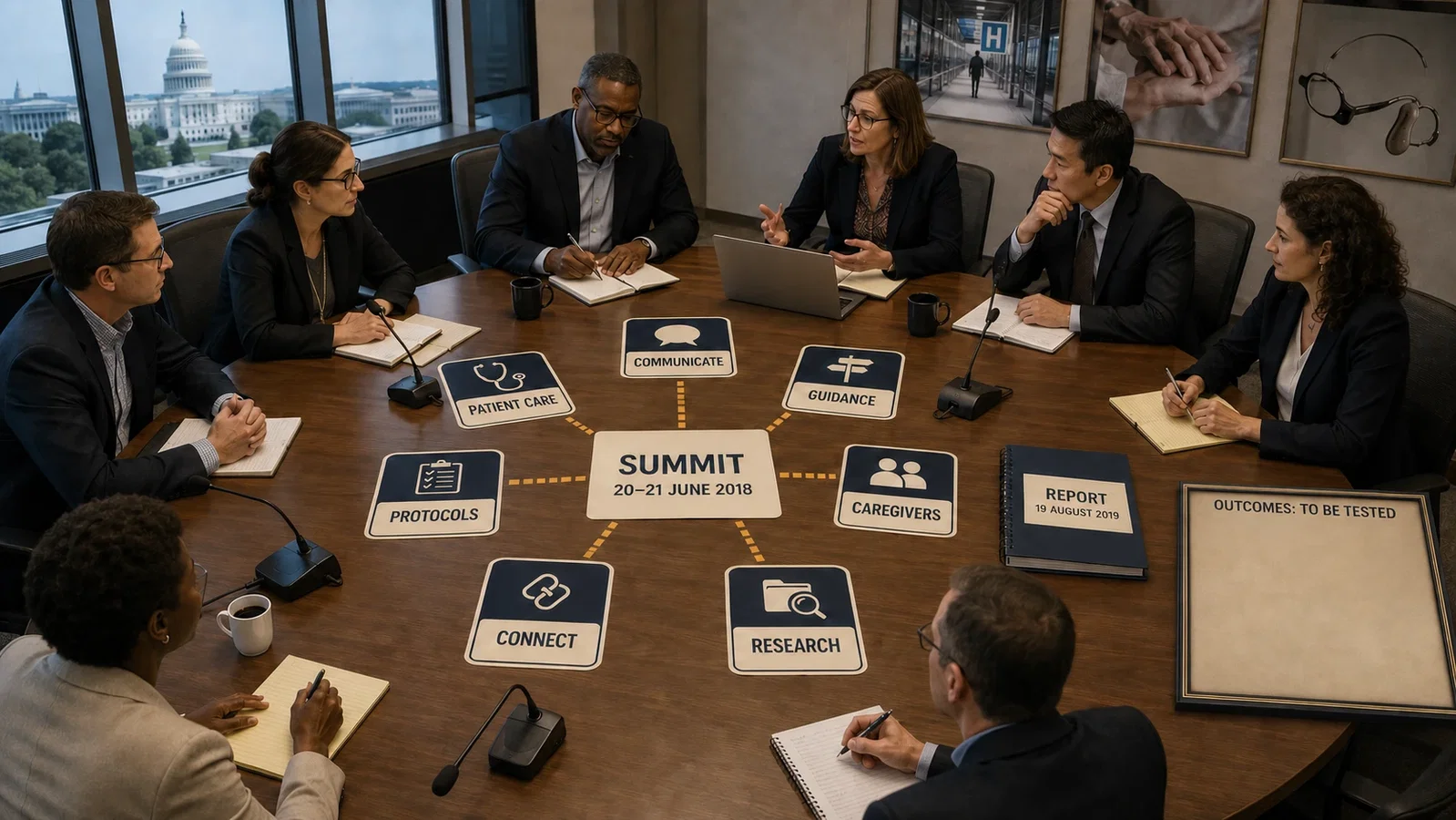
One page. Seven numbered actions. Not one of them was an effect size.
In 2018, the American Society of Anesthesiologists and AARP convened a summit on perioperative brain health. It gathered concerns that had been scattered across patients, caregivers, anesthesia, surgery, geriatric care, hospitals, and research funding, then arranged them as a Call to Action. The document asked for better conversations, better recognition of risk, more consistent nonpharmacologic care, stronger hospital protocols, and more research.
The summit report published the following year did not present that list as an answer already shown to work. It did something more disciplined. It separated what evidence could support, what practice had not yet adopted, what remained a plausible mechanism, and what still required a real test.
This article is therefore not the story of a meeting that “solved” perioperative neurocognitive disorders. It is the story of institutions turning unresolved questions into assigned work.
Separate the 2018 meeting from the 2019 report
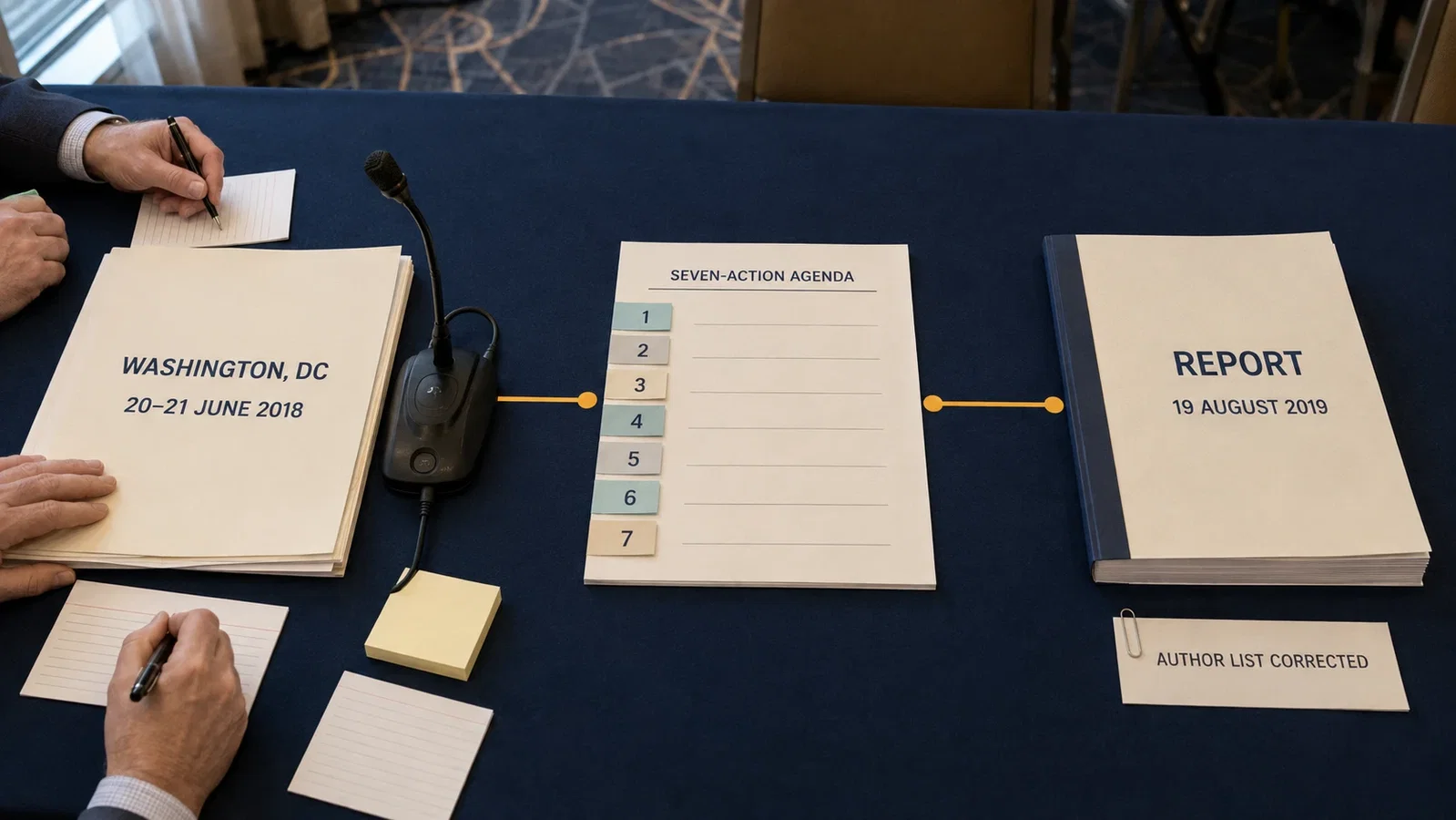
The summit took place in Washington, DC, on 20-21 June 2018. The ASA/AARP attendee summary names Lee A. Fleisher and Sarah Lenz Lock as moderators. The one-page Call to Action places the meeting at the AARP Hatchery.
The report by Mahanna-Gabrielli and colleagues was not published at the meeting. It appeared electronically on 19 August 2019 and then in the October issue of the British Journal of Anaesthesia, volume 123, issue 4, pages 464-478. PubMed classifies it as both a journal article and a review. It was a summit report and state-of-clinical-science synthesis, not a trial that randomized patients or hospitals to a world with or without the summit.
The ASA-hosted PDF also preserves a version defect. That article-in-press copy lists 15 authors. A later corrigendum states that Deborah J. Culley and Catherine C. Price had been omitted and restores a 17-person author list. This article therefore uses the corrected authorship rather than allowing the earlier PDF to perpetuate the omission.
Dates and versions may look like housekeeping, but they determine the history. The meeting happened in 2018; the report was published in 2019. The early PDF is a complete reading copy, but it is not the final authority on who wrote the paper.
Seven actions moved responsibility beyond the operating room
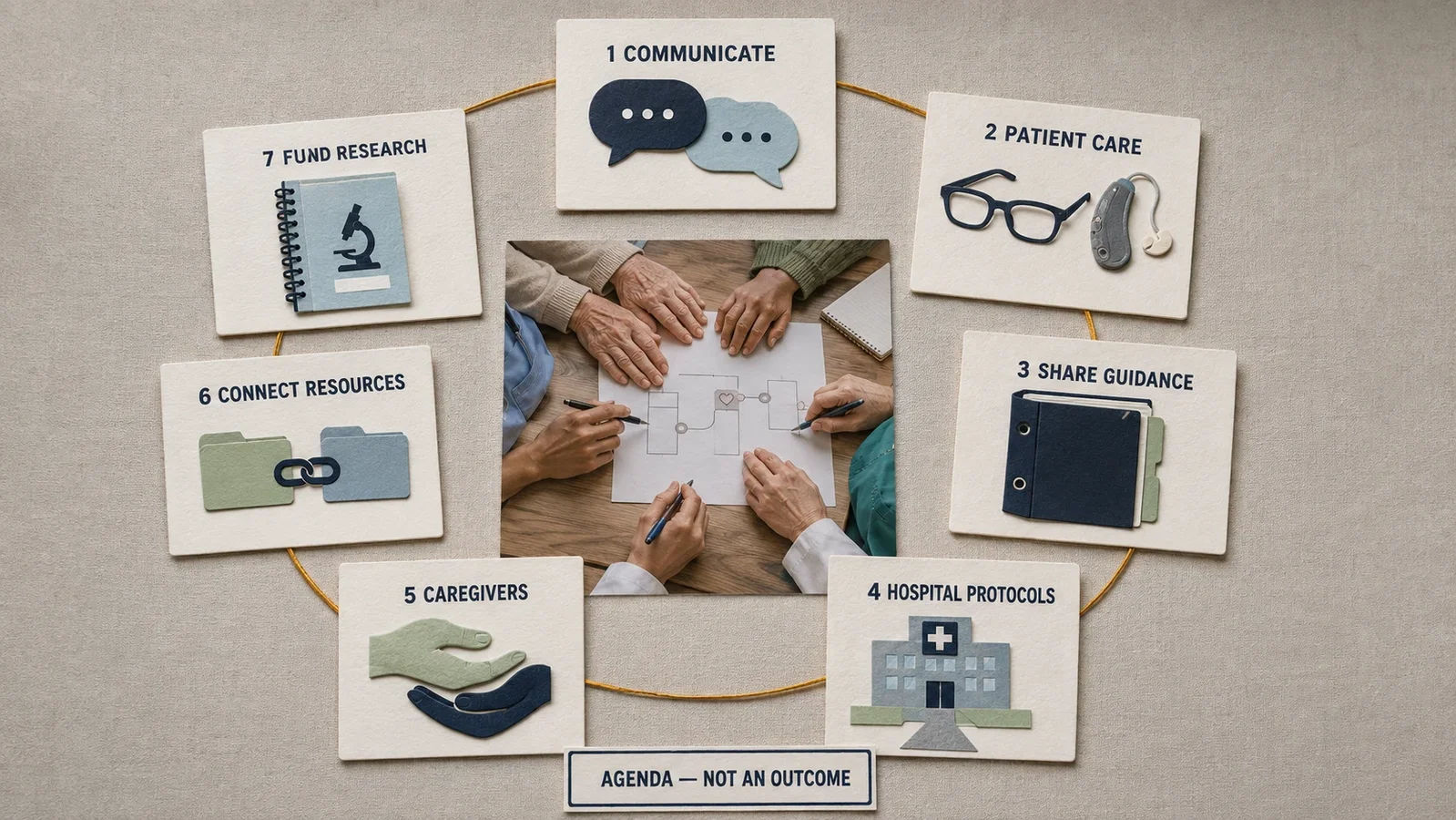
The Call to Action began with communication. It proposed discussing the risks of postoperative delirium and short-term cognitive disorders with older patients and providing educational material on orientation, mobilization, sleep hygiene, nutrition, and recovery.
Its second action carried care to the bedside: glasses, hearing aids, dentures, orientation to place and time, family participation, and healthy preparation around surgery. The third did not invent a new guideline. It called for broader awareness of existing ACS/AGS perioperative guidance for older patients and AGS guidance on delirium.
The fourth action assigned work to clinical teams and hospitals by asking for protocols for older surgical patients. The fifth turned caregivers into informed participants who could recognize delirium or cognitive difficulty, seek help, and receive follow-up information at discharge. The sixth sought to connect ASA brain-health materials with other resources. The seventh addressed funders, calling for support for research into mechanisms and treatment.
These responsibilities crossed consent, the clinical environment, hospital organization, family care, and the research system. They were not seven treatments tested together, nor a new “summit bundle” with a measurable effect. The document shows that participating organizations agreed to promote the actions. It does not show nationwide implementation, and it does not show that implementation reduced delirium or cognitive decline.
Screening exposed the distance between knowing and using
The 2019 report identified pre-existing cognitive impairment as an important risk factor for perioperative neurocognitive disorders. It also distinguished predisposing vulnerabilities from precipitating factors that arise across the perioperative course and may sometimes be modifiable.
That makes preoperative cognitive screening sound like an obvious next step. Existing best-practice statements had already recommended assessment in older adults. Yet the report did not claim the screening problem was solved. Routine preoperative cognitive assessment was still in its infancy. Very few hospitals included it in the ordinary evaluation of older patients, and clinicians were only beginning to learn how to use the resulting information wisely.
A screen can make risk visible without specifying what should happen next. Should an abnormal result trigger geriatric, neurologic, psychiatric, or neuropsychological assessment? How should it change medication review, the risk conversation, surgical planning, discharge expectations, or caregiver preparation? Those are implementation and outcome questions. A screening form cannot answer them by itself.
This is why the summit linked screening to communication. Risk information may matter only when it reaches shared decisions and changes preparation. Entering the conversation, however, is still not the same as improving an outcome.
Even the strongest direction had a setting
In its prevention section, the report gave multicomponent nonpharmacologic approaches the strongest footing for efficacy with the least potential harm. It highlighted the Hospital Elder Life Program and the ABCDEF bundle used in critical care.
Their shared elements were notably unglamorous: orientation, mobility, sleep, hydration and nutrition, sensory assistance, and family participation. The Call to Action carried many of those tasks into its patient-oriented hospital strategy. The summit was trying to make established principles more consistent and more visible in daily care.
But the source setting still matters. Much of HELP's evidence came from general medical patients; ABCDEF belonged to the ICU. Those programs could inform perioperative practice without proving that one uniform bundle would benefit every surgical population. The treatment section also kept prevention separate from treatment after delirium began. It did not identify an established drug for delayed neurocognitive recovery or postoperative neurocognitive disorder.
The most defensible part of the agenda was not a new invention. It was a reorganization of low-harm, multidisciplinary, continuous-care principles.
EEG, anesthetic technique, perfusion, and drugs did not converge on one prescription
The report described age-adjusted anesthetic dosing, brain monitoring, and prehabilitation as areas of equipoise.
Its EEG discussion had to hold ENGAGES and CODA at the same time. ENGAGES did not demonstrate fewer delirium cases with its EEG-guided strategy; CODA reported a reduction. The authors considered differences in anesthetic exposure and patient susceptibility, then proposed further work on waveforms, spectrograms, and vulnerable subgroups. That was not enough to declare EEG guidance universally effective. It was also not enough to declare it useless.
Regional and general anesthesia did not yield a simple cognitive-benefit conclusion either. The available studies were limited by age, sedation, sample size, and procedure type. Research on hypotension, cerebral perfusion, and near-infrared spectroscopy contained associations and conflicting results, while individualized thresholds remained an open problem.
The medication literature was no neater. Studies of dexmedetomidine, ketamine, haloperidol, melatonin, and other agents differed in population, timing, and outcome, and their results did not form a single reliable prescription. The report was not looking for one drug that could replace the system around a patient. It suggested that poorly resolved mechanisms make it difficult for one pharmacologic strategy to prevent or treat every form of PND.
The disorder in the evidence was not a failure of the review. It was the reason an action agenda had to coexist with a research agenda.
“Cognitive change” required more than one name
The report used perioperative neurocognitive disorders, or PND, as an umbrella. It did not collapse every postoperative cognitive problem into one condition.
Postoperative delirium is an acute, fluctuating disturbance of attention and awareness. Delayed neurocognitive recovery applies neurocognitive-disorder criteria within the first 30 days after anesthesia and surgery and excludes delirium. Mild or major postoperative neurocognitive disorder occupies the later interval, after expected recovery and from 30 days through 12 months. The older term postoperative cognitive dysfunction still appeared when the paper discussed research conducted with older testing definitions, but it was not treated as a universal clinical label.
That nomenclature came from a separate 2018 working-group consensus; it was not invented at the summit. The summit report adopted it so that risk, diagnosis, recovery, and research could be attached to different time frames and evidentiary questions.
“Postoperative” marks a temporal relationship. It does not, on its own, prove that anesthesia or surgery caused every later change. An initiative that failed to distinguish the names of its problems would have little chance of testing their solutions precisely.
The product of the summit was an auditable next step
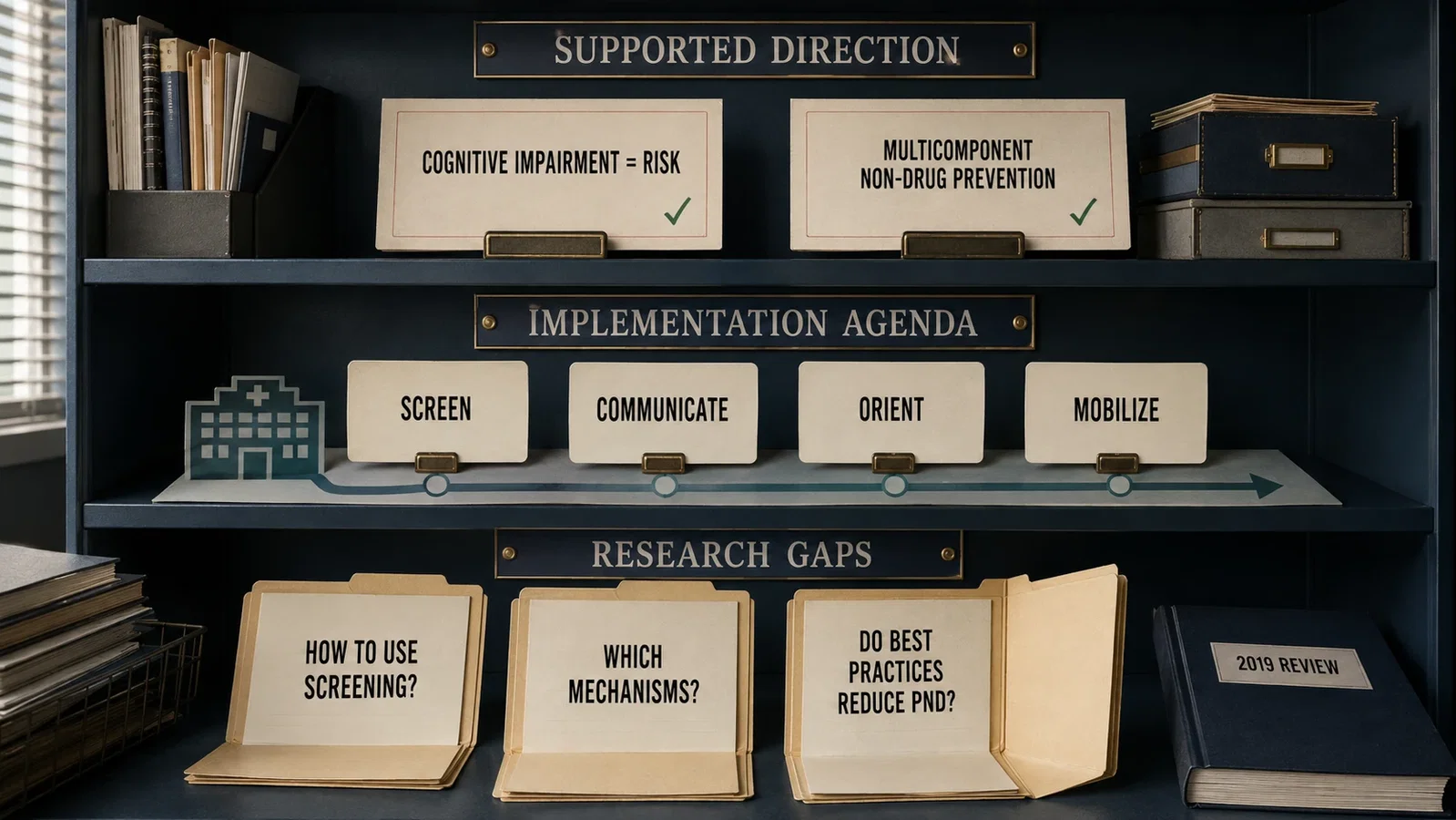
The 2019 report closed by calling for more rigorous multicenter randomized trials and larger observational studies to determine whether current best practices actually reduce perioperative neurocognitive disorders. It also asked how screening should alter care, which patients were most vulnerable, which mechanisms and biomarkers held up in humans, and how prevention and treatment should be evaluated separately.
That request defines the evidentiary boundary of the summit.
Consensus and advocacy can do work that a randomized trial cannot. They can gather people whose responsibilities are otherwise fragmented, establish shared language, move patient concerns into preoperative conversations, assign bedside practices to hospital systems, and make unanswered questions visible to investigators and funders.
A randomized trial can do work that a summit cannot. It can determine whether a specified action, in a specified population and workflow, changes a specified outcome.
The seven actions were therefore not seven answers. They were a map of responsibility. The map mattered because it showed where the next work had to go. Its scientific integrity depended on not pretending that the field had already arrived.
Sources and reading limits
Sources: Mahanna-Gabrielli E et al. Br J Anaesth. 2019;123(4):464-478. PMID 31439308. PMCID PMC6871269. DOI 10.1016/j.bja.2019.07.004; Corrigendum. Br J Anaesth. 2019;123(6):917. PMID 31591017. DOI 10.1016/j.bja.2019.09.014; ASA/AARP Summit 2018 Attendee Summary; AARP/ASA Call to Action; archived PubMed, PMC, Crossref, ASA, and Johns Hopkins records. The corrected 17-author identity is used; the 15-author article-in-press copy is retained only as a declared pre-corrigendum version.
Visual interpretations
These illustrations explore the setting and ideas. Depicted people, actions, instruments and documents are reconstructions, not evidence of their exact historical appearance.
Continue exploring
Related reading connects shared questions and contexts; it does not by itself establish historical influence.
Historical connections
- Earlier connection: 2015: Care for the Older Surgical Patient Becomes a Perioperative Pathway
- Earlier connection: 2019: ENGAGES Cuts Anesthetic Exposure but Not Delirium
Related reading
- 2010: NICE CG103 Turns 'Think Delirium' into a Care Pathway
- 2015: Care for the Older Surgical Patient Becomes a Perioperative Pathway
- 2018: Beverley Orser and the α5-GABA_A Brake After Anesthesia
- 2018: The PND Consensus Separates Postoperative Time from Cause
- 2019: ENGAGES Cuts Anesthetic Exposure but Not Delirium
The Source Room · About & Editorial Method
Sources and reading limits are stated above. Illustrations are labelled as original source images or AI-made. Historical accounts are educational; they are not current treatment instructions.